Recent Movies
Showing posts with label Adventure. Show all posts

Captain Marvel (2019)

Captain Marvel (2019)

Cast
  • Brie Larson as Carol Danvers / Captain Marvel
  • Samuel L. Jackson as Nick Fury
  • Ben Mendelsohn as Talos
  • Jude Law as Yon-Rogg
  • Annette Bening as Supreme Intelligence
  • Gemma Chan as Minn-Erva
  • Lee Pace as Ronan
  • Mckenna Grace as Young Carol Danvers
  • Djimon Hounsou as Korath
  • Clark Gregg as Agent Phil Coulson
Director
  • Ryan Fleck
  • Anna Boden
Writer (story by)
  • Nicole Perlman
  • Meg LeFauve
  • Anna Boden
  • Ryan Fleck
  • Geneva Robertson-Dworet
Writer
  • Anna Boden
  • Ryan Fleck
  • Geneva Robertson-Dworet
Cinematographer
  • Ben Davis
Editor
  • Elliot Graham
  • Debbie Berman
Composer
  • Pinar Toprak
Action, Adventure, Mystery, Science Fiction
Rated PG-13 for sequences of sci-fi violence and action, and brief suggestive language.
128 minutes
It’s finally here: the first film in the Marvel Cinematic Universe with a female superhero at its center and a woman serving as a co-director and writer. These are unprecedented, exciting and long overdue achievements all around within a pop-culture powerhouse that’s long been dominated by male stories and storytellers.

So why does “Captain Marvel” feel like a bit of a disappointment? It’s fine and often quite funny. It fits securely within the MCU but also functions sufficiently as a stand-alone entity. But the character, and the tremendous actress playing her in Oscar-winner Brie Larson, deserved more than fine. They—and the girls and women everywhere looking to “Captain Marvel” with wide eyes and high hopes for seeing themselves on screen—deserved a game-changer along the lines of “Black Panther” or even “Guardians of the Galaxy” or “Doctor Strange.”

“Captain Marvel” mostly takes place in the mid-1990s, and feels like it was made then, too, in terms of its technical prowess and emotional depth. This is not a compliment. As for the former, perhaps that was intentional—yet another example of wallowing in period nostalgia alongside the grunge chic and girl-power anthems. The prolonged intro in space and the big action sequences have a cheesy, retro feel to them that can be amusing but also inscrutable.

But co-directors Anna Boden and Ryan Fleck have made their names writing and directing indie dramas featuring richly drawn characters facing real stakes. “Half Nelson” (2006), about a drug-addicted middle school teacher, is the movie that put Ryan Gosling on the map and earned him his first Oscar nomination. “Sugar” (2008) is one of the most intimate and insightful movies ever made about baseball. You’d rightly expect that their depiction of the title character—real name Carol Danvers—would be complex, compelling and abidingly human, despite her otherworldly superpowers. But while Larson is tough, plucky and skilled with a well-timed quip, her chief character trait seems to be rebelliousness. That’s a little limiting. (Boden and Fleck co-wrote the script with Geneva Robertson-Dworet, and all three share story-by credit with Nicole Perlman and Meg LeFauve.) Additionally, she has forgotten who she really is, so her interior life is as much of a blank to her as it is to us.

Despite her fighting spirit, Carol often finds herself as a pawn trapped between various worlds where she feels as if she doesn’t belong. At the film’s start, she’s living and training as a warrior on the Kree planet of Hala. Her mentor, Jude Law’s Yon-Rogg, is constantly reminding her not to let her emotions get the best of her—a pointed commentary on the sexist notion that women are too emotional to handle tough jobs. And “Captain Marvel” is full of such less-than-subtle messaging. But after the shapeshifting enemy Skrulls, led by the swaggering Talos (Ben Mendelsohn), take her prisoner during a battle, she escapes and lands on a different planet: our own. Specifically, she finds herself a fish out of water within the urban sprawl of Los Angeles.

It’s here that “Captain Marvel” leans hard on the humorous kitsch of its decade-specific detail: Blockbuster Video! Two-way pagers! Dial-up Internet! We were so lame. It’s the cinema of empty recognition—a ‘90s version of the way “Ready Player One” relies heavily on ‘80s pop culture to provoke a warm, knowing response. “Hey, Captain Marvel ties her plaid flannel button-down around her waist the way I used to in college! Cool.” These moments and images are good for a chuckle and not much more.

But as Carol begins to piece together her history as an Air Force test pilot, “Captain Marvel” begins to feel like a female version of “Top Gun.” This actually is a compliment; the sections on Earth in which Carol grasps at her memories of the past and discovers her strength and bravery in the present (and in the cockpit) are the film’s highlights. The always formidable Annette Bening is a tantalizingly fleeting presence as a mysterious mentor figure in Carol’s previous life. And Lashana Lynch helps flesh out Carol’s personality as her best friend: a fellow pilot who similarly never got the shot she deserved because she was a woman and a young mother.

Carol’s most rewarding and consistently entertaining relationship, though, is with young S.H.I.E.L.D. agent Nick Fury, played by a magically de-aged Samuel L. Jackson in a bit of visual effects wizardry. Truly, the result is seamless. You will forget that you are looking at a 70-year-old man. (Clark Gregg, reprising his revered role as Agent Coulson, isn’t quite so believable, but it’s always good to see him.) Larson and Jackson play off each other beautifully, trading snappy banter and affectionate zingers with ease. Their mission is to find a glowy space cube thingy—you know what it is and why it matters if you’ve been following these movies—and keep it out of the wrong hands, but that’s the least intriguing component of “Captain Marvel.”  

But her camaraderie with Jackson—and later with a quick-witted Mendelsohn and a fantastically scene-stealing orange kitty named Goose—ultimately serves as a reminder of just how little there is to Larson’s character. Not unlike Captain America’s role within the Avengers, Captain Marvel functions here as the straight woman, the steady anchor in a sea of big, swirling personalities. Sure, she eventually comes into her powers in full and is literally the kind of girl on fire that Alicia Keys sings about. But if we’re not invested in who she is at her core, how are we supposed to care about what she’s burning down?

Speaking of music, the folks behind “Captain Marvel” spared no expense on the film’s soundtrack, including songs from such female-driven '90s acts as TLC, Garbage, Elastica, Salt-n-Pepa and a painfully on-the-nose use of No Doubt’s “Just a Girl” during a particularly elaborate fight scene. The girl power (and grrl power) ring out loud and clear, if a bit hollow.


Robin Hood (2018)

Robin Hood (2018)

Cast
  • Taron Egerton as Robin Hood
  • Jamie Foxx as Little John
  • Jamie Dornan as Will Scarlet
  • Eve Hewson as Maid Marian
  • Ben Mendelsohn as Sheriff of Nottingham
  • Tim Minchin as Friar Tuck
Producer
  • Leonardo DiCaprio
Director
  • Otto Bathurst
Director of Photography
  • George Steel
Story
  • David James Kelly
Screenplay
  • Ben Chandler
  • David James Kelly
Editor
  • Christopher Barwell
Music
  • Joseph Trapanese
Action, Adventure
Rated PG-13
104 minutes
 
 
You could build a suspension bridge over the gap between what "Robin Hood" could have been and what it is. Its hero is credible as a man who wants to rob from the rich and give to the poor, but the storytelling is so impoverished that the message can't stick. 

"Robin Hood" is a malleable tale, but the core is always the same: a cocky underdog fights the power on behalf of mistreated citizens. This new version from director Otto Bathurst ("Peaky Blinders") captures the heart of the legend, but frustratingly fails to translate it. Bluntly political and surprisingly coherent in its messaging, the movie is filled with deliberately modern details signaling that it's a folktale aimed at modern multiplex audiences, closer to a science fiction or fantasy epic than a "Barry Lyndon"-style "accurate" representation of life in another era. If the filmmaking and writing weren't so undistinguished, this could have been special. Instead, it's a flat and often grating experience, dotted by pockets of intelligence and surprise.
This incarnation of Robin of Locksley ("Kingsman: The Secret Service" star Taron Egerton) is a traitor to his class—a veteran of the Crusades who is literally to-the-manor born. He battles the cruel and corrupt Sheriff of Nottingham (Ben Mendelsohn) after returning home and realizing that the bad guy has taxed his community into oblivion to fund the war effort. Robin is joined by the Saracen Little John (Jamie Foxx), who becomes his friend and mentor after Robin risks treason charges to save John's son during the Crusades. 
Robin, John and their allies start stealing gold from the bad guys, Robin's face-concealing black hood becoming a revolutionary emblem on par with the Guy Fawkes mask. At the same time, Robin ingratiates himself into the Sheriff's inner circle, gathering intelligence for his growing rebellion, and uncovering a conspiracy to subjugate the people that's even more awful than what he'd imagined. The film's supporting heroes—including Robin's former fiancee Maid Marian (Eve Hewson) and the local clergyman Friar Tuck (Tim Minchin)—are quite jaded about the world. They require little prompting to join Robin's campaign to give gold and hope back to people who've been abused or taken for granted by the state.
Ben Chandler and David James Kelly's script takes a story that's several centuries old and marries it to modern-day concepts and language, and the filmmakers try to push that strategy to the next level. Like Guy Ritchie's recent attempt to update another ancient English hero in "King Arthur: Legend of the Sword"—and, for that matter, Kevin Reynold's 1991 hit "Robin Hood: Prince of Thieves," from which this film borrows freely—this is a loud, fast, choppy production, with a punkish yet earnest edge. It often apes the look and feel of Christopher Nolan's Batman films, trading energy for elegance, and enthusiastically owning its many, blatant anachronisms. Marian has circa 2016 smoky-eye makeup, the costuming showcases some of the yummiest custom-cut leather jackets in cinema history, and the combat sequences feature archers rapidly firing arrows at each other at close quarters, like gunfighters in a John Wick film. An opening action sequence set in Syria has stuttering handheld camerawork in the vein of "Saving Private Ryan" and "Black Hawk Down." 

The dialogue is likewise packed with modern aphorisms and political slogans that seem meant to lodge in the mind and incite passions. At one point, the corrupt Sheriff of Nottingham, who's presented as a Trump-Bolsonaro-Le Pen-styled nationalist/racist despot, quotes George W. Bush's post-9/11 statement "They hate us for our freedom," in reference to the Muslim hordes that the Christian warriors are fighting overseas. He warns that they'll overrun England unless everyone pitches in with their treasure and blood. "They'll burn your houses!" the Sheriff bellows. "They'll burn your land!" Robin and John's friendship is treated as a bond between men who are smart enough to see through the forces that are trying to trick them into hating each other.

The film's genuine cynicism towards the powers that be is palpable, and it runs deeper than you expect. The Sheriff is in cahoots with a cruel and greedy Cardinal (F. Murray Abraham), who reveals that they're secretly funding both the Christians and the Muslims overseas to keep the war machine going and the gold pouring into the coffers of the local mine and foundry, which employs much of the local population and belches flame and toxic fumes. Marian's new husband Will Scarlet (Jamie Dornan), whom she married after Robin was reported dead in the war, is what 2018 political commentators would call a "centrist," expressing guarded sympathy for the motives of Robin and the other rebels while decrying their methods and worrying that they're going to upset a system that provides him with a stable and comfortable life. This is the kind of movie that turns boilerplate phrases into images, as when a newly radicalized character becomes a literal bomb-thrower.
In contrast to many other heroic narratives that are about nothing more than being opposed to bad people doing bad stuff, this "Robin Hood" is about institutional as well as personal corruption; it goes out of its way to show how one feeds and expands the other, and how perpetrators cloak themselves in political slogans and religious imagery while picking the pockets of working people and turning nations against each other. The movie is specifically an anti-organized religion statement as well as an anti-capitalist and anti-nationalist statement: a Noam Chomsky editorial with bows and arrows. 

The film's storytelling, however, is as conservative as its messaging is intriguingly radical. While modernizing other aspects of the legend, the script fails to find a new way into Robin's relationships with John (essentially another neutered Black mentor/father figure to a young, white man, his lopped-off hand preventing him from ever besting his student) and Marian (a damsel in distress, still, no matter how spunkily she resists the rape-minded Sheriff and his goons). 

The direction is paint-by-numbers, capturing every piece of relevant action but evoking nothing—which would be aesthetically offensive even if the costumers, set builders and decorators weren't in there filling every frame with colors and textures worth savoring. There's not a single witty or lyrical image anywhere in the movie, which wastes its dynamic, wide framing, and is shot in a glitzy, fast-cut style, characteristic of high-end TV pilots, complete with BOOM! sounds to inform us that something important just happened. A lot of the special effects are dodgy, particularly a wagon chase scene where Robin, Marian and John flee the Sherriff's guards and the assassin Guy of Gisborne (Paul Anderson) in the fiery mills. The actors are so clearly not inhabiting the same space as the spectacle, they might as well be standing on the deck of The Love Boat. But in the end "Robin Hood," succumbs to Marvel/DC syndrome, presumptuously setting up a sequel that it's hard to imagine anyone demanding. 


Bumblebee (2018)

Bumblebee (2018)

Cast
  • Hailee Steinfeld as Charlie Watson
  • Dylan O'Brien as Bumblebee (voice)
  • Jorge Lendeborg Jr. as Memo
  • John Cena as Agent Burns
  • Angela Bassett as Shatter (voice)
  • Justin Theroux as Dropkick (voice)
  • John Ortiz as Agent Powell
  • Peter Cullen as Optimus Prime (voice)
Director
  • Travis Knight
Writer
  • Christina Hodson
Cinematographer
  • Enrique Chediak
Editor
  • Paul Rubell
Composer
  • Dario Marianelli
Action, Adventure, Science Fiction
Rated PG-13 for sequences of sci-fi action violence.
114 minutes
"Bumblebee," the first live-action Transformers movie to be directed by somebody other than Michael Bay, a Bizarro World version of this year's "The Predator," though only in one very particular way: there's too much undercooked human drama and not enough 'splodey high-concept stuff (which is competent). Sure, "Bumblebee" may seem like a welcome change-up after six Bay-ified Transformers flicks. But, as somebody who quit the recently revived franchise after the fourth entry, I have to say: so what? "Bumblebee" is only comparatively modest: it's 113 minutes and feels longer, and plays like a lukewarm, John Hughes-ified clone of "E.T.: The Extra-Terrestrial." There's not only nothing new here, there's nothing convincing. And if I'm supposed to judge "Bumblebee" based on how well it succeeds at what it tries to do (rather than what came before it), it's still not very good.

"Bumblebee" begins with a lifeless homage/tip of the cap to the animated "Transformers: The Movie." War has come to Cybertron, the home of the Autobots—who have apparently already visited Earth, and therefore look like cars—and the Decepticons, who also look like cars and jets and things, despite ... not having been to Earth yet? You guessed it, dear reader: "Bumblebee" is a prequel, a bridge between the notoriously confusing "Transformers: The Movie" and Bay's tediously noisy "Transformers," so it makes sense that this new movie should be ... well, a bit like both the older Transformers film and the newer Transformer films, actually.

Yet while "Bumblebee" is a movie where sentient war machine robots go pew-pew at each other—and blow up trucks, and sometimes reduce human beings to translucent goo—this is also apparently a film about generically rebellious teenager Charlie Watson ("True Grit" star Hailee Steinfeld), a young woman who listens to The Smiths, resents her mom ("Better Things" star Pamela Adlon), and has a tentative romance with a wimpy boy-next-neighbor named Memo (Jorge Lendeborg Jr.). Throw in the mute, nigh-magical, E.T.-like Bumblebee, and bam, you got yourself a thrice-nuked fish-out-of-water-tale.
The film's "formulaic" nature isn't necessarily a bad thing. Problems do, however, inevitably arise with "Bumblebee" since it often appears to be stuck on fast-forward, especially during big emotional moments. Several key scenes—ones that are supposed to establish the film's heartstring-tugging stakes—feel bewilderingly inconsequential, but only because screenwriter Christina Hodson's scenario (realized as it is by director Travis Knight and the gang), feels totally rushed. It's enough to leave viewers with burning questions, though the answers to those questions might seem obvious to anyone who's cursorily familiar with post-"E.T." fish out of water stories. 

Like: why did Bumblebee wait so long—in an early scene, before he loses his voice, and also one second before missiles decimate a bunch of gruff military guys—to command them to "Run?" Because the filmmakers don't have an extra couple seconds to earn genuine dramatic tension, not when they could just make their robot hero strike a cool pose and then get blown up. And why did Hodson and company have the film's villainous Decepticons kill Bumblebee’s Autobot friend on another planet before viewers are introduced to that character in a prior scene? Because wanton death is dramatic! 

As for the film's supporting characters, the one whose expectations Charlie rebels against: they're sadly not well-developed either. Which is a problem, since I can't root very hard for Charlie if my expectations are not overturned with hers. Stephen Schneider's amiably goony stepdad isn’t a convincing stick in the mud since his character's most heinous crimes against Charlie are practicing defensive driving and earnestly recommending one self-help book. And John Cena—playing cranky-pants, anti-robot military guy Agent Burns—isn’t a believable trigger-happy villain, despite the scary scar on his cheek. Finally, Lendeborg's Memo isn’t a credible nerd, despite the way he breathlessly explains why he wears disposable hair nets (sanitary reasons) when he’s confronted by a vaguely threatening valley girl bully.
Then again, what would you expect from a movie that asks viewers to fall in love with Bumblebee, a character who (in this film) appears to be a cuddly VW-shaped war machine? At the beginning of the movie, Bumblebee blows up a robot to rescue of his leader Optimus Prime (Peter Cullen). Later, after a bunch of sappy moments that don't quite land, he blows up a bunch of other stuff (mostly inanimate). Yes, Bumblebee ostensibly loves Charlie, his human owner/buddy. But the military? And the bad robots? According to the film’s aimlessly destructive (but convincing) logic, Bumblebee delivers the only fitting punishment for their (inefficient) kind of violent intolerance: total destruction.
Look, I’m not expecting the shooty-shoot robot movie to deliver a great anti-war, anti-consumerist epic (I used to love “Transformers: Beast Wars” when I was a pre-teen). I do, however, wish that somebody who was responsible for this film’s creation was a little more serious about the tropes that they mercilessly ripped off, I mean borrowed, from executive producer Steven Spielberg. There's nothing implicitly wrong with this movie's approach. You just have to do something with it.


Aquaman (2018) - Film Review

Aquaman (2018)

Cast
  • Jason Momoa as Arthur Curry / Aquaman
  • Amber Heard as Mera
  • Willem Dafoe as Nuidis Vulko
  • Patrick Wilson as Orm Marius / Ocean Master
  • Dolph Lundgren as King Nereus
  • Yahya Abdul-Mateen II as David Kane / Black Manta
  • Nicole Kidman as Queen Atlanna
  • Temuera Morrison as Thomas Curry
  • Ludi Lin as Murk
  • Graham McTavish as King Atlan
  • Djimon Hounsou as The Fisherman King
  • Natalia Safran as Fisherman Queen
  • Michael Beach as Jesse Kane
  • Randall Park as Dr. Stephen Shin
Writer
  • Will Beall
  • David Leslie Johnson-McGoldrick
  • Will Beall
Writer (Aquaman created by)
  • Mort Weisinger
  • Paul Norris
Writer (story by)
  • Geoff Johns
  • James Wan
  • Will Beall
Cinematographer
  • Don Burgess
Editor
  • Kirk M. Morri
Composer
  • Rupert Gregson-Williams
Action, Adventure, Fantasy, Romance, Science Fiction
Rated PG-13 for sequences of sci-fi violence and action, and for some language.
 
144 minutes
 
 
Whenever anybody asks me what “Aquaman” is like, I mention an early scene where opposing Atlantean forces square off and debate the kingdom’s future. One side rides armored seahorses that whinny. The other rides armored sharks that roar. "Aquaman" is as concerned with scientific accuracy as “SpongeBob Squarepants.” And that’s one of many reasons why I like it. 

It takes skill to be as ridiculous as this movie about a half-human, half-Atlantean prince who’s known on land as Arthur Curry (Jason Momoa) without seeming to condescend to the material. Directed by James Wan (“Saw,” “The Conjuring”), it’s part of a thriving subcategory of superhero movies, also represented by “Spider-Man: Homecoming,” “Thor: Ragnarok,” “Venom” and both “Ant-Man” pictures—sweet, goofy, at times psychedelically weird films that mostly reject the sour gloom that gets mistaken for maturity. But that’s not to say that those movies aren’t serious in their own way. “Aquaman,” in particular, feels simultaneously like a spoof and an operatic melodrama. Any film that can combine those modes is a force to be reckoned with. 

Aquaman made his DC Expanded Universe debut in “Batman vs. Superman” and was part of the ensemble in “Justice League,” but this is the first movie that’s put him front-and-center. The results are enjoyable enough that you may wish Warner Bros. had done it sooner. While it’s not billed as such, this is an origin story, positioning Arthur as a reluctant hero. As concieved by screenwriters David Leslie Johnson-McGoldrick and Will Beall, adapting Mort Weisinger and Paul Norris’ source, Arthur is a mixed-species character who feels alienated from both of the civilizations he embodies. He's the offspring of union between a lighthouse keeper named Tom Curry (Temura Morrison) and a stranded Atlantean named Atlanna (Nicole Kidman) whom Tom nursed back to health. Atlanna then returned to the sea and was put to death for the sin of birthing a half-human child. 

Arthur has long hair and tattoos, a knack for wisecracks and a fondness for beer, and just wants to be left alone. He rejects allegiance to land or sea, but eventually succumbs to prodding by the idealistic Atlantean Mera (Amber Heard) and becomes a uniter at a time when radical forces, led by Arthur’s treacherous half-brother Orm (Patrick Wilson), want to destroy the land-dwellers as revenge for polluting and militarizing the ocean. Arthur is one of those Joseph Campbell-certified, Fated-for-Great-Things heroes, thus the mythically resonant first name. He even has the equivalent of the moment where the future King Arthur pulls the sword from the stone.

The movie is overlong and a bit repetitious (as big-budget superhero films tend to be), and its second half is more distinctive than its first because it lets its freak flag fly. But Wan and company mostly do a brilliant job of shaking the algae from cliches. Rather than get bogged down in plot particulars, they concentrate on characterization and performances, production design, costumes, and visual details. 

Every frame has marvelous details that you might not catch on first viewing. The Atlanteans use their mouths to speak, but there are no visible bubbles, only vocal distortion that suggests "bubbly-ness." When the characters aren’t swimming at dolphin speeds, they square off against each other as if they’re standing on a sidewalk on land, bobbing ever-so-slightly. The water dwellers have lighting that's supplied by luminous deep-sea creatures and high technology that’s inspired by aquatic animals and plants. Some of the battle armor features oversized crab and lobster claws. In one scene, Mera wears a dress with a collar made of glowing jellyfish and a multicolored seagrass skirt. In an arena sequence, we hear taiko drumming on the soundtrack, and the camera moves to reveal a lone percussionist: a giant octopus. 

The fight sequences use high-speed, 360-degree camerawork to create surprise and delight, rather than to add superfluous hype. We’re constantly surprised by where movements start and end, and there are multiple slapstick jokes woven into each encounter. "Aquaman" embraces the childlike absurdity of armored Atlantean troopers coming up onto the land and martial arts-fighting their enemies in broad daylight, presenting the mayhem as plainly as a kung fu showdown in a schlock fantasy like “Infra-man” or TV’s “Mighty Morphin Power Rangers.” Rather than cross-cut between multiple lines of action, the camera sometimes swims or flies from one location to another and back again—most spectacularly in a chase-and-fight sequence set in a Sicilian seaside town, where combatants smash through the walls of cliffside homes and scramble across tiled rooftops. 

Momoa anchors the film, imbuing the big guy with surly charm, like one of those early Marlon Brando characters who was a jerk most of the time, but so magnetic and wounded that you couldn’t help but care about him. The rest of the cast is just as committed, notably Kidman as Atlanna, who carries on as if she’s playing the lead in an ancient Greek tragedy; Yahya Abdul-Mateen II as David Kane, aka Black Manta, a pirate who swears revenge on the hero; and Willem Dafoe as Atlantis’ counselor Vulko, who advises caution and reason to no avail, and who’s like a second (aquatic) father to Arthur. 

The most remarkable aspect, though, is the way "Aquaman" pushes against the idea that every problem can be solved by violence. There are plenty of bruising fights on land and sea, plus laser shootouts and aquatic infantry clashes, but some of the most important showdowns are resolved peacefully, through conversation, negotiation, and forgiveness. Men as well as women cry in this movie, and the sight is treated not as a shameful loss of dignity, but as the normal byproduct of pain or joy. For all its wild spectacle and cartoon cleverness, this is a quietly subversive movie, and an evolutionary step forward for the genre. 


Johnny English Strikes Again (2018) - Film Review

Johnny English Strikes Again (2018)


Who knew that we’d see Rowan Atkinson return to the world of secret spies in Johnny English Strikes Again? The 2011 sequel Johnny English Reborn was already an unexpected follow-up. I asked myself if anyone asked for this, but the question I should be asking is another one entirely: will anyone care? From the looks of it, the film will drive enough interest as it hits on all the marks to appease to its target demographic.
  
Quick! A hacker attack exposed every MI6 agent to the world! What do you do? You call in a retired agent, that’s what. Some would say he’s the best, others will urge that he’s the worst, but nevertheless, it’s up to Johnny English to uncover who the evil-doer is before he or she endangers England and possibly the rest of the world. All lives depend on this guy.

I was looking forward going into this film. I’ve only seen the first 5 minutes of the second movie. Despite my meager history with the franchise, I craved a satisfying comedy that got out a few chuckles.
The series lies in a weird spot. Each film came out at least 6 years apart from its predecessor with a different director of an unimpressive filmography at the helm. This time around that mantle went to David Kerr. Yup, I haven’t heard of him either. His area of expertise lies in TV with this movie being his cinematic debut. It’s not an impressive choice, but with a franchise like this one, the shoes aren’t too big to fill-in.

I’d be lying if I didn’t admit I laughed more than expected. This movie can be funny especially if you’re a fan of British comedy. Some may find it too predictable or simple, but in this case, Strikes Again creates the opportunity to add finishing touches in a form of clever twists or subtle jabs.

Sadly, this isn’t always the case. Some jokes don’t take these extra steps and run on for far too long. Two long sequences in particular fall on their faces despite their good intentions. It wastes the concept’s opportunity and settles for predictability. These inconveniences would be deal breakers, if not for the tone.
By the end of the day, a gag is a gag. It’s either cheaply hilarious or cheaply unimpressive. In this case, the final act predominantly goes with the latter while the first two with the former.

The film opens fast. It gets to the point and takes you on a fun ride. You appreciate the things it throws your way. It makes the most out of the light and silly tone. That’s it!
Johnny English is the comedic take on the James Bond franchise and it does so with its own flavor. For example, it takes the time to comment and at times make fun of today’s day and age. Johnny English is a man of his own mold. He does things the old-fashioned way, free of any safety nets, obligatory procedures or fresh tech. Things like this allow it to distance itself from a blatant parody.
Instead of effortlessly making fun of popular genre attributes, it takes its spy story elements and weaves them into the narrative as if they were their own. Even if some jokes aren’t original, the movie persists on staying away from bromidic references.

For some reason, the final act double downs on the bad gags that were once excusable. The characters that added something to the story are now useless. Their purpose is to deliver solutions in style of ex machina. In the end, Johnny English is the only character who ends up mattering at the expense of others.
The ending doesn’t give us proper closure. It’s just…there. The director’s resume shows its unimpressive teeth in this instance. The film only lasts 89 minutes. I’m sure it wouldn’t have killed anyone if they added a minute or three to fix these issues.

Johnny English: Strikes Again perfectly deserves a viewing when it happens to air on TV some day in the future — ironic isn’t it? It’s not an insult, rather a recommendation. The movie provides a good amount of laughs that will brighten up your day even if it’s through at least one joke. All of its faults ultimately don’t dwindle your fun to the point where you will hate this movie outright.
The movie is another relish of the week. Easily entertaining, yet if you’ve seen Atkinson play his typical caricature, you won’t find innovation. Unless the mandate is to relieve yourself of any stress, there is no need to rush out to your local theater.


THE PREDATOR (2018) - FILM REVIEW

The Predator (2018)


Cast

Boyd Holbrook as Quinn McKenna
Trevante Rhodes as Nebraska Williams
Jacob Tremblay as Rory McKenna
Keegan Michael Key
Olivia Munn as Casey Bracket
Thomas Jane
Alfie Allen
Sterling K. Brown
Jake Busey
Yvonne Strahovski as Emily
Director

Shane Black
Writer

Fred Dekker
Shane Black
Director of Photography

Larry Fong

Action, Adventure, Horror, Science Fiction

Rated R
101 minutes


Shane Black’s “The Predator” is a fun, brutal, fighting machine that wastes no time getting down to business—not unlike its title character. It’s not big on wasted dialogue or too many attempts at meta humor, playing both like an homage/throwback film to the action of the ‘80s and something that feels new and fresh. There’s nothing pretentious or whimsical here as we so often see in films that almost parody ‘80s action instead of trying to figure out why these movies have endured in the first place. It’s easy to mimic or mock something. It’s much harder to ask why the first “Predator” captured lightning in a bottle and then try to catch it again. With a fantastic cast and razor-sharp pacing, the fact is that this is what you want from a movie called “The Predator.”
Black wastes no time, actually opening the film on a predator ship hurtling towards Earth. A sniper named Quinn McKenna (Boyd Holbrook) is on a job when he’s practically hit by an escape pod containing one of the legendary creatures. McKenna gets his hands on some of the alien’s gear, sending some of it home and hiding one particularly bad-ass piece, well, somewhere nowhere will find it. Instead of going to his P.O. box, the mail ends up on his doorstep, where his son Rory (Jacob Tremblay) opens the package, finding a predator weapon and mask.

Meanwhile, a science teacher named Casey Bracket (Olivia Munn) is brought in to examine the predator that McKenna incapacitated, pushed around by a smug asshole named Traeger (a fantastic Sterling K. Brown, proving he should play villains more often). While that’s about to go predictably haywire, McKenna is put on a bus of fellow military prisoners, including Nebraska (Trevante Rhodes, who should be an action star if there’s any justice), Coyle (Keegan-Michael Key), Baxley (Thomas Jane), Lynch (Alfie Allen), and Nettles (Augusto Aguilera). Nicknamed “The Loonies,” the gang eventually connects with Casey, and they all try to catch up with the predator before he gets to Rory to retrieve his stuff.

Co-written by another ‘80s icon in Fred Dekker, this is a movie that keenly understands what its audience wants and endeavors to provide that, which is something more action filmmakers could learn from Black. There’s a rhythm and a structure to “The Predator” that’s easy to take for granted but much harder to pull off than people will probably give this film credit for. It’s in the way Black jumps from scene to scene and beat to beat, giving each character just enough dialogue and development for them to register as more than bodies for the predator to hunt but not lingering long enough for viewers to get impatient. Black is assisted greatly by an incredibly charismatic cast, and he knows how to use them to amplify their strengths. Holbrook and Rhodes are the buddy action movie duo you never knew you wanted, Munn holds her own (although her character kind of takes a back seat in the second half), and Jane and Key are fun comic relief.

Casting aside, what really elevates “The Predator” above the disaster that it easily could have been is the way Black and Dekker manage tone. They lean into the old-fashioned aspect of “The Predator” in that they’re clearly trying to recreate the ragtag crew from the first movie to a certain extent, but they also play with a few other staples of ’80s action movies like “the kid who knows more than the adults about aliens” and “the initially-difficult government guys who will eventually need our hero’s help to survive.” And yet “The Predator” never plays like a pure parody. So many '80s-inspired movies look back at that era with something like mockery. You get the sense that Black loves these tropes, and so he never mocks them as much as he tries to figure out why they worked and still work for so many people.

By the time “The Predator” gets to its climax, it has lost a little bit of steam. Some of the final scenes are a bit messy in terms of editing, especially when compared to what came before. I liked some of the earlier set pieces more, as we are getting to know the characters, especially the initial predator breakout and a great scene with…wait for it…predator dogs. Yes, this movie has predator dogs. Dear reader, you probably know if you want to see a movie with predator dogs or not. If you do, I can’t imagine you won’t be happy with this one.

This review was filed from the Toronto International Film Festival.


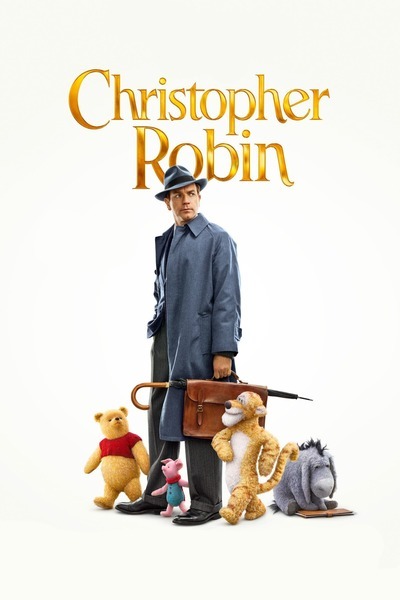
CHRISTOPHER ROBIN (2018) - FILM REVIEW

Christopher Robin (2018)

Cast
Director
  • Marc Forster
Writer (based on the characters created by)
  • A.A. Milne
  • Ernest Shepard
Writer (story)
  • Greg Brooker
  • Mark Steven Johnson
Writer
  • Allison Schroeder
  • Alex Ross Perry
  • Tom McCarthy
Cinematographer
  • Matthias Koenigswieser
Editor
  • Matt Chesse
Composer
  • Jon Brion
  • Geoff Zanelli
Adventure, Animation, Comedy
Rated PG for some action.
120 minutes
 
 
One of the problems with “Christopher Robin” is right there in the title. Compared to his stuffed playthings, Christopher Robin is the least memorable character in the Hundred Acre Wood-set tales penned by A.A. Milne and illustrated by E. H. Shepard. And we don’t even get him as the imaginative, precocious child overlord of Milne’s stories. Instead, Christopher appears in the guise of 47-year-old Ewan McGregor, a man who, in his own words, has not thought about his old pal Winnie-the-Pooh in thirty years. So why does Pooh, a figment of Christopher’s young imagination, return to him after all these years? Because Disney wants your money, of course. I don’t begrudge their need for greed; I just wish they hadn’t given us yet another movie built on the pseudo-psychological cliché that adults need to reconnect with their childhoods in order to be better adults.

After a brief recap of the most famous moments in Pooh’s history, “Christopher Robin” settles into the present day. Pooh and his friends are living their best lives in the Hundred Acre Wood. They have accepted that Christopher has grown up and moved on to London. We see Pooh change from his pajamas into his familiar and very short red shirt (it’s odd that he wears more clothes to bed than he does when he’s roaming the streets, but I digress). Armed with his usual hungry tummy rumble, Pooh sets off to mooch hunny from his friends, only to find that everyone has mysteriously disappeared.

Meanwhile, in the adult world, we learn that Christopher has grown up, gotten married to a woman named Evelyn (Hayley Atwell) and had a daughter name Madeline (a very good Bronte Carmichael). He works a miserable job in Winslow Luggage Factory and is shown to be a World War II veteran. Whoever thought it was a good idea to put violent war footage of the main character into a children’s film must know more about feel-good kiddie films than I do. But again, I digress.

I dawdle because I don’t want to tell you that Christopher is a rather horrible person. He’s a workaholic who neglects his kid and frowns on any notion of playtime she may be harboring. (His idea of bedtime reading involves history books, not “Treasure Island.”) Despite her pleas, he intends to ship her off to boarding school. Making matters worse, Chris’ marriage is on the rocks because he and Evelyn are not doing that thing I can’t talk about in a review of a children’s movie. Worst of all, the luggage factory is failing financially due to lack of travel after the war, so Christopher must fire a good portion of the factory workers. This last item prevents him from going away for the weekend with his family, who is so used to his broken promises that they don’t even pack him a suitcase.

For reasons unexplained, Pooh needs Christopher to help him find his friends Piglet, Eeyore, Rabbit, Owl, Tigger, Kanga and Roo. So when he shows up in London, having gone through Christopher’s tree in the Hundred Acre Wood, his former benefactor thinks he’s losing his mind. Once he’s accepted the situation, however, Christopher Robin sees Pooh as another problem he doesn’t have time to solve. But unlike Paddington Bear (whose movie is one of this year’s best), Pooh isn’t going to last 45 seconds in London. So Christopher Robin has to personally deliver him back to the Hundred Acre Wood, which requires returning to the same old house where Madeline and Evelyn are vacationing. 

The travel scenes, and the return visit to the Hundred Acre Wood, are pleasant enough, with McGregor doing a fine job of credibly selling the reunion between him and his stuffed pals. Each of your favorite characters is brought to life in special effects I thought looked exceptionally creepy, but your mileage may vary. Their personalities remain intact, and McGregor interacts with each of them with an admirable amount of happiness and joy.

This joy is short-lived, of course, because adulthood isn’t all fun and games. In fact, it stinks on ice. Christopher Robin has major league problems that the childlike, innocent Pooh and his crew are just not equipped to handle let alone supplement. That’s my biggest issue here. As a kid, the last thing you probably wanted during playtime was for it to be invaded by adults. Even though the characters are pulled into Christopher’s real-life universe, it feels as if reality has invaded the Hundred Acre Wood and sullied it. The film’s Madeline-led climax, a mad race to save Christopher’s ability to fire people, feels like a case where the children have to raise the adults.
By now, you’re probably saying I should just change my name to OdiEeyore Henderson. And I’m fine with that, because I love Eeyore. He was my favorite character as a kid. My mother used to say I had the hyperactivity of Tigger and the miserableness of Eeyore, which is the nicest thing anyone has ever said about me. My partner in attitude is rendered magnificently by the voice of Brad Garrett. As Eeyore, he gets the best lines, which I would expect from a script co-written by misery specialist Alex Ross Perry, and Garrett digs into them with a hilarious mixture of pathos and pessimism. And Jim Cummings’ voice-work as Pooh is also superb, a warm and cozy nostalgic throwback to Sterling Holloway that’s as comforting as Pooh’s favorite food.

Back in 1991, Steven Spielberg’s “Hook” tried to bring a grown Peter Pan, and all his adult problems, back to Neverland. It was a bad idea despite the fact that Neverland is well-matched with the more messed up parts of the adult male psyche. By contrast, the Hundred Acre Wood—Heffalumps notwithstanding—felt safer and more immune to intrusions from scary adulthood. Even at its most amusing—and there are moments when it is downright hilarious—“Christopher Robin” can’t reconcile its darkness and its light. But if these folks want to write an Eeyore movie that stays firmly planted in the Wood, I’ll be first in line to see it.


MISSION IMPOSSIBLE FALLOUT (2018) - FILM REVIEW

Mission: Impossible - Fallout (2018)

Cast
Director
  • Christopher McQuarrie
Screenplay
  • Christopher McQuarrie
Director of Photography
  • Rob Hardy
Editor
  • Eddie Hamilton
Music
  • Lorne Balfe
Action, Adventure, Thriller
Rated PG-13
147 minutes
 
 
Great action movies develop a rhythm like no other genre. Think of the way the stunts in “Mad Max: Fury Road” become a part of the storytelling. Think of how “Die Hard” flows so smoothly from scene to scene, making us feel like we’re right there with John McClane. Think of the dazzling editing of “Baby Driver” and the way it incorporates sound design, music, and action into a seamless fabric that’s toe-tapping. It’s obviously incredible praise to say that “Mission: Impossible – Fallout” reminds me of these films. It’s got that finely-tuned, perfect blend of every technical element that it takes to make a great action film, all in service of a fantastic script and anchored by great action performances to not just work within the genre but to transcend it. This is one of the best movies of the year.

For the first time in this franchise, director Christopher McQuarrie has made what is basically a direct sequel to the previous film, “Mission: Impossible – Rogue Nation.” Wasting absolutely no time, “Fallout” drops viewers into the narrative, getting the important details out of the way so the action can get started. So many action movies spend forever with monologuing villains and extensive set-ups. But there’s no fat on this movie, even early on, where action so often takes too long to get to the “good stuff,” and definitely not late when the movie is intense enough to leave you exhausted. 

A group called the Apostles wants to create chaos. That’s really all you need to know. They have a belief that suffering leads to peace, and so it’s time to unleash the pain. They have been working with someone clearly on the inside at IMF code-named John Lark and have conspired to obtain weapons-grade plutonium to create three dirty bombs. Ethan Hunt (Tom Cruise) has to get the plutonium back, but there’s a ghost haunting him in the form of Solomon Lane (Sean Harris), the villain from the last film who Hunt left alive instead of killing. The head of the Syndicate has been passed around intelligence agencies, looking for information on the IMF Agent-killing group, but he’s also a part of this new plot to end the world. 

As the movie opens, Hunt is tasked by his boss Alan Hunley (Alec Baldwin) to go to Paris to find John Lark before he buys the plutonium. He is handed a sidekick by Alan’s superior Erica Sloan (Angela Bassett) in the form of the brutish August Walker (Henry Cavill). Sloan isn’t sure she trusts Hunt or Hunley, and so wants one of her own men on the crucial mission, someone she knows will do whatever it takes to complete the mission. There’s a thematic undercurrent through “Fallout” as to how much one should be willing to sacrifice for the greater good—the classic spy flick question of killing someone you love to save the lives of millions you don’t (it’s the action movie equivalent of “The Trolley Problem”). The implication is that Hunt is too protective of those he loves, while Walker loves no one, and the movie vacillates in fascinating ways as to which modus operandi is better for a super-spy. Hunt is even described as the ‘scalpel’ to Walker’s ‘hammer.’ 

This dynamic duo heads to Paris—and are joined before long by familiar faces like Luther (Ving Rhames), Benji (Simon Pegg) and Ilsa (Rebecca Ferguson)—and, well, things get deadly fast. “Fallout” is one of those excellent action movies that works whether you pay attention to the plot or not. It is one of the most streamlined and fast-paced films in Hollywood history, moving from one set piece to the next. Don’t worry. There’s a plot. And it’s actually an interesting one that feels both timeless and current in the way that it plays with loyalty and identity. But McQuarrie and Cruise are keenly aware that they can’t lean too heavily on the plot or people will lose interest. We don’t need speeches. And so the dramatic stakes of the set-up are pretty much enough. Nuclear bombs, a double agent or two, a homicidal mastermind—now go! 

And, man, does “Fallout” go. Roughly seven of the ten best action sequences of the year will be from this film. There’s a wonderful diversity in action styles too from a skydiving nightmare to a car chase to, of course, a “Run Tom!” scene to the already-famous helicopter sequence. All of them feature an intensity of movement that we hardly see in action movies anymore. Critics have already compared the film to “Fury Road” and I think that’s why—the fluidity of motion that you see in both films. The great cinematographer Rob Hardy (“Annihilation”) and editor Eddie Hamilton (who did the last movie as well) have refined the action here with McQuarrie in such a perfect way. We rarely lose the geography of scenes—which is so common in bad action—and often feel like we’re falling, speeding, or running with Hunt. The audience I saw it with was gasping and nervously laughing with each heart-racing sequence. See this one with a crowd. And as big as you can (some of the footage was shot in IMAX, and it’s worth the upcharge).

“Fallout” isn’t the kind of film one often gets pumped for in regard to performance, but even those are better than average here. It’s fascinating to see how Cruise is finally allowing his age to show a little bit, especially in early scenes with Cavill, who looks like a tougher, stronger model of Ethan Hunt. Cruise's latest version of Hunt stumbles a few times and his punches don’t land with the force of Walker’s. It instills more relatability in a character who would have been less interesting as a superhuman spy. And the supporting cast is uniformly strong, especially Cavill and Rebecca Ferguson, who has the screen charisma of someone who really should be a superstar by now. Let’s make that happen. 

It’s easy to get cynical at the movies. With eight sequels in the top ten last week, more and more people see the Hollywood machine as just that, something that spits out product instead of art or even entertainment. Perhaps the best thing I can say about “Mission: Impossible – Fallout” is that it destroys cynicism. It truly does what so many people have looked for in entertainment for over a century—a chance for real-world worries to take a back seat for a couple hours. You’ll be too busy worrying how Ethan Hunt is going to get out of this one to care about anything outside the theater. It's a rare action movie that can do that so well that you not only escape but walk out kind of invigorated and ready to take on the world. “Mission: Impossible – Fallout” is one of those movies. 


INCREDIBLES 2 (2018) - FILM REVIEW

Incredibles 2 (2018)


For years, Pixar focused on original films, ignoring the sequel trend so prevalent in children’s entertainment. Sure, there were two sequels to “Toy Story,” but that was the exception. Now, the company regularly alternates original projects like “Inside Out” with sequels to “Cars,” “Monsters Inc.,” and “Finding Nemo.” But even as critics bemoaned the sequelitis that inflicted the company, there was always a caveat. “No more sequels...well, maybe The Incredibles.” Brad Bird’s 2004 animated classic felt like the most sequel-ready film in the entire Pixar canon. It was an origin story, the first chapter of a universe waiting to be explored. For some reason, it took 14 years to get back to the world of “The Incredibles,” but the good news is that this world doesn’t feel remotely stale. In fact, Bird and his collaborators have wisely updated it for the late-'10s while also staying true to what we loved about the first movie. They’ve done what a great animated sequel should do—continue to develop the themes of the original while also staking new territory. This is a smart, beautiful, fun family film. In other words, exactly what we want from Pixar.

Bird wastes no time getting into the meat of this story, cleverly picking up where the last film ended. Sure, it’s been 14 years in the real world, but animation allows time to be suspended. And so we see an attack by the Underminer, burrowing through the city, robbing its banks from below, and we watch the Parr family try to stop it. They do, but there’s so much damage done to the metropolis that no one is really eager to thank them. In a clever twist that is sure to inspire some thinkpieces about how it reflects on our current culture, officials would rather just let the criminals get away with it. The banks have insurance and there wouldn’t be so much destruction. And it’s that destruction that has led to superhero activity being criminalized. Read into that themes of failures of justice, anti-intellectualism, etc. as you see fit.

One person who refuses to believe that superheroes should be criminalized is Winston Deavor (Bob Odenkirk), who comes to the Incredibles with a plan. Working with his sister Evelyn (Catherine Keener), he’s going to make superheroes great again. And he’s going to do so by being transparent. They’ll put a body cam on a superhero and allow the world to fall in love with heroic deeds all over again. Realizing that her brand of lifesaving is a little more cost-effective than her husband’s, the Deavors pick Elastigirl (Holly Hunter) to be the face that will make people love heroes. Once again, the concept that we only appreciate that which we can see in today’s society feels remarkably current. “Pics or it didn’t happen,” if you will.

As Elastigirl gets a new outfit and a cool new ride, Bob/Mr. Incredible (Craig T. Nelson) is stuck at home, learning how being a parent takes a different kind of heroism. Dash (Huck Milner) is still his rambunctious self—and the most underwritten character in the film—but Violet (Sarah Vowell) is going through some teen girl drama, especially after the boy she likes literally doesn’t remember her any more. Most urgently, Jack-Jack has started to display powers, and if you think your baby is tough to manage because you don’t know when he’s going to throw a tantrum, imagine if you didn’t know when he was going to burst into flames.


As he has in all of his work, Bird is playing with societal definitions. The Iron Giant doesn’t have to be a weapon; a rat can be a chef; Mr. Incredible can be the stay-at-home parent and Elastigirl can save the day. And the theme of surpassing even the expectations and limitations we set for ourselves weaves through the plot of “Incredibles 2” as we’re introduced to new heroes (with names like Voyd, Screech, and Reflux) and a villain named Screenslaver, who hypnotizes people through today’s greatest addiction—our attachment to our screens. Yes, “Incredibles 2” is a movie that encourages us to detach from technology and experience the world. However, it’s with a twist.

Pixar films are famously beautiful when it comes to character design and art direction, but “Incredibles 2” is one of the most significant achievements in this regard. The word that I kept thinking of was fluid. I have three kids, so trust me when I say that this is not a common word when it comes to family entertainment, much of which shoehorns in messages between clunky comedy scenes with no concern for flow and pacing. “Incredibles 2” just moves beautifully, sliding from one scene to another with such grace and momentum. And the action sequences are among the best you’ll see all year. There’s a sequence with Elastigirl and a runaway train that’s gorgeously conceived and executed, and the climax is better than most Marvel action sequences. It’s a movie that’s constantly in motion, surprising you with the way it so seamlessly flows from action to comedy to family and back again, buoyed by a jazzy, fantastic score by Michael Giacchino. It’s a testament to Bird’s filmmaking ability how effortless “Incredibles 2” often feels. Nothing feels too eager-to-please, even the Jack-Jack material, which is surprisingly funny and fresh.

It helps to have a fantastic voice cast to be the fuel for this finely-tuned animated machine. Nelson gets the gruff tone of Mr. Incredible, a man who loves his family but also misses the days when he was the coolest superhero in the world, and the supporting cast is uniformly stellar. But the movie is really stolen by Hunter, who can convey more with a single line reading than other actresses can with an entire monologue.

Parents should be warned that “Incredibles 2” is long—almost two hours—just like the first one, and there is an unavoidable sense that some of the wonder of the concept has been diluted since the first film. Having said that, “Incredibles 2” understands something that most family sequels, even the Pixar ones, fail to comprehend—we don’t just want to repeat something we loved before. We want to love it all over again. You will with “Incredibles 2.”  


Bob Parr (Mr. Incredible) is left to care for Jack-Jack while Helen (Elastigirl) is out saving the world.

Director:

Writer:

Stars:

, ,  

Official Sites:

Official Movie Website

Country:

Language:

Release Date:

13 June 2018 (Philippines)  »

Also Known As:

The Incredibles 2  »

Company Credits

Production Co:

,
 
Copyright © 2017. MOVIETOWN
Blogger Templates