Recent Movies
Showing posts with label Horror. Show all posts

The Prodigy (2019)

The Prodigy (2019)

Cast
  • Taylor Schilling as Sarah
  • Jackson Robert Scott as Miles
  • Colm Feore as Arthur Jacobson
  • Brittany Allen as Margaret St. James
  • Oluniké Adeliyi as Rebecca
Director
  • Nicholas McCarthy
Writer
  • Jeff Buhler
Cinematographer
  • Bridger Nielson
Editor
  • Brian Ufberg
  • Tom Elkins
Composer
  • Joseph Bishara
Horror
Rated R


There's a tagline on the posters for "The Prodigy," a new horror film about a possessed child: "There's something wrong with Miles." That's an understatement, and not just for the obvious reasons. Miles is the object of much hoopla in "The Prodigy," which was written by Jeff Buhler ("Midnight Meat Train") and directed by Nicholas McCarthy ("The Pact"). But Miles is never distinct enough to be worth caring about. He's also not scary because his actions are seemingly only motivated by Buhler's need to get to the next schematic horror movie plot point. Worst of all: McCarthy's direction is so sleepy that a number of key scenes fizzle out before they can pay off with the next big jump scare. "The Prodigy" doesn't work because Buhler's scenario is too predictable to be involving and McCarthy's direction is too indecisive to be gripping. One of these two problems might have been surmountable, but both, at the same time, is lethal.
Also deadly: Miles (Jackson Robert Scott), an eight year-old wunderkind who, we are told, is super-smart in some unspecified areas, but also developmentally delayed in other unclear ways. Realistically, it's pretty hard to tell what's wrong with Miles because Buhler doesn't spell it out. Miles appears to be somewhere on the autism spectrum, based on the way that he skittishly interacts with his understandably worried mother Sarah (Taylor Schilling). Then again, you might also think that Miles looks normal enough, right until he starts cursing out Sarah in Hungarian, attacking another kid with a pipe wrench, and doing unpleasant things with the family dog. 

You'd be wrong, by the way, since "The Prodigy" is a horror movie that sticks closely to the post-"The Omen" formula for Evil Kid Flicks. You probably know this formula, even if you haven't thought of it as such: Young Mother gives birth to Violent Child; Kind Doctors find early signs of concern for Violent Child, but re-assure Young Mother that there's nothing to worry about yet; Violent Child begins to act squirrelly; Young Mother is worried enough to consult with Well-Meaning Spiritualist (Colm Feore), who tells Young Mother that Violent Child has become a vessel for Big Evil; Young Mother doesn't believe Well-Meaning Spiritualist until more Bad Stuff happens; then Young Mother takes matters into her own hands, by which time it may or may not be already too late to help Violent Child.

I realize that outlining this type of film's plot is like ragging on the apparently scripted nature of pro-wrestling matches. Why bother? We all know that the fights are rigged and the wrestlers are actors. I appreciate that, but I must re-assure viewers: there is nothing to "The Prodigy" beyond what I just outlined to you. And honestly, I did try to love this movie, having previously enjoyed films by both Buhler and McCarthy. I also tried to ignore all the little tropes and jump scares that Buhler and McCarthy took from earlier horror films, and often blatantly, as in almost shot-for-shot nods to lesser-known films, like Mario Bava's "Shock" and Damiano Damiani's "Amityville II: The Possession." I tried to focus on what I was looking at on a moment-to-moment basis, just so I could suspend my disbelief long enough to invest in these types of characters again.

Sarah and her emotionally distant husband John (Peter Mooney) are not only boring to watch, but also boring to think about. These guys don't just make generic bad decisions, like wandering into the wrong dark room, or participating in a staring contest with the wrong possessed child. Sarah and John are also poorly developed characters. Buhler and McCarthy rely so much on the familiarity of their scenario that they never bother to explain why Sarah immediately accepts the judgment of Feore's hypnotist, or how, exactly, was John affected by childhood abuse (we can guess, but you get what I mean). It's all barely simmering on the film's surface because "The Prodigy" mostly follows Miles as he pointlessly terrorizes other forgettable characters. 

So if there's something wrong with Miles, it's that his creators don't do much with him. They wind him up, and expect viewers to be impressed, because hey, Violent Children are creepy! Unfortunately, the film's scare scenes aren't even well-executed: an ostensibly creepy walk down a dark stairway appears to take a lifetime before it climaxes with the most obvious jump scare imaginable. "The Prodigy" wasn't made by incompetent filmmakers. But that doesn't make it any less wrong.


Happy Death Day 2U (2019)

Happy Death Day 2U (2019)

Cast
  • Jessica Rothe as Theresa "Tree" Gelbman
  • Israel Broussard as Carter Davis
  • Phi Vu as Ryan Phan
  • Suraj Sharma as Samar Ghosh
  • Sarah Yarkin as Dre Morgan
  • Rachel Matthews as Danielle Bouseman
  • Ruby Modine as Lori Spengler
Director
  • Christopher Landon
Writer (characters)
  • Scott Lobdell
Writer
  • Christopher Landon
Cinematographer
  • Toby Oliver
Editor
  • Ben Baudhuin
Composer
  • Bear McCreary
Horror, Mystery, Thriller
Rated PG-13 for violence, language, sexual material and thematic elements.
 
100 minutes


How much fun was 2017’s “Happy Death Day,” a gloriously self-aware blend of a teen slasher flick and “Groundhog Day,” with genuine jump-scares and a sharp sense of humor? In director Christopher Landon’s playful genre entry (written by Scott Lobdell) which wasn’t ashamed of its hybrid identity, our feisty heroine Tree Gelbman (“La La Land”'s Jessica Rothe) lived through the day of her murder in the hands of a masked killer again and again until she grew as a human being and a vengeful strategic thinker. And Tree wasn’t just another female survivor—in any other horror flick, this delightfully despicable, unapologetically debauched sorority queen wouldn’t have lasted past the first act. But she’s gotten so far that she received a sequel from the same team. Unfortunately, “Happy Death Day 2U” doesn’t deserve her or her tireless efforts through time to outwit a murderous loser behind a creepy baby mask.

More a geeky '80s-style high school film than horror, “Happy Death Day 2U” puzzlingly gives up on all the strengths that made its predecessor an appealing watch. Throughout this meandering mess, my mind wandered off to anything between “Weird Science” and “Back to the Future Part II—the latter is even frequently name-checked—except, “Happy Death Day 2U” is neither entertaining nor knowingly overindulgent. In reality, its convolutions feel miscalculated in the hands of creators that mistake complicated developments with amusement. And those missteps kick in pretty promptly in the sequel, right from the first occurrence of the very first murder. The early moments of the film admittedly feel like a bummer when we realize we're getting more of the same bloody cycles, but this time focusing on Ryan (Phi Vu); a side character from the first film, playing the roommate of Tree’s boyfriend Carter (Israel Broussard).

Not that Ryan isn’t endearing to follow on his own, but honestly, who’d want a “Happy Death Day” sequel that pushes Rothe, its chief asset, to the side? It’s almost as if the film realizes this gaffe while feeling its way through a cluttered story that corrects and revises itself at once. In due course, Ryan’s involvement in the plot becomes clear: turns out, he and his brainy friends at Bayfield University had invented a machine that created the time loops and sent Tree off to a one-way survival adventure. Surely, history would repeat itself, but in an alternate reality. (Those “Back to the Future Part II” and “space-time continuum” references do come in handy.) Stuck in a different dimension where her mother is still alive, she isn’t in the midst of an affair with a married professor and her fellow meanie Danielle (Rachel Matthews) is dating Carter, Tree tries to resurrect the familial and romantic order in her own universe while repeatedly escaping a mad killer through semi-comical methods.

If you can fend off the recurring bores of “Happy Death Day 2U,” Landon and Lobdell have some chuckles reserved up their sleeves. A sleekly edited montage of Tree’s increasingly creative suicides (why get murdered when you can just kill yourself?) arrives just in time to alleviate the dullness, while an intriguing array of side characters—portraying nerds and villainous teachers—keeps things mildly bearable. The sequel doesn’t drop the ball on some of the previous film’s key roles either—in that, both the adulterous Dr. Gregory Butler and secretly malicious roomie Lori (Ruby Modine) receive character makeovers. Still, the uninventive “Happy Death Day 2U” can neither sustain nor recreate the charms of the first film by recycling its ideas. In a way, Landon’s sequel gets stuck in its own alternate dimension—after starting off as something much closer to “Scream” in spirit, it devolves into a lazy “Scary Movie." 


Velvet Buzzsaw (2019)

Velvet Buzzsaw (2019)

Cast
  • Jake Gyllenhaal as Morf Vandewalt
  • Rene Russo as Rhodora Haze
  • Toni Collette as Gretchen
  • Zawe Ashton as Josephina
  • Tom Sturridge as Jon Dondon
  • Natalia Dyer as Coco
  • Billy Magnussen as Bryson
  • John Malkovich as Piers
  • Daveed Diggs as Damrish
Director
  • Dan Gilroy
Screenplay
  • Dan Gilroy
Director of Photography
  • Robert Elswit
Editor
  • John Gilroy
Original Music Composer
  • Marco Beltrami
Fantasy, Horror, Mystery, Thriller
Rated R
112 minutes
 
 
Art is dangerous and those who profit from it are risking their lives in Dan Gilroy’s bloody art-world satire “Velvet Buzzsaw.” Gilroy targets all the players who feed the machine of high-priced art—the pretentious artists, the gallery owners, the agents, the clients, and especially the critics—making the case that the more we commodify art that comes from passionate, even dark places, the more we risk suffering as a consequence. And he does so in what could be called a satire-horror hybrid, playfully poking his art world players for the first half and then unleashing actual violence on them in the second. It’s a wildly inconsistent film, sometimes disappointingly clunky and as superficial as the world it’s mocking, but it’s also an ambitious piece of work with unforgettable imagery and an ace ensemble. You know how a painting can look totally different depending on the angle from which you're viewing it? The same thing is going to happen with “Velvet Buzzsaw,” and I think that’s exactly how Dan Gilroy wants it.

Jake Gyllenhaal is in gloriously showy mode as art critic Morf Vandewalt, a writer who can literally make or break an artist’s career with his buzz-generating reviews. He is a kingmaker in a circle of art profiteers that includes agent Rhodora Haze (Rene Russo) and her assistant Josephina (Zawe Ashton). Almost like a slasher movie director giving us snippets of character for the eventual victims arriving to the remote cabin in the woods, Gilroy populates an ensemble with quirky characters like installment technician Bryson (Billy Magnussen), gallery manager Gretchen (Toni Collette), grown-repetitive artist Piers (John Malkovich), hot-young-agent Jon Dondon (Tom Sturridge), hot-young-artist Damrish (Daveed Diggs), and new assistant Coco (Natalia Dyer). It’s a crowded cast of beautiful people about to have their superficial lives destroyed.
It starts when Josephina comes home to find her upstairs neighbor deceased in the hallway. She peeks into his apartment and finds dozens of gorgeous paintings—and the design of the art is truly fantastic. They’re haunting pieces of work and the movie could have collapsed if they were not. Much of “Velvet Buzzsaw” rises or falls on whether or not the art Josephina finds would believably incite the buying frenzy and fandom that it does, so it’s essential that we believably buy that she’s captivated by the art. She learns that her neighbor was a troubled artist, and he was trying to destroy his life's work when he died. She probably should have taken that as an omen. Instead, Josephina unleashes the art into the world, and all of the aforementioned characters (except maybe Coco) want a piece of the inevitable profit. And then people start dying.

“Velvet Buzzsaw” is a unique horror film visually in that it doesn’t employ the typical dark color pattern or low lighting typical in the genre. It is a bright, vividly colored slice of gore, a pop art riff on “Final Destination” with bright red flames, blood, and paint. The design of the film always kept me engaged, impressed by the visual choices from the paintings to the production design to the costumes to the kill scenes. Almost all of the deaths in “Velvet Buzzsaw” involve characters being absorbed by their art, almost as if Gilroy is saying you can’t be an outsider to true art for very long without getting sucked into it. It was shot by the great Robert Elswit (robbed of an Oscar nod for his work on Gilroy’s “Nightcrawler”) and his work elevates the piece overall. There are striking enough visuals throughout “Velvet Buzzsaw,” and a nice streak of black humor threaded through the entire piece, to keep viewers engaged at least superficially.

The problems start when one starts digging below the surface. It feels like “Velvet Buzzsaw” needed another pass on every level. The script feels clunky at times, uncertain of its targets and willing to go off on tangents that the movie really doesn’t need—there’s a scene between Piers and Dondon that does nothing for the film other than to show John Malkovich can drop a free throw. And I kept hoping for it to coalesce into a statement about art that was deeper than “take it seriously.” There are also some weird, choppy edits, and tonal jumps. It’s an ambitious movie, so a difficult one to manage in terms of structure, but this flick lurches and stops sometimes right when you want it to be building up momentum. It sometimes even approaches “failed experiment” status, but a strong acting choice or design element just brings it back from that precipice a few times. One just wishes it never got so close.

As someone who sees hundreds of movies a year, and covers hundreds of hours of television, I value originality, and “Velvet Buzzsaw” is certainly unlike anything else you’re going to see this year on Netflix or any other streaming service. And so maybe I’m more forgiving of it than people who aren’t subjected to so much predictable mundanity would be. Or maybe, after watching the cautionary tale Morf the cynical critic, I’m just scared something will happen to me if I’m too mean.


The Possession of Hannah Grace (2018)

The Possession of Hannah Grace (2018)

Cast
  • Shay Mitchell as Megan Reed
  • Grey Damon as Andrew Kurtz
  • Stana Katic as Lisa Roberts / Nurse
  • Louis Herthum as Grainger
Director
  • Diederik Van Rooijen
Writer
  • Brian Sieve
Cinematographer
  • Lennert Hillege
Editor
  • Stanley Kolk
  • Jake York
Composer
  • John Frizzell
Horror
Rated R for gruesome images and terror throughout.
85 minutes
 
 
The makers of “The Possession of Hannah Grace” clearly intended for it to be dark. After all, it’s about an exorcism that goes horribly wrong, resulting in further mayhem months later at a morgue. But they probably didn’t mean for it to be visually inscrutable, which is what this quick and dirty—and mostly scare-free—horror film ends up being.

Dutch director Diederik Van Rooijen’s movie mostly takes place in the middle of the night at a hospital, a brutalist monolith that radiates doom and gloom. (The exterior is actually the Boston City Hall building, transformed slightly with a bit of signage.) Once inside, though, everything else is dark too: the lobby, the hallways, the women’s bathroom and especially the morgue. Van Rooijen and screenwriter Brian Sieve actually use that room’s lighting as a vaguely intriguing plot point: It operates on motion sensors, turning on with a clickclickclick and an ominous buzz whenever someone enters. (The overhead lamps also happen to be shaped like a cross, in a not-so-subtle bit of symbolism.)

Surely, this was an aesthetic choice—an attempt to create an unsettling mood. But more often than not, it’s just plain difficult to see what’s going on, and that murkiness results in an overall feeling of frustration. It certainly doesn’t help that “The Possession of Hannah Grace” is one-note in its foreboding tone, punctuated by the occasional jump scare.

“Hannah Grace” begins with the title character (Kirby Johnson) undergoing a pretty standard movie exorcism. She’s tied to a bed with priests standing over her, praying and splashing her with holy water. The devil inside causes her to writhe and contort while spewing vile things. Seeing the carnage and chaos she’s causing, her dad (Louis Herthum) eventually says screw it, takes control of the situation and smothers her face with a pillow.

This is where most movies about demonic possession might end; here, it’s just the start. Because three months later, Hannah’s body turns up at the morgue on what just happens to be the first night of work for Megan (Shay Mitchell of “Pretty Little Liars”), a new intake assistant. The stoic Megan is a former cop battling demons and substance abuse issues; newly clean, she hopes for a fresh start at … the morgue. This is basically all we know about this character, who’s at the center of the film. (In order to secure the job, though, she insists in a winking bit of foreshadowing: “I believe when you die, you die. End of story.”) We know even less about the young woman who gives the film its title and serves as its driving narrative force.
Anyway, Megan tries to run through all the steps she’s just learned as far as photographing and fingerprinting the body before placing it in storage, but Hannah Grace’s overwhelming evil—even in cold corpse form—throws everything out of whack. In no time, she’s sneaking out of her drawer when no one’s looking and wreaking havoc on the few employees who have the misfortune of being on duty during the graveyard shift. This central premise is the only compelling element of Sieve’s script, but it’s executed in dreary fashion.
Part of the problem is that the rules are unclear. Sometimes Hannah Grace crawls in a crablike way, her mangled and bony body making a crackcrackcrack noise with every jumpy movement. (The sound design is indeed creepy the first time around with all these auditory tricks, but quickly grows repetitive.)  Sometimes, she walks upright. Sometimes, she leaps forward or skitters up a wall. She can interfere with cell phone signals and power lines and move entire ambulances with just a slight shove but wastes her time hanging around the hospital—and waits to inflict her wrath on Megan until the end.

We’d have no movie otherwise—and as is, “Hannah Grace” is barely 85 minutes, with an ending so abrupt that you’ll wonder whether you’ve missed something. (Spoiler alert: you haven’t.) But maybe we’d actually be able to see what’s going on in the outside world.


Glass (2019)

Glass (2019)

Cast
  • James McAvoy as Kevin Wendell Crumb / The Horde / The Beast / Patricia / Dennis / Hedwig / Barry / Jade / Orwell / Heinrich / Norma
  • Bruce Willis as David Dunn / The Overseer
  • Samuel L. Jackson as Elijah Price / Mr. Glass
  • Anya Taylor-Joy as Casey Cooke
  • Sarah Paulson as Dr. Ellie Staple
  • Spencer Treat Clark as Joseph Dunn
  • Charlayne Woodard as Mrs. Price
  • Luke Kirby as Pierce
Director
  • M. Night Shyamalan
Producer
  • Jason Blum
Editor
  • Luke Franco Ciarrocchi
  • Renaldo Kell
Director of Photography
  • Mike Gioulakis
Writer
  • M. Night Shyamalan
Original Music Composer
  • West Dylan Thordson
Drama, Horror, Mystery, Science Fiction, Thriller
Rated PG-13
129 minutes
More “Split 2” than “Unbreakable 2,” M. Night Shyamalan has finally produced his first direct sequel, the mash-up that is “Glass,” bringing together characters from two of his biggest hits. As the end of “Split” hinted, that film took place in the same universe as Shyamalan’s 2000 film “Unbreakable,” still his best work to date. The promise of the coda to “Split” is fulfilled in “Glass,” bringing together Shyamalan’s vision of the Freudian brain in the uncontrolled id of DID-afflicted Kevin Crumb (James McAvoy), the regulating force of the super-ego in David Dunn (Bruce Willis), and the moderator between the hero and the villain in the ego that is Elijah Price aka Mr. Glass (Samuel L. Jackson). Once again, Shyamalan is playing with comic book tropes, adding his twists to monologuing heroes and villains who are remarkably self-aware of their own genre arcs. There’s a truly ambitious film buried in “Glass,” and I do mean buried. The problem is that Shyamalan can’t find the story, allowing his narrative to meander, never gaining the momentum it needs to work. Say what you will about “Unbreakable” and even “Split,” they had a propulsive energy that’s lacking here, at least partially because any sense of relatability is gone. “Glass” is a misfire, and it’s the kind of depressing misfire that hurts even more given what it could have been.

“Unbreakable” and “Split” have protagonists thrust into life-changing situations. The former told the story of David Dunn, the only survivor of a horrible train crash, who learned that he was more than human. The latter tells two stories—that of a girl, Casey (Anya Taylor-Joy, who returns here and is given woefully little to do), forced to discover her own strengths, and that of a mentally ill patient who may be more than your average person diagnosed with DID. 

As “Glass” opens, we know David Dunn, now known in Philadelphia as the mysterious protector called the Overseer and working with his son (Spencer Treat Clark), is a superhero. And we know Kevin Crumb has a personality called The Beast that can climb walls and take shotgun blasts. And yet so much of “Glass” is devoted to trying to convince David and Kevin that they are not super in any way. In the pursuit of another twist ending, Shyamalan takes a narrative step back, covering so much of the same ground that the two previous films did instead of carving a new path. He’s so obsessed with ending on a gotcha note that he delays any sort of narrative interest until then, basically forcing his audience to tread water until that point. Think long and hard about what you know at the end of “Glass” as opposed to what you knew at the beginning and you’ll realize how hollow this whole venture has been.

Most of “Glass” takes place at Raven Hill Memorial Psychiatric Hospital. In what could be called the prologue, David/Overseer tracks Kevin/Horde down after the villainous man with multiple personalities kidnaps four young women, holding them in an abandoned factory. The two men fight, and one immediately gets the sense that something is not quite right. This showdown between two of the most memorable characters in Shyamalan’s history lacks the punch or creative fight choreography fans should expect. The pair head out a window and into the arms of Dr. Ellie Staple (Sarah Paulson), the confident doctor who shuttles them off to the same psych ward that’s been housing Mr. Glass for almost two decades. Glass is kept in a deeply vegetative state in a room in the same wing as David and Kevin. Dr. Staple tries to convince all three that they are not really super in any way. David’s strength isn’t that abnormal and Kevin’s powers as The Beast could be explained away.

In the midsection of “Glass,” Shyamalan hits every beat more than once, almost joylessly. Paulson gives the same speech multiple times, and a bit with a bright light that can change which personality of Kevin’s dominates goes on forever ... and then happens again. Shyamalan is determined to cycle through the back stories of these characters, even employing footage from “Unbreakable” and “Split” in flashbacks as if he doesn’t realize that 95% of viewers have seen them. He seems so intent on the reveals of his final fifteen minutes that he forgets to take opportunities to make the nearly two hours before that interesting. Why is Raven Hill such a dull bore to look at? Why is Shyamalan determined to make another film about whether or not superheroes are superheroes instead of just building on the foundation he’s created? Imagine “The Avengers” retelling all the origin stories and then questioning whether or not The Hulk is really a superhero or just an angry dude. 

There are glimpses of the crazy, ambitious movie that “Glass” could have been, and that’s what saves it from complete "Happening"-level disaster. Once again, McAvoy is giving it his all, even if he’s not getting as much back in return as he did last time (and is balanced by another half-hearted Willis performance in which I swear you can practically see him fall asleep). And there are just enough out-there ideas in “Glass” that it’s impossible to completely dismiss even if they don't come together. It’s that fine line between ambitiously clunky in a way that engages the viewer and just sloppy. I honestly kept trying to engage with “Glass” as a fan of Shyamalan’s early films, comic books, and movies that try to mash-up familiar genres in a way that makes a new one. I ultimately resigned myself to the fact that it’s not my fault that it’s broken.


Escape Room (2019)

Escape Room (2019)

Cast
  • Taylor Russell as Zoey
  • Deborah Ann Woll as Amanda
  • Tyler Labine as Mike
  • Logan Miller as Ben
  • Jay Ellis as Jason
  • Adam Robitel as Gabe
  • Nik Dodani as Danny
  • Jessica Sutton as Allison
Director
  • Adam Robitel
Writer (story by)
  • Bragi Schut
Writer
  • Bragi Schut
  • Maria Melnik
Cinematographer
  • Marc Spicer
Editor
  • Steve Mirkovich
Composer
  • John Carey
  • Brian Tyler
Action, Horror, Thriller
Rated PG-13 for terror/perilous action, violence, some suggestive material and language.
100 minutes
 
 
“Escape Room,” a new PG-13-rated horror film, is a sometimes diverting, but overly familiar series of set pieces in search of a good melodrama. There’s not much of a plot: six disposable protagonists try to solve a series of inter-connected puzzles, and death is the penalty for failure.

There’s also not much reason to care if these protagonists live or die, a demerit that slightly (but notably) distinguishes “Escape Room” from what appears to be its creators’ biggest influence: the go-for-broke “Saw” movie franchise, a series of “torture porn” flicks that weirdly improved as its creators grew more desperate to keep diehard fans (and only diehard fans) interested. The “Saw” movies are probably best remembered for their instantly dated gore. But, speaking for myself: I love their over-the-top soap opera plotting, especially in later sequels like “Saw VI” and “Saw: The Final Chapter” (the latter of which is not, as horror fans know, the last “Saw” sequel). 

“Escape Room” has a handful of enjoyably bonkers moments, most of which involve nonsensical death traps. But “Escape Room” is also anemic compared to the “Saw” movies, as you might imagine based on the film’s comparatively weak PG-13 rating. That wouldn’t be a problem if there were other major differences between “Escape Room” and the “Saw” sequels. Sadly, “Escape Room” is only longer and more impersonal than what came before it. 

“Escape Room” also feels pretty schematic since very few plots twists serve to develop the film’s cipher-like characters. Six thrill-seekers pile into the waiting room of a non-descript Chicago office building. A woman’s voice tells them to wait to be seen. They follow her instructions and exchange introductory pleasantries. But then the suite’s door handle breaks, their disembodied host’s voice disappears (surprise: she was a recording!), and a powerful convection oven-style heater turns on. The film’s deadly games begin.
If you’re like me, you probably don’t watch movies like “Escape Room” and “Saw” for their characters or performances. Still, that might be something you do while watching “Escape Room” given how threadbare the rest of the film is. Unfortunately, Nik Dodani and Jason Ellis—who respectively play clueless puzzle nerd Danny and hothead know-it-all Jason—are often loud and annoying. And Tyler Labine, in the role of the likeably clueless trucker Mike, barely does anything. Heck, even the characteristically charming Deborah Ann Woll—as the tough, capable war vet Amanda—is barely able to steal a single scene (you’ll know it when you see it).

None of this would be so bad if the two least interesting performers and characters didn’t overshadow everyone else. Logan Miller—as the twitchy (but young!) alcoholic Ben—is maybe one of the least convincing Byronic teenage protagonists in a recent horror film. And Taylor Russell’s withdrawn college student Zoey is exclusively defined by her exasperating savant-like behavior. You probably already know what’s going to happen to Ben and Zoey, but that also wouldn’t be a problem if the rest of “Escape Room” wasn’t so uninspired. 

To be fair: the death trap set pieces are united by dumb-fun themes, like Tim Burton Room or Dirty Hospital Ward. But that’s about it. The oven-heated waiting room features dull clues, like an (apparently) unread copy of Ray Bradbury’s Fahrenheit 451 and a barely full water-cooler, too. And an upside-down billiards room is only noteworthy because of its annoyingly malfunctioning jukebox (it plays only one song, loudly and frequently!) and rapidly collapsing ceiling, I mean floor. 

Sure, it's less fun than the "Saw" movies, but why doesn’t “Escape Room” work on its own terms? The characters all have dark secrets that ostensibly give meaning to their Sisyphean struggles. But their secrets aren’t dark enough, nor are their Rube-Goldbergian trials wild enough to be memorable. (The second-to-last puzzle room, which looks like a condemned hospital ward, is especially tedious). “Escape Room” may be a welcome oasis at the start of January’s seemingly vast pre-Oscars wasteland. But if you miss “Escape Room” while it’s in theatres, you can probably miss it altogether.


Venom (2018) - FIlm Review

Venom (2018)


Cast
Director

Ruben Fleischer
Screenplay

Scott Rosenberg
Jeff Pinkner
Kelly Marcel
Characters

David Michelinie
Todd McFarlane
Mike Zeck
Director of Photography

Matthew Libatique
Original Music Composer

Ludwig Göransson
Editor

Alan Baumgarten

Action, Horror, Science Fiction, Thriller

Rated PG-13 for intense sequences of sci-fi violence and action, and for language.

112 minutes


Tom Hardy is notorious for giving it his all—for digging in deep, physically and emotionally, for every role he inhabits. Whether it’s bulking up to play Bane in “The Dark Knight Rises,” being strapped to the front of a truck for “Mad Max: Fury Road,” spouting indecipherable dialogue as British gangster twins in “Legend” or spending the entirety of a shoot alone in a car for “Locke,” Hardy never half-asses it. It’s been said many times before, but it’s true: He’s our generation’s Brando.

So of course, Hardy applies that same intensity to the comic-book anti-hero origin story, “Venom.” And his fully committed performance is pretty much the only reason to see it.

This is an extremely minor entry in the Marvel universe (although it’s not technically a part of the Marvel Cinematic Universe, for those of you who care about these things), a tonally wonky lark that’s actually stronger when it’s sillier. It’s a mess, but a fun mess—at least for a while.

Think of this as an intensely violent version of “All of Me,” the 1984 comedy in which Lily Tomlin’s soul ends up in Steve Martin’s body. As in that film, the best parts of director Ruben Fleischer’s uneven extravaganza occur when Hardy’s character, investigative reporter Eddie Brock, struggles to retain control of his body, even as an otherworldly life force in the form of a menacing black blob is gaining strength inside and bickering with him.

The most successful example of this comes when Eddie first realizes the extent of his newfound (and unwanted) abilities—the thing that turns him from a regular guy into a hulking mass. A group of heavily armed henchmen have invaded his shabby San Francisco apartment to take him down and retrieve the gooey alien specimen inhabiting him, which he accidentally acquired while snooping around a high-tech lab. Eddie unwittingly annihilates them one by one, his limbs instantly stretching and transforming into sharp, shiny and supremely deadly weapons. His body gets yanked hither and yon and his panic rises, even as the growling voice in his head (also Hardy) grows louder and lifeless bodies lie scattered in his frenzied wake. In moments like this, Hardy seems down for both the demanding physicality of the role as well as the dark humor, even though the two mixed together aren’t always the smoothest fit as the film goes on.

When he’s completely overtaken by the wide-eyed, sharp-toothed Venom, he literally bites people’s heads off, but he also wants you to toss your head back in laughter with his wacky quips. (Four writers get screenplay credit: Scott Rosenberg, Jeff Pinkner, Kelly Marcel and Will Beall). It’s a tough balance to strike, one the extremely R-rated “Deadpool” movies achieved by absolutely going for it in terms of both ridiculous violence and raunchy humor. “Venom” is right there on the edge of what you can get away with and still maintain a PG-13 rating, in that it features massive amounts of carnage, gunfire and destruction, but no bloodshed. But as the film’s action set pieces grow larger in scale—including one particularly exciting motorcycle chase through the streets of San Francisco—they increasingly fail to connect emotionally and visually.

Fleischer (“Zombieland,” “Gangster Squad”) had the benefit of working with a true artist in Matthew Libatique, Darren Aronofsky’s longtime cinematographer. (He also happens to have shot Bradley Cooper’s remake of “A Star Is Born,” which is opening this week, as well. It’s a must-see for a multitude of reasons, but Libatique’s glossy, dreamy images are among them.) But so much in “Venom” happens at night—and Venom himself essentially looks like an enormous dominatrix clad in head-to-toe black Latex—that it’s often difficult to discern what’s happening. This is especially true when Venom takes on a guy whose body has become the host for another angry blob: mad billionaire scientist Carlton Drake (Riz Ahmed), who’d hoped to tame these space specimens for the supposed good of mankind.

Their fight scenes are as inscrutable as anything you’d see in a “Transformers” movie: a sticky mass of sinew, screams and flailing limbs. Sometimes, it’s clear that there are people inside these creatures, as opposed to the other way around, which complicates the visuals even further. But once again, on a more intimate level, the playful connection between Eddie and Venom can be enjoyable. This is often true in his/their interactions with Michelle Williams, who’s imminently overqualified for the role of Eddie’s ex-fiancée, Anne Weying. Hardy also has some sprightly interplay with Jenny Slate as the whistleblower at Drake’s company; it’s one of several examples of the film’s inspired casting.

And eventually, as we know, Venom will have to become a villain in Spider-Man’s web. That’s why we care about him, theoretically. For now, in Hardy’s hands, it’s the ambiguity of the character—if not his surroundings—that makes him intriguing.


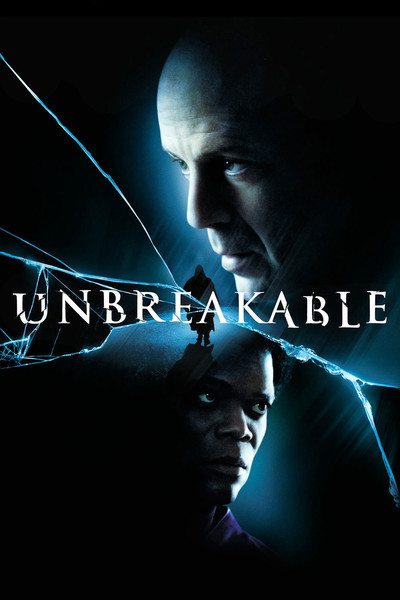
UNBREAKABLE & SPIT FILM SPECIAL + REVIEW + SUMMARY

Earlier I posted on my Facebook account the new trailer of Glass, which will be part 3 of the series about people who think and believe in being a super heroe.

Follow me on FB for more trailer and special plus exclusive Hollywood news.

Tonight let's have a review on part one and two of this movie series, which will create its own universe in the future. 

Unbreakable (2000)


Cast

Bruce Willisas David Dunne
Samuel L. Jacksonas Elijah Price
Robin Wright Pennas Megan Dunne
Spencer Treat Clarkas Jeremy Dunne
Written and Directed by

M. Night Shyamalan

Action, Fantasy, Science Fiction, Suspense, Thriller

Rated PG-13 For Mature Thematic Elements, Including Some Disturbing Violent Content, and For A Crude Sexual Reference

107 minutes


At the center of "Unbreakable" is a simple question: "How many days of your life have you been sick?" David Dunne, a security guard played by Bruce Willis, doesn't know the answer. He is barely speaking to his wife Megan (Robin Wright Penn), but like all men, he figures she remembers his life better than he does. She tells him she can't remember him ever being sick, not even a day. They have this conversation shortly after he has been in a train wreck that killed everybody else on board, but left him without a scratch. Now isn't that strange.

The question originally came to him in an unsigned note. He finds the man who sent it. This is Elijah Price (Samuel L. Jackson), who runs a high-end comic book store with a priceless stock of first editions. Elijah has been sick a lot of days in his life. He even had broken bones when he emerged from the womb. He has spent a long time looking for an unbreakable man, and his logic is plain: "If there is someone like me in the world, shouldn't there be someone at the other end of the spectrum?"
"Unbreakable," the new film by M. Night Shyamalan, is in its own way as quietly intriguing as his "The Sixth Sense." It doesn't involve special effects and stunts, much of it is puzzling and introspective, and most of the action takes place during conversations. If the earlier film seemed mysteriously low-key until an ending that came like an electric jolt, this one is more fascinating along the way, although the ending is not quite satisfactory. In both films, Shyamalan trusts the audience to pay attention, and makes use of Bruce Willis' everyman quality, so we get drawn into the character instead of being distracted by the surface.

The Jackson character is not an everyman. Far from it. He is quietly menacing, formidably intelligent, and uses a facade of sophistication and knowledge to conceal anger that runs deep: He is enraged that his bones break, that his body betrays him, that he was injured so often in grade school that the kids called him "Mr. Glass." Why does he want to find his opposite, an unbreakable man? The question lurks beneath every scene.

This story could have been simplified into a -- well, into the plot of one of Elijah Price's old comic books. Shyamalan does a more interesting thing. He tells it with observant everyday realism; he's like Stephen King, dealing in the supernatural and yet alert to the same human details as mainstream writers. How interesting, for example, that the Robin Wright Penn character is not simply one more bystander wife in a thriller, but a real woman in a marriage that seems to have run out of love. How interesting that when her husband is spared in a crash that kills everyone else, she bravely decides this may be their opportunity to try one last time to save the marriage. How interesting that David Dunne's relationship with his son is so strong, and that the boy is taken along for crucial scenes like the first meeting of David and Elijah.

In "Psycho," Alfred Hitchcock made us think the story was about the Janet Leigh character, and then killed her off a third of the way into the film. No one gets killed early in "Unbreakable," but Shyamalan is skilled at misdirection: He involves us in the private life of the comic book dealer, in the job and marriage problems of the security guard, in stories of wives and mothers. The true subject of the film is well-guarded, although always in plain view, and until the end, we don't know what to hope for or fear. In that way, it's like "The Sixth Sense." 

There is a theory in Hollywood these days that audiences have shorter attention spans and must be distracted by nonstop comic book action. Ironic, that a movie about a student of comic book universes would require attention and patience on the part of the audience. Moviegoers grateful for the slow unfolding of "The Sixth Sense" will like this one, too.

The actors give performances you would expect in serious dramas. Jackson is not afraid to play a man it is hard to like -- a bitter man, whose intelligence only adds irony to anger. Willis, so often the centerpiece of brainless action movies, reminds us again that he can be a subtle actor, as muted and mysterious as actors we expect that sort of thing from -- John Malkovich or William Hurt, for example. If this movie were about nothing else, it would be a full portrait of a man in crisis at work and at home.

I mentioned the ending. I was not quite sold on it. It seems a little arbitrary, as if Shyamalan plucked it out of the air and tried to make it fit. To be sure, there are hints along the way about the direction the story may take, and maybe this movie, like "The Sixth Sense," will play even better the second time -- once you know where it's going. Even if the ending doesn't entirely succeed, it doesn't cheat, and it comes at the end of an uncommonly absorbing movie.

Split (2017)


Cast

James McAvoy as Kevin
Anya Taylor-Joy as Casey
Haley Lu Richardson as Claire
Jessica Sula as Marcia
Betty Buckley as Dr. Fletcher
Kim Director as Hannah
Brad William Henke as Uncle John

Director

M. Night Shyamalan

Writer

M. Night Shyamalan

Cinematographer

Mike Gioulakis

Editor

Luke Franco Ciarrocchi

Composer

West Dylan Thordson

Drama, Horror, Thriller

Rated PG-13 for disturbing thematic content and behavior, violence and some language.
 
116 minutes


Within the process of watching an M. Night Shyamalan film, there exists a parallel and simultaneous process of searching for its inevitable twist. This has been true of every film the writer-director has made since his surprise smash debut, “The Sixth Sense,” nearly two decades ago. We wonder: How will he dazzle us? What clues should we be searching for? Will it actually work this time?

Increasingly, with middling efforts like “The Village” and “Lady in the Water”—and dreary aberrations like “The Last Airbender” and “After Earth,” which bore none of his signature style—the answer to that last question has been: Not really. Which makes his latest, “Split,” such an exciting return to form. A rare, straight-up horror film from Shyamalan, “Split” is a thrilling reminder of what a technical master he can be. All his virtuoso camerawork is on display: his lifelong, loving homage to Alfred Hitchcock, which includes, as always, inserting himself in a cameo. And the twist—that there is no Big Twist—is one of the most refreshing parts of all.

“Split” is more lean and taut in its narrative and pace than we’ve seen from Shyamalan lately. Despite its nearly two-hour running time, it feels like it’s in constant forward motion, even when it flashes backward to provide perspective.

It’s as if there’s a spring in his step, even as he wallows in grunge. And a lot of that has to do with the tour-de-force performance from James McAvoy as a kidnapper named Kevin juggling two-dozen distinct personalities.

From obsessive-compulsive maintenance man Dennis to playful, 9-year-old Hedwig to prim, British Patricia to flamboyant, New York fashionista Barry, McAvoy brings all these characters to life in undeniably hammy yet entertaining ways. There’s a lot of scenery chewing going on here, but it’s a performance that also showcases McAvoy’s great agility and precision. He has to make changes both big and small, sometimes in the same breath, and it’s a hugely engaging spectacle to behold.
His portrayal of this troubled soul is darkly funny but also unexpectedly sad. Kevin is menacing no matter which personality in control, but the underlying childhood trauma that caused him to create these alter egos as a means of defense clearly still haunts him as a grown man. Flashes of vulnerability and fragility reveal themselves in the film’s third act, providing an entirely different kind of disturbing tone.

First, though, there is the abduction, which Shyamalan stages in efficient, gripping fashion. Three high school girls get in a car after a birthday party at the mall: pretty, chatty Claire (Haley Lu Richardson of “The Edge of Seventeen”) and Marcia (Jessica Sula) and shy, quiet Casey (Anya Taylor-Joy), who was invited along out of pity. But they quickly realize the man behind the wheel isn’t Claire’s dad—it’s Kevin, who wastes no time in knocking them out and dragging them back to his makeshift, underground lair.

Repeated visits from Kevin, with his varying voices and personae, gradually make it clear that their kidnapper harbors multiple personalities. Only Casey, who emerges as the trio’s clever leader, has the audacity to engage with him. As she showed in her breakout role in “The Witch” as well as in “Morgan,” Taylor-Joy can be chilling in absolute stillness with her wide, almond eyes—as much as McAvoy is in his showiness. She makes Casey more than your typical horror heroine to root for, particularly with the help of quietly suspenseful flashbacks that indicate how she acquired her survival instincts. Her co-stars aren’t afforded nearly as much characterization or clothing, for that matter.

But we also get a greater understanding of Kevin’s mental state through the daily sessions he (or, rather, a version of him) schedules with his psychologist, Dr. Fletcher (an elegant and soulful Betty Buckley). A leading researcher in the field, she believes having dissociative identity disorder is actually a reflection of the brain’s vast potential rather than a disability. Their conversations, while exquisitely tense, also provide a welcome source of kindness amid the brutality.

And they help us put together the pieces of this puzzle—which is actually a few different puzzles at once. There’s the question of what Kevin wants with these girls. There’s the question of how they’ll escape. But the fundamentally frightening element of this whole scenario is how the various personalities interact with each other—how they manipulate and intimidate each other—and whether there’s an even more fearsome force gaining strength.


Still, it’s exciting to see Shyamalan on such confident footing once more, all these years later. Make sure you stay in your seat until the absolute end to see what other tricks he may have up his sleeve.

HALLOWEEN (2018) - FILM REVIEW

Halloween (2018)


Cast

Jamie Lee Curtis as Laurie Strode
Judy Greer as Karen Strode
Andi Matichak as Allyson Strode
Will Patton as Hawkins
Virginia Gardner as Vicky
Nick Castle as The Shape
Miles Robbins as Dave
Toby Huss as Ray
Jefferson Hall as Martin
Director

David Gordon Green
Writer (characters)

John Carpenter
Debra Hill
Writer

Jeff Fradley
David Gordon Green
Danny McBride
Cinematographer

Michael Simmonds
Composer

Cody Carpenter
John Carpenter
Daniel A. Davies

Horror

Rated R for horror violence and bloody images, language, brief drug use and nudity.
 
109 minutes
 
As much I hate to say this, I’m not sure that David Gordon Green, Danny McBride and the people behind a new sequel to John Carpenter’s “Halloween” really understand what made the first film a masterpiece. Their highly anticipated take on the legend of Michael Myers is admirable in its thematic relation to Carpenter’s vision, but the no-nonsense, tightly-directed aspect of the influential classic just isn’t a part of this one. Carpenter’s movie is so tautly refined that the sometimes incompetent slackness of this one is all the more frustrating. As is the complete lack of atmosphere, another strength of the original. In that first movie, you can hear the crunch of the leaves and smell Fall in the air. This one always feels like a movie, never transporting you or offering the tactile terror of the story of The Shape. Green and McBride are playing with some interesting themes and there’s a female empowerment story of trauma here that’s interesting (but underdeveloped), but do you know the biggest sin of the new “Halloween”? It’s just not scary. And that’s one thing you could never say about the original.

What I like most about the new “Halloween” is that its message could be boiled down to something as simple as “Don’t Fuck Around with Evil.” Don’t try and study it, or understand it, or do a podcast about it, or whatever—just kill it. Laurie Strode (Jamie Lee Curtis) learned this lesson the hard way the night she survived an attack by Michael Myers, who has been incarcerated for the 40 years since (this movie pretends all of the sequels never happened, even number two, and even has a character make fun of the stories about Michael being Laurie’s brother and things like “revenge” and “curses” in a way that comes off as snarky more than clever). Laurie has lived as her own kind of prisoner since that night, completely terrified of the day Michael would come home, basically becoming a doomsday prepper, turning her home into a heavily armed bunker. She also obsessively taught her daughter (Judy Greer) how to fend off the ultimate attacker, so much so that she’s nearly estranged from her.

“Halloween” opens with a pair of podcasters going to meet Michael and Laurie for a piece they’re doing, allowing for a lot of the last paragraph’s “what have they been up to” exposition. Michael has been completely silent for four decades, never saying a word, but the podcasters think it a good idea to bring him his mask on the day of the interview, meaning they (and it) will be nearby when Mike later escapes and beats them to death. As he makes his way back to Haddonfeld on Halloween, a dozen or so victims stand in his way, including Laurie’s granddaughter and some of her teenage friends, some hapless cops, and a few other locals. There’s an excellently staged sequence as Michael’s killing spree starts and Green’s camera stays mostly outside of homes, watching the icon go about his work through windows.

And yet even this moment feels almost too precious. Green makes a number of explicit references to Carpenter’s film with dialogue and even shots, but there’s a difference between referencing something and actually incorporating it into a new vision. The former is just an echo, and that’s often what I felt watching “Halloween”—the echo of the original is loud, but that’s ultimately hollow compared to sequels that truly build on what came before instead of just expressing how much they love it.

Worst of all, Green bungles the ending. I would never spoil it, but you might imagine that an evening massacre that its central characters have been anticipating for four decades has to really stick the landing. At its best, “Halloween” is about a woman dealing with trauma for more than half her life, and only able to exorcise her demon when she faces him again. That sets up a great deal of pressure on the closing scenes, and—other than one nice twist—“Halloween” just doesn’t deliver when it needs to most of all.

I walked into “Halloween” wanting to feel the magic of the original again in some form. Carpenter's film is one of my favorite films of all time. And David Gordon Green and Danny McBride are clearly smart guys, bringing a higher pedigree than nearly any other horror sequel, allowing for optimism. And there are, of course, elements that display Green’s craftsmanship more than, say, Dwight H. Little (director of “Halloween 4: The Return of Michael Myers”). I’ve heard a number of people say that it’s the best “Halloween” sequel, to which one almost has to laugh at the low height of that bar. And shouldn’t we expect more from a project this high profile than “better than H20?” Especially when the answer to that question is "just barely."

This review was filed from the Toronto International Film Festival.


THE NUN (2018) - FILM REVIEW

The Nun (2018)


Cast

Bonnie Aarons as The Nun / Valak
Demián Bichir as Father Burke
Taissa Farmiga as Sister Irene
Charlotte Hope as Sister Victoria
Ingrid Bisu as Sister Oana
Manuela Ciucur as Sister Christian
Jonas Bloquet as Frenchie
Jonny Coyne as Gregoro
Jared Morgan as Marquis
Sandra Teles as Sister Ruth
Boiangiu Alma as Demon Nun
Director

Corin Hardy
Writer (story by)

James Wan
Gary Dauberman
Writer

Gary Dauberman
Cinematographer

Maxime Alexandre
Editor

Michel Aller
Ken Blackwell
Composer

Abel Korzeniowski

Horror, Mystery, Thriller

Rated R for terror, violence, and disturbing/bloody images.

96 minutes
 
 
A little bit of The Nun goes a long way.

With her cheekbones jutting like daggers from her chalky-white skin, her eyes a piercing yellow beneath her habit and her ravenous, bloody fangs, The Nun served as a deeply unsettling image in brief but potent glimpses throughout various films in “The Conjuring” universe. Now, we get an entire film devoted to her: the appropriately titled “The Nun,” which simultaneously serves as an origin story for the entire franchise. And a presence that initially was disturbing grows repetitive and almost predictable over the course of an entire film.

It’s sort of like the Minions. (Hear me out on this.) The Minions were the best part of the “Despicable Me” movies. They provided quick blasts of adorable insanity with their denim overalls and dazed expressions, their gibberish and their general incompetence. But a whole movie about them—again, the appropriately titled “Minions”—grew tedious pretty quickly when it came out on 2015.

I’m not saying that The Nun is literally like an evil version of a Minion, although she does run around in a uniform, wreaking havoc and doing her master’s bidding. But there is a similarity to the shallow nature of these crucial supporting characters that reveals itself when a feature film focuses on them.

But director Corin Hardy’s movie, based on a screenplay by “It” and “Annabelle” writer Gary Dauberman, has no shortage of mood. Set at a remote abbey in 1952 Romania, “The Nun” grabs you with Gothic dread from the get-go with its candlelit stone passageways, creaky sound design and the mesmerizing tones of deep, droning chants. Fog shrouds the overgrown grounds, which are dotted with makeshift wooden crosses. The feeling of foreboding is inescapable throughout. This place is cursed, and no amount of prayer from well-intentioned, young nuns can redeem it. 

But after one of these devout, promising ladies hangs herself from her bedroom window at the film’s dramatic start, the Vatican sends demon hunter Father Burke (Demian Bichir) and Sister Irene (Taissa Farmiga), a novitiate on the verge of taking her final vows, to determine what forces are plaguing this holy site. Young Irene has been plucked for this dangerous assignment because she has a history of experiencing visions; in a clever touch that unifies the series, she’s played by Farmiga, younger sister of Vera Farmiga, who starred as supernatural seer Lorraine Warren in the original “Conjuring” movies. The younger Farmiga has a similar steely presence and a quietly authoritative way about her.

Burke and Irene are joined by local farmhand Maurice (Jonas Bloquet), a flirty French-Canadian who goes by the nickname Frenchie. He serves as their guide, provides necessary comic relief and warns them that they’re about to enter the Dark Ages. But he has no idea just how dark the situation will get.

The Vatican’s emissaries have the Sisyphean task of trying to interview the remaining nuns to determine how such a sad and sinful fate could have befallen one of their own. But they get stuck in one section of the abbey when giant, metal gates shut for the night, or they find that the sisters are in the midst of mandatory silence until sunrise. They’re spinning their wheels, and we feel like we are, too. Through it all, The Nun (Bonnie Aarons) wanders the dark hallways, an elusive yet menacing force. Seeing a glimpse of her habit is good for a jolt here and there, at first. But Hardy goes to that tactic repeatedly, showing us The Nun—or maybe just A Nun—kneeling in prayer from behind or from the side, or sneaking up on someone, hidden by reams of black material. This cheap thrill happens over and over, like clockwork.

Hardy employs some visual acrobatics to liven things up in this cramped and clammy place; a couple of overhead shots are inspired, especially one in which Irene, in her white habit, is surrounded by her fellow nuns dressed in black and kneeling in desperate prayer. But by the end, “The Nun” has become an almost entirely different kind of movie, a puzzly “Da Vinci Code”-light, which sounds redundant, I realize. We eventually get full-frontal Nun—more Nun than you can shake a cross at—but even while she’s all up in our faces, it’s unclear what exactly she wants beyond run-of-the-mill possession.

The “Conjuring” movies—especially James Wan’s original two, and not so much the “Annabelle” prequels—stood apart from so much demon-themed horror with their well-drawn characters, strong performances and powerful emotional underpinning. “The Nun” feels like an empty thrill ride by comparison. Once it stops and you step off, you may still feel a little dizzy, but you’ll have forgotten exactly why.


THE PREDATOR (2018) - FILM REVIEW

The Predator (2018)


Cast

Boyd Holbrook as Quinn McKenna
Trevante Rhodes as Nebraska Williams
Jacob Tremblay as Rory McKenna
Keegan Michael Key
Olivia Munn as Casey Bracket
Thomas Jane
Alfie Allen
Sterling K. Brown
Jake Busey
Yvonne Strahovski as Emily
Director

Shane Black
Writer

Fred Dekker
Shane Black
Director of Photography

Larry Fong

Action, Adventure, Horror, Science Fiction

Rated R
101 minutes


Shane Black’s “The Predator” is a fun, brutal, fighting machine that wastes no time getting down to business—not unlike its title character. It’s not big on wasted dialogue or too many attempts at meta humor, playing both like an homage/throwback film to the action of the ‘80s and something that feels new and fresh. There’s nothing pretentious or whimsical here as we so often see in films that almost parody ‘80s action instead of trying to figure out why these movies have endured in the first place. It’s easy to mimic or mock something. It’s much harder to ask why the first “Predator” captured lightning in a bottle and then try to catch it again. With a fantastic cast and razor-sharp pacing, the fact is that this is what you want from a movie called “The Predator.”
Black wastes no time, actually opening the film on a predator ship hurtling towards Earth. A sniper named Quinn McKenna (Boyd Holbrook) is on a job when he’s practically hit by an escape pod containing one of the legendary creatures. McKenna gets his hands on some of the alien’s gear, sending some of it home and hiding one particularly bad-ass piece, well, somewhere nowhere will find it. Instead of going to his P.O. box, the mail ends up on his doorstep, where his son Rory (Jacob Tremblay) opens the package, finding a predator weapon and mask.

Meanwhile, a science teacher named Casey Bracket (Olivia Munn) is brought in to examine the predator that McKenna incapacitated, pushed around by a smug asshole named Traeger (a fantastic Sterling K. Brown, proving he should play villains more often). While that’s about to go predictably haywire, McKenna is put on a bus of fellow military prisoners, including Nebraska (Trevante Rhodes, who should be an action star if there’s any justice), Coyle (Keegan-Michael Key), Baxley (Thomas Jane), Lynch (Alfie Allen), and Nettles (Augusto Aguilera). Nicknamed “The Loonies,” the gang eventually connects with Casey, and they all try to catch up with the predator before he gets to Rory to retrieve his stuff.

Co-written by another ‘80s icon in Fred Dekker, this is a movie that keenly understands what its audience wants and endeavors to provide that, which is something more action filmmakers could learn from Black. There’s a rhythm and a structure to “The Predator” that’s easy to take for granted but much harder to pull off than people will probably give this film credit for. It’s in the way Black jumps from scene to scene and beat to beat, giving each character just enough dialogue and development for them to register as more than bodies for the predator to hunt but not lingering long enough for viewers to get impatient. Black is assisted greatly by an incredibly charismatic cast, and he knows how to use them to amplify their strengths. Holbrook and Rhodes are the buddy action movie duo you never knew you wanted, Munn holds her own (although her character kind of takes a back seat in the second half), and Jane and Key are fun comic relief.

Casting aside, what really elevates “The Predator” above the disaster that it easily could have been is the way Black and Dekker manage tone. They lean into the old-fashioned aspect of “The Predator” in that they’re clearly trying to recreate the ragtag crew from the first movie to a certain extent, but they also play with a few other staples of ’80s action movies like “the kid who knows more than the adults about aliens” and “the initially-difficult government guys who will eventually need our hero’s help to survive.” And yet “The Predator” never plays like a pure parody. So many '80s-inspired movies look back at that era with something like mockery. You get the sense that Black loves these tropes, and so he never mocks them as much as he tries to figure out why they worked and still work for so many people.

By the time “The Predator” gets to its climax, it has lost a little bit of steam. Some of the final scenes are a bit messy in terms of editing, especially when compared to what came before. I liked some of the earlier set pieces more, as we are getting to know the characters, especially the initial predator breakout and a great scene with…wait for it…predator dogs. Yes, this movie has predator dogs. Dear reader, you probably know if you want to see a movie with predator dogs or not. If you do, I can’t imagine you won’t be happy with this one.

This review was filed from the Toronto International Film Festival.


Copyright © 2017. MOVIETOWN
Blogger Templates