Recent Movies
Showing posts with label Fantasy. Show all posts

Velvet Buzzsaw (2019)

Velvet Buzzsaw (2019)

Cast
  • Jake Gyllenhaal as Morf Vandewalt
  • Rene Russo as Rhodora Haze
  • Toni Collette as Gretchen
  • Zawe Ashton as Josephina
  • Tom Sturridge as Jon Dondon
  • Natalia Dyer as Coco
  • Billy Magnussen as Bryson
  • John Malkovich as Piers
  • Daveed Diggs as Damrish
Director
  • Dan Gilroy
Screenplay
  • Dan Gilroy
Director of Photography
  • Robert Elswit
Editor
  • John Gilroy
Original Music Composer
  • Marco Beltrami
Fantasy, Horror, Mystery, Thriller
Rated R
112 minutes
 
 
Art is dangerous and those who profit from it are risking their lives in Dan Gilroy’s bloody art-world satire “Velvet Buzzsaw.” Gilroy targets all the players who feed the machine of high-priced art—the pretentious artists, the gallery owners, the agents, the clients, and especially the critics—making the case that the more we commodify art that comes from passionate, even dark places, the more we risk suffering as a consequence. And he does so in what could be called a satire-horror hybrid, playfully poking his art world players for the first half and then unleashing actual violence on them in the second. It’s a wildly inconsistent film, sometimes disappointingly clunky and as superficial as the world it’s mocking, but it’s also an ambitious piece of work with unforgettable imagery and an ace ensemble. You know how a painting can look totally different depending on the angle from which you're viewing it? The same thing is going to happen with “Velvet Buzzsaw,” and I think that’s exactly how Dan Gilroy wants it.

Jake Gyllenhaal is in gloriously showy mode as art critic Morf Vandewalt, a writer who can literally make or break an artist’s career with his buzz-generating reviews. He is a kingmaker in a circle of art profiteers that includes agent Rhodora Haze (Rene Russo) and her assistant Josephina (Zawe Ashton). Almost like a slasher movie director giving us snippets of character for the eventual victims arriving to the remote cabin in the woods, Gilroy populates an ensemble with quirky characters like installment technician Bryson (Billy Magnussen), gallery manager Gretchen (Toni Collette), grown-repetitive artist Piers (John Malkovich), hot-young-agent Jon Dondon (Tom Sturridge), hot-young-artist Damrish (Daveed Diggs), and new assistant Coco (Natalia Dyer). It’s a crowded cast of beautiful people about to have their superficial lives destroyed.
It starts when Josephina comes home to find her upstairs neighbor deceased in the hallway. She peeks into his apartment and finds dozens of gorgeous paintings—and the design of the art is truly fantastic. They’re haunting pieces of work and the movie could have collapsed if they were not. Much of “Velvet Buzzsaw” rises or falls on whether or not the art Josephina finds would believably incite the buying frenzy and fandom that it does, so it’s essential that we believably buy that she’s captivated by the art. She learns that her neighbor was a troubled artist, and he was trying to destroy his life's work when he died. She probably should have taken that as an omen. Instead, Josephina unleashes the art into the world, and all of the aforementioned characters (except maybe Coco) want a piece of the inevitable profit. And then people start dying.

“Velvet Buzzsaw” is a unique horror film visually in that it doesn’t employ the typical dark color pattern or low lighting typical in the genre. It is a bright, vividly colored slice of gore, a pop art riff on “Final Destination” with bright red flames, blood, and paint. The design of the film always kept me engaged, impressed by the visual choices from the paintings to the production design to the costumes to the kill scenes. Almost all of the deaths in “Velvet Buzzsaw” involve characters being absorbed by their art, almost as if Gilroy is saying you can’t be an outsider to true art for very long without getting sucked into it. It was shot by the great Robert Elswit (robbed of an Oscar nod for his work on Gilroy’s “Nightcrawler”) and his work elevates the piece overall. There are striking enough visuals throughout “Velvet Buzzsaw,” and a nice streak of black humor threaded through the entire piece, to keep viewers engaged at least superficially.

The problems start when one starts digging below the surface. It feels like “Velvet Buzzsaw” needed another pass on every level. The script feels clunky at times, uncertain of its targets and willing to go off on tangents that the movie really doesn’t need—there’s a scene between Piers and Dondon that does nothing for the film other than to show John Malkovich can drop a free throw. And I kept hoping for it to coalesce into a statement about art that was deeper than “take it seriously.” There are also some weird, choppy edits, and tonal jumps. It’s an ambitious movie, so a difficult one to manage in terms of structure, but this flick lurches and stops sometimes right when you want it to be building up momentum. It sometimes even approaches “failed experiment” status, but a strong acting choice or design element just brings it back from that precipice a few times. One just wishes it never got so close.

As someone who sees hundreds of movies a year, and covers hundreds of hours of television, I value originality, and “Velvet Buzzsaw” is certainly unlike anything else you’re going to see this year on Netflix or any other streaming service. And so maybe I’m more forgiving of it than people who aren’t subjected to so much predictable mundanity would be. Or maybe, after watching the cautionary tale Morf the cynical critic, I’m just scared something will happen to me if I’m too mean.


Aquaman (2018) - Film Review

Aquaman (2018)

Cast
  • Jason Momoa as Arthur Curry / Aquaman
  • Amber Heard as Mera
  • Willem Dafoe as Nuidis Vulko
  • Patrick Wilson as Orm Marius / Ocean Master
  • Dolph Lundgren as King Nereus
  • Yahya Abdul-Mateen II as David Kane / Black Manta
  • Nicole Kidman as Queen Atlanna
  • Temuera Morrison as Thomas Curry
  • Ludi Lin as Murk
  • Graham McTavish as King Atlan
  • Djimon Hounsou as The Fisherman King
  • Natalia Safran as Fisherman Queen
  • Michael Beach as Jesse Kane
  • Randall Park as Dr. Stephen Shin
Writer
  • Will Beall
  • David Leslie Johnson-McGoldrick
  • Will Beall
Writer (Aquaman created by)
  • Mort Weisinger
  • Paul Norris
Writer (story by)
  • Geoff Johns
  • James Wan
  • Will Beall
Cinematographer
  • Don Burgess
Editor
  • Kirk M. Morri
Composer
  • Rupert Gregson-Williams
Action, Adventure, Fantasy, Romance, Science Fiction
Rated PG-13 for sequences of sci-fi violence and action, and for some language.
 
144 minutes
 
 
Whenever anybody asks me what “Aquaman” is like, I mention an early scene where opposing Atlantean forces square off and debate the kingdom’s future. One side rides armored seahorses that whinny. The other rides armored sharks that roar. "Aquaman" is as concerned with scientific accuracy as “SpongeBob Squarepants.” And that’s one of many reasons why I like it. 

It takes skill to be as ridiculous as this movie about a half-human, half-Atlantean prince who’s known on land as Arthur Curry (Jason Momoa) without seeming to condescend to the material. Directed by James Wan (“Saw,” “The Conjuring”), it’s part of a thriving subcategory of superhero movies, also represented by “Spider-Man: Homecoming,” “Thor: Ragnarok,” “Venom” and both “Ant-Man” pictures—sweet, goofy, at times psychedelically weird films that mostly reject the sour gloom that gets mistaken for maturity. But that’s not to say that those movies aren’t serious in their own way. “Aquaman,” in particular, feels simultaneously like a spoof and an operatic melodrama. Any film that can combine those modes is a force to be reckoned with. 

Aquaman made his DC Expanded Universe debut in “Batman vs. Superman” and was part of the ensemble in “Justice League,” but this is the first movie that’s put him front-and-center. The results are enjoyable enough that you may wish Warner Bros. had done it sooner. While it’s not billed as such, this is an origin story, positioning Arthur as a reluctant hero. As concieved by screenwriters David Leslie Johnson-McGoldrick and Will Beall, adapting Mort Weisinger and Paul Norris’ source, Arthur is a mixed-species character who feels alienated from both of the civilizations he embodies. He's the offspring of union between a lighthouse keeper named Tom Curry (Temura Morrison) and a stranded Atlantean named Atlanna (Nicole Kidman) whom Tom nursed back to health. Atlanna then returned to the sea and was put to death for the sin of birthing a half-human child. 

Arthur has long hair and tattoos, a knack for wisecracks and a fondness for beer, and just wants to be left alone. He rejects allegiance to land or sea, but eventually succumbs to prodding by the idealistic Atlantean Mera (Amber Heard) and becomes a uniter at a time when radical forces, led by Arthur’s treacherous half-brother Orm (Patrick Wilson), want to destroy the land-dwellers as revenge for polluting and militarizing the ocean. Arthur is one of those Joseph Campbell-certified, Fated-for-Great-Things heroes, thus the mythically resonant first name. He even has the equivalent of the moment where the future King Arthur pulls the sword from the stone.

The movie is overlong and a bit repetitious (as big-budget superhero films tend to be), and its second half is more distinctive than its first because it lets its freak flag fly. But Wan and company mostly do a brilliant job of shaking the algae from cliches. Rather than get bogged down in plot particulars, they concentrate on characterization and performances, production design, costumes, and visual details. 

Every frame has marvelous details that you might not catch on first viewing. The Atlanteans use their mouths to speak, but there are no visible bubbles, only vocal distortion that suggests "bubbly-ness." When the characters aren’t swimming at dolphin speeds, they square off against each other as if they’re standing on a sidewalk on land, bobbing ever-so-slightly. The water dwellers have lighting that's supplied by luminous deep-sea creatures and high technology that’s inspired by aquatic animals and plants. Some of the battle armor features oversized crab and lobster claws. In one scene, Mera wears a dress with a collar made of glowing jellyfish and a multicolored seagrass skirt. In an arena sequence, we hear taiko drumming on the soundtrack, and the camera moves to reveal a lone percussionist: a giant octopus. 

The fight sequences use high-speed, 360-degree camerawork to create surprise and delight, rather than to add superfluous hype. We’re constantly surprised by where movements start and end, and there are multiple slapstick jokes woven into each encounter. "Aquaman" embraces the childlike absurdity of armored Atlantean troopers coming up onto the land and martial arts-fighting their enemies in broad daylight, presenting the mayhem as plainly as a kung fu showdown in a schlock fantasy like “Infra-man” or TV’s “Mighty Morphin Power Rangers.” Rather than cross-cut between multiple lines of action, the camera sometimes swims or flies from one location to another and back again—most spectacularly in a chase-and-fight sequence set in a Sicilian seaside town, where combatants smash through the walls of cliffside homes and scramble across tiled rooftops. 

Momoa anchors the film, imbuing the big guy with surly charm, like one of those early Marlon Brando characters who was a jerk most of the time, but so magnetic and wounded that you couldn’t help but care about him. The rest of the cast is just as committed, notably Kidman as Atlanna, who carries on as if she’s playing the lead in an ancient Greek tragedy; Yahya Abdul-Mateen II as David Kane, aka Black Manta, a pirate who swears revenge on the hero; and Willem Dafoe as Atlantis’ counselor Vulko, who advises caution and reason to no avail, and who’s like a second (aquatic) father to Arthur. 

The most remarkable aspect, though, is the way "Aquaman" pushes against the idea that every problem can be solved by violence. There are plenty of bruising fights on land and sea, plus laser shootouts and aquatic infantry clashes, but some of the most important showdowns are resolved peacefully, through conversation, negotiation, and forgiveness. Men as well as women cry in this movie, and the sight is treated not as a shameful loss of dignity, but as the normal byproduct of pain or joy. For all its wild spectacle and cartoon cleverness, this is a quietly subversive movie, and an evolutionary step forward for the genre. 


Mary Poppins Returns (2018) - Film Review

Mary Poppins Returns (2018)

Cast
  • Emily Blunt as Mary Poppins
  • Lin-Manuel Miranda as Jack
  • Ben Whishaw as Michael Banks
  • Emily Mortimer as Jane Banks
  • Pixie Davies as Anabel Banks
  • Nathanael Saleh as John Banks
  • Joel Dawson as Georgie Banks
  • Julie Walters as Ellen
  • Meryl Streep as Topsy
  • Colin Firth as William Weatherall Wilkins
  • Dick Van Dyke as Mr. Dawes Jr.
  • Angela Lansbury as Balloon Lady
Director
  • Rob Marshall
Writer (based upon the "Mary Poppins" stories by)
  • P.L. Travers
Writer (screen story by)
  • David Magee
  • Rob Marshall
  • John DeLuca
Cinematographer
  • Dion Beebe
Editor
  • Wyatt Smith
Composer
  • Marc Shaiman
Family, Fantasy, Music
Rated PG for some mild thematic elements and brief action.
131 minutes
 
 
I don’t envy the filmmaker remaking or creating a sequel to a beloved classic children’s story. Yet numerous directors and stars are lining up for this latest craze, and especially the people over at Disney. Starting with “Alice in Wonderland,” the studio has been raiding its vaults to tap into its audience’s entrenched nostalgia, offering familiar characters and storylines in a spate of live-action remakes (“Cinderella” and “Beauty and the Beast”), sequels (“Christopher Robin”) and spinoffs (“Maleficent”) that have been met with mixed reactions.
The latest movie to join the revisited ranks is Rob Marshall’s sequel to one of the most recognized musicals in the Disney canon, “Mary Poppins.” The bar for this project is pretty high, since Marshall has to both entice newcomers and win over ardent fans with a loyalty to the Sherman Brothers’ catchy songs, memorable performances from Julie Andrews and Dick Van Dyke and a heartwarming story of how one stern-faced nanny reunites a family. 

Unfortunately, “Mary Poppins Returns” falls quite short of being practically perfect in every way. The cast puts on a good show, but very little can be done to salvage the forgettable numbers by Marc Shaiman and Scott Wittman and dance routines that already look dated. A handful of colorfully charming scenes liven up the movie’s dull events, but its copycat story arc isn’t strong enough to stand apart from the original. 

Back in the magical world of Mary Poppins’ England, things are bleak. A post-war fog has settled in 1930’s London, threatening the Banks’ family home unless they can find the MacGuffin—sorry, I meant proof that the dearly departed old man Banks left behind enough shares in company stock to cover the cost of the mortgage and save their house from foreclosure. The now grown Banks children Michael (Ben Whishaw) and Jane (Emily Mortimer) look through the attic, desks and shelves, digging up old childhood relics like their broken kite with their mother’s “Votes for Women” sash, but no form to save their home. Michael’s oily boss (Colin Firth) at his dad’s old bank extends the family’s deadline to come up with the receipt or they will finally lose the home. His three children—Anabel (Pixie Davies), John (Nathanael Saleh) and Georgie (Joel Dawson)—try to help or cheer up Michael since the family is still reeling from the death of their mother that year. Unfortunately, there’s only so much children can do in these grown-up matters.

Just as the Banks family is once again in chaos, who should arrive but the sharp and resourceful Mary Poppins (Emily Blunt)? She invites herself in, much like she does in the original, and brightens the children's day while also hiding their adventures from their beleaguered dad. Her Bert-like friend, Jack (Lin-Manuel Miranda), is part of an army of lamplighters called leeries who have seemingly taken the place of chimney sweepers in this economy. This time, the charismatic city worker doesn’t have a fondness for Mary (not in that way, it seems) but for the spirited activist in the family, Jane. Jack sometimes joins Mary and the three Banks children on a few tangential adventures before the family’s deadline for their home arrives and bad news is imminent.

The movie is a bit of a mixed bag from the get-go, with a wide-eyed Miranda singing a tune that’s not quite in his range and with an accent that doesn’t fully stick. However, he has enough energy to power through numbers that better suit his strengths. Blunt riffs on Mary Poppins by giving her some extra pep, a fresher wardrobe and an all-knowing sly smile that Michael and Jane always seem to miss. She’s delightful to watch, and her version of Poppins seems to take pleasure in throwing the children into magical situations.
Blunt and Miranda share the highlight of “Mary Poppins Returns,” a set of animated musical numbers with talking animals reminiscent of the “Jolly Holliday” sequence in the original, “The Royal Doulton Music Hall” and “A Cover is Not a Book.” Along with the three Banks children, the group travels into an animated world set on the side of a ceramic vase the kids accidentally chipped. Everyone’s costumes look more like drawings, and the movie takes on bright, bold colors missing from live-action London. The sequence feels at once singular yet clearly an homage to the original, and it’s enchanting to see it work—until it doesn’t. 

Sticking too close to the footsteps of the original has its own pitfalls, as evidenced by the “Trip a Little Light Fantastic” number. On their way home from a disappointing trip to the bank, Mary and the three children find themselves lost and in need of help from Jack and his streetlighting friends. They assemble for what’s supposed to be a rousing number in the spirit of “Step in Time” but ultimately falls flat. Marshall, who also co-choreographed routines with Joey Pizzi, John DeLuca, Tara Nicole Hughes and Marlon Pelayo, layers in too much for spectacle and ends up with a Baz Luhrmann-size hodgepodge of contemporary dance, parkour and BMX bike tricks that feels like it was choreographed in the last decade. The scene's steps reference everything from “An American in Paris” to “Silk Stockings” to the “Step Up” movies, but it is so messily shot that our characters get lost in the shuffle.

For someone who learned every word to "Supercalifragilisticexpialidocious" thanks to old Disney sing-a-long tapes, perhaps any return of Mary Poppins would never measure up to the original. If anything, watching “Mary Poppins Returns” works best if the 1964 movie is a distant memory or something you just never got around to. There’s almost a parallel equivalent in the new movie for everything in the original, which makes me wonder, why not just stick with the original? For instance, the original had a character called Uncle Albert (Ed Wynn) for a one-off number, “I Love to Laugh.” The new movie features a character named Cousin Topsy (Meryl Streep) for a lukewarm number among many props called “Turning Turtle.” Not quite the catchiest title, but then again, none of the songs take off on their own. Although “Mary Poppins Returns” plays with a fan’s nostalgia with a few Easter eggs and cameos from Van Dyke and Angela Lansbury, there’s a feeling that something is missing beyond an appearance from Andrews. “Returns” is neither really new or familiar, but an odd knockoff that will work for some audiences and leave others craving a rewatch of an old favorite.


THE HOUSE WITH A CLOCK IN ITS WALLS (2018) - FILM REVIEW

The House with a Clock in Its Walls (2018)

PG | | Comedy, Family, Fantasy | 21 September 2018 (USA) 


Director:

Eli Roth

Writers:

Eric Kripke (screenplay by), John Bellairs (based on the novel by)

Stars:

Cate Blanchett, Jack Black, Lorenza Izzo
 
Rated PG for thematic elements including sorcery, some action, scary images, rude humor and language
 
104 mins


  Lewis Barnavelt, after losing his parents, is sent to Michigan to live with his uncle Jonathan. He discovers his uncle is a warlock, and enters a world of magic and sorcery. But this power is not limited to good people: Lewis learns of Isaac Izard, an evil wizard who wanted to cause the Apocalypse so that he could see what happened afterwards. To do this, he constructed a magical clock with black magic, as long as it exists it will keep ticking, counting down to doomsday. He died before he could finish the clock, but he hid the clock in his house, where Uncle Jonathan now lives. Now Lewis and Jonathan must find the clock before it's too late, and before Isaac's wife, Selena, gets to it.

Jack Black and Cate Blanchett star in Eli Roth’s first film for kids, based on the book by John Bellairs. 

Eli Roth shows himself unafraid of chronic neck pain with The House with a Clock in Its Walls, pivoting from March’s tepidly received Death Wish remake to an Amblin film about an orphan adopted by his warlock uncle and inducted into an exciting new world of magic. Jack Black and Cate Blanchett topline what’s clearly intended to be a franchise starter, with Daddy’s Home tyke Owen Vaccaro as Lewis Barnavelt, the star of a series that started with John Bellairs’ 1973 book, on which this handsome exercise in nostalgia is based.

A throwback to studio fare like Hocus Pocus or Casper, it’s anybody’s guess if Universal can entice parents to theaters when it opens Friday. But as a family film in that vein it largely succeeds, buoyed by Black’s typical exuberance, Blanchett’s typical slyness and a richly evocative rendering of a Rockwellian suburb sprinkled with goofer dust. Less interesting, as is the way with many audience-avatar YA protagonists (sorry, Harry), is the main character, and Vaccaro’s rather hyper-articulated performance doesn’t help.

Kitted out by Marlene Stewart in a tweed jacket, bowtie and aviator goggles, Lewis (Vaccaro) arrives in the fictional New Zebedee, Michigan, in 1955, to meet his uncle Jonathan (Black), who has assumed custody of the boy after the death of his parents in a car crash. Sporting a boxed beard and black kimono, Black leans into his regular persona, period be damned, begrudgingly telling a matronly neighbor (a memorable Colleen Camp) he’ll keep the noise down after midnight, even though “them’s me best jamming hours.” He’s a dream guardian, serving choc-chip cookies for dinner and insisting there’s no such thing as bedtime.  

Jonathan’s next-door neighbor and best friend, Florence Zimmerman (Blanchett), is introduced stepping out of a grandfather clock that seems to connect their two homes. The house itself could be a replica of Stephen King’s, and its velour interior, designed by Jon Hutman and dressed by Ellen Brill, reps the film’s most distinctive ingredient, a mahogany-gold wonderland of seemingly limitless dimensions. It’s also the source of nightly tick-tocking, though Florence can’t find anything in the crawlspace. Wearing a pencil skirt and grey bun — Jonathan describes her, affectionately, as looking like a Q-tip — Zimmerman is an emigree from Paris who came to America after the war, in which her husband and child were killed. Blink and you’ll miss the numerical tattoo on her arm, visible briefly in one scene.

That loss makes her protective of Lewis, a precocious lad who carries dictionaries in his suitcase and uses words like “pulchritudinous.” He’s naturally shunned at school. The only classmate to show him any kindness is Tarby (Mid90s star Sunny Suljic), a cool kid dressed like a greaser, who’s shocked to learn that Lewis lives in what the neighborhood kids refer to as “the slaughterhouse.” Convinced that his uncle intends to do him harm, Lewis attempts to flee, forcing Jonathan to reveal his true magical self — and the boy’s alarm quickly transforms into the excitement of a budding pupil. Cue a montage in which editor Fred Raskin fades from textbook-skimming in the library to the boy out in the garden, demonstrating his new-found knowledge in front of the house pet, a topiary griffin with unpredictable bowel movements.

That sequence is set to one of a handful of period tunes that complement Nathan Barr’s fluting score, and the filmmakers have fun indulging in the trappings of the era, from Jonathan’s rusted-out Morris Minor to the Captain Midnight serials that Lewis is obsessed with, one of which the director even cameos in. Desaturated flashback sequences reveal that the house (and the clock that turns out to be not exactly within its walls) is ground zero for a nefarious plot set in motion by its former owner: Jonathan’s old stage partner Isaac Izard (Kyle MacLachlan), whose wartime experience has left him with a seething hatred for human beings. Their reunion is shot like a silent movie, and Black amusingly — and unsurprisingly — nails the bigness of the gestures.

The period of Hollywood filmmaking that Roth is most keenly paying homage to here, though, is not the 20s or even the 50s but the 80s, as much about tipping the hat to Amblin classics like Back to the Future as it is a pro-forma paean to embracing one’s weirdness. And, especially, to the work of the man whose company logo is the first thing that appears onscreen. The House With a Clock in Its Walls is most of all a child’s-eye view of a fractured family and its eventual reconstitution, in which a Holocaust survivor thwarts a plan to exterminate not just a race but humanity itself. 

It’s also the closest we’ll likely get to seeing Blanchett as an action heroine outside the Marvel universe, pole-vaulting through a transom window and executing a perfect handstand escape from an attack of sharp-fanged jack-o-lanterns. The scenes she shares with Black — “I’d give you an ugly look but you’ve already got one,” she tells him — approximate a kind of screwball, but one that’s romance-free and largely frictionless (their single confrontation, in which Florence upbraids Jonathan for shirking his parental responsibilities, seems to have flown in from a different movie).

But it’s an enjoyably unlikely pairing nonetheless, and they get the best of Eric Kripke’s literate script, which fizzes with the sheer pleasure of the words themselves.


UNBREAKABLE & SPIT FILM SPECIAL + REVIEW + SUMMARY

Earlier I posted on my Facebook account the new trailer of Glass, which will be part 3 of the series about people who think and believe in being a super heroe.

Follow me on FB for more trailer and special plus exclusive Hollywood news.

Tonight let's have a review on part one and two of this movie series, which will create its own universe in the future. 

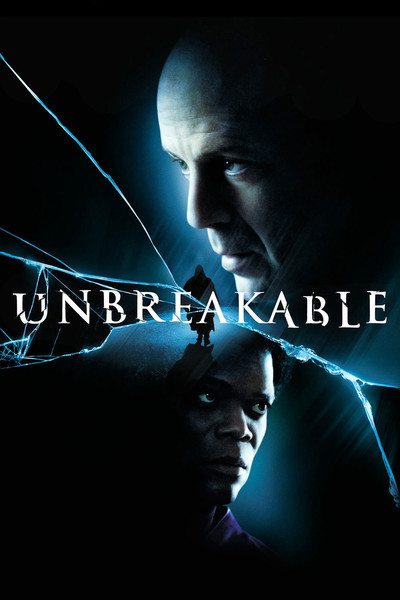
Unbreakable (2000)


Cast

Bruce Willisas David Dunne
Samuel L. Jacksonas Elijah Price
Robin Wright Pennas Megan Dunne
Spencer Treat Clarkas Jeremy Dunne
Written and Directed by

M. Night Shyamalan

Action, Fantasy, Science Fiction, Suspense, Thriller

Rated PG-13 For Mature Thematic Elements, Including Some Disturbing Violent Content, and For A Crude Sexual Reference

107 minutes


At the center of "Unbreakable" is a simple question: "How many days of your life have you been sick?" David Dunne, a security guard played by Bruce Willis, doesn't know the answer. He is barely speaking to his wife Megan (Robin Wright Penn), but like all men, he figures she remembers his life better than he does. She tells him she can't remember him ever being sick, not even a day. They have this conversation shortly after he has been in a train wreck that killed everybody else on board, but left him without a scratch. Now isn't that strange.

The question originally came to him in an unsigned note. He finds the man who sent it. This is Elijah Price (Samuel L. Jackson), who runs a high-end comic book store with a priceless stock of first editions. Elijah has been sick a lot of days in his life. He even had broken bones when he emerged from the womb. He has spent a long time looking for an unbreakable man, and his logic is plain: "If there is someone like me in the world, shouldn't there be someone at the other end of the spectrum?"
"Unbreakable," the new film by M. Night Shyamalan, is in its own way as quietly intriguing as his "The Sixth Sense." It doesn't involve special effects and stunts, much of it is puzzling and introspective, and most of the action takes place during conversations. If the earlier film seemed mysteriously low-key until an ending that came like an electric jolt, this one is more fascinating along the way, although the ending is not quite satisfactory. In both films, Shyamalan trusts the audience to pay attention, and makes use of Bruce Willis' everyman quality, so we get drawn into the character instead of being distracted by the surface.

The Jackson character is not an everyman. Far from it. He is quietly menacing, formidably intelligent, and uses a facade of sophistication and knowledge to conceal anger that runs deep: He is enraged that his bones break, that his body betrays him, that he was injured so often in grade school that the kids called him "Mr. Glass." Why does he want to find his opposite, an unbreakable man? The question lurks beneath every scene.

This story could have been simplified into a -- well, into the plot of one of Elijah Price's old comic books. Shyamalan does a more interesting thing. He tells it with observant everyday realism; he's like Stephen King, dealing in the supernatural and yet alert to the same human details as mainstream writers. How interesting, for example, that the Robin Wright Penn character is not simply one more bystander wife in a thriller, but a real woman in a marriage that seems to have run out of love. How interesting that when her husband is spared in a crash that kills everyone else, she bravely decides this may be their opportunity to try one last time to save the marriage. How interesting that David Dunne's relationship with his son is so strong, and that the boy is taken along for crucial scenes like the first meeting of David and Elijah.

In "Psycho," Alfred Hitchcock made us think the story was about the Janet Leigh character, and then killed her off a third of the way into the film. No one gets killed early in "Unbreakable," but Shyamalan is skilled at misdirection: He involves us in the private life of the comic book dealer, in the job and marriage problems of the security guard, in stories of wives and mothers. The true subject of the film is well-guarded, although always in plain view, and until the end, we don't know what to hope for or fear. In that way, it's like "The Sixth Sense." 

There is a theory in Hollywood these days that audiences have shorter attention spans and must be distracted by nonstop comic book action. Ironic, that a movie about a student of comic book universes would require attention and patience on the part of the audience. Moviegoers grateful for the slow unfolding of "The Sixth Sense" will like this one, too.

The actors give performances you would expect in serious dramas. Jackson is not afraid to play a man it is hard to like -- a bitter man, whose intelligence only adds irony to anger. Willis, so often the centerpiece of brainless action movies, reminds us again that he can be a subtle actor, as muted and mysterious as actors we expect that sort of thing from -- John Malkovich or William Hurt, for example. If this movie were about nothing else, it would be a full portrait of a man in crisis at work and at home.

I mentioned the ending. I was not quite sold on it. It seems a little arbitrary, as if Shyamalan plucked it out of the air and tried to make it fit. To be sure, there are hints along the way about the direction the story may take, and maybe this movie, like "The Sixth Sense," will play even better the second time -- once you know where it's going. Even if the ending doesn't entirely succeed, it doesn't cheat, and it comes at the end of an uncommonly absorbing movie.

Split (2017)


Cast

James McAvoy as Kevin
Anya Taylor-Joy as Casey
Haley Lu Richardson as Claire
Jessica Sula as Marcia
Betty Buckley as Dr. Fletcher
Kim Director as Hannah
Brad William Henke as Uncle John

Director

M. Night Shyamalan

Writer

M. Night Shyamalan

Cinematographer

Mike Gioulakis

Editor

Luke Franco Ciarrocchi

Composer

West Dylan Thordson

Drama, Horror, Thriller

Rated PG-13 for disturbing thematic content and behavior, violence and some language.
 
116 minutes


Within the process of watching an M. Night Shyamalan film, there exists a parallel and simultaneous process of searching for its inevitable twist. This has been true of every film the writer-director has made since his surprise smash debut, “The Sixth Sense,” nearly two decades ago. We wonder: How will he dazzle us? What clues should we be searching for? Will it actually work this time?

Increasingly, with middling efforts like “The Village” and “Lady in the Water”—and dreary aberrations like “The Last Airbender” and “After Earth,” which bore none of his signature style—the answer to that last question has been: Not really. Which makes his latest, “Split,” such an exciting return to form. A rare, straight-up horror film from Shyamalan, “Split” is a thrilling reminder of what a technical master he can be. All his virtuoso camerawork is on display: his lifelong, loving homage to Alfred Hitchcock, which includes, as always, inserting himself in a cameo. And the twist—that there is no Big Twist—is one of the most refreshing parts of all.

“Split” is more lean and taut in its narrative and pace than we’ve seen from Shyamalan lately. Despite its nearly two-hour running time, it feels like it’s in constant forward motion, even when it flashes backward to provide perspective.

It’s as if there’s a spring in his step, even as he wallows in grunge. And a lot of that has to do with the tour-de-force performance from James McAvoy as a kidnapper named Kevin juggling two-dozen distinct personalities.

From obsessive-compulsive maintenance man Dennis to playful, 9-year-old Hedwig to prim, British Patricia to flamboyant, New York fashionista Barry, McAvoy brings all these characters to life in undeniably hammy yet entertaining ways. There’s a lot of scenery chewing going on here, but it’s a performance that also showcases McAvoy’s great agility and precision. He has to make changes both big and small, sometimes in the same breath, and it’s a hugely engaging spectacle to behold.
His portrayal of this troubled soul is darkly funny but also unexpectedly sad. Kevin is menacing no matter which personality in control, but the underlying childhood trauma that caused him to create these alter egos as a means of defense clearly still haunts him as a grown man. Flashes of vulnerability and fragility reveal themselves in the film’s third act, providing an entirely different kind of disturbing tone.

First, though, there is the abduction, which Shyamalan stages in efficient, gripping fashion. Three high school girls get in a car after a birthday party at the mall: pretty, chatty Claire (Haley Lu Richardson of “The Edge of Seventeen”) and Marcia (Jessica Sula) and shy, quiet Casey (Anya Taylor-Joy), who was invited along out of pity. But they quickly realize the man behind the wheel isn’t Claire’s dad—it’s Kevin, who wastes no time in knocking them out and dragging them back to his makeshift, underground lair.

Repeated visits from Kevin, with his varying voices and personae, gradually make it clear that their kidnapper harbors multiple personalities. Only Casey, who emerges as the trio’s clever leader, has the audacity to engage with him. As she showed in her breakout role in “The Witch” as well as in “Morgan,” Taylor-Joy can be chilling in absolute stillness with her wide, almond eyes—as much as McAvoy is in his showiness. She makes Casey more than your typical horror heroine to root for, particularly with the help of quietly suspenseful flashbacks that indicate how she acquired her survival instincts. Her co-stars aren’t afforded nearly as much characterization or clothing, for that matter.

But we also get a greater understanding of Kevin’s mental state through the daily sessions he (or, rather, a version of him) schedules with his psychologist, Dr. Fletcher (an elegant and soulful Betty Buckley). A leading researcher in the field, she believes having dissociative identity disorder is actually a reflection of the brain’s vast potential rather than a disability. Their conversations, while exquisitely tense, also provide a welcome source of kindness amid the brutality.

And they help us put together the pieces of this puzzle—which is actually a few different puzzles at once. There’s the question of what Kevin wants with these girls. There’s the question of how they’ll escape. But the fundamentally frightening element of this whole scenario is how the various personalities interact with each other—how they manipulate and intimidate each other—and whether there’s an even more fearsome force gaining strength.


Still, it’s exciting to see Shyamalan on such confident footing once more, all these years later. Make sure you stay in your seat until the absolute end to see what other tricks he may have up his sleeve.

DUMBO Trailer (2019)

Dumbo (2019)


Plot unknown.

Director:

Writer:

(screenplay)

Stars:


Holt was once a circus star, but he went off to war and when he returned it had terribly altered him. Circus owner Max Medici (Danny DeVito) hires him to take care of Dumbo, a newborn elephant whose oversized ears make him the laughing stock of the struggling circus troupe. But when Holt's children discover that Dumbo can fly, silver-tongued entrepreneur V.A. Vandevere (Michael Keaton), and aerial artist Colette Marchant (Eva Green) swoop in to make the little elephant a star.


MORTAL ENGINES Trailer 2 (2018)

Mortal Engines (2018)


Many years after the "Sixty Minute War," cities survive a now desolate Earth by moving around on giant wheels attacking and devouring smaller towns to replenish their resources.

Director:

Writers:

(screenplay by), (screenplay by) | 2 more credits »

Stars:


Set in a world many thousands of years in the future. Earth’s cities now roam the globe on huge wheels, devouring each other in a struggle for ever diminishing resources. On one of these massive Traction Cities, Tom Natsworthy has an unexpected encounter with a mysterious young woman from the Outlands who will change the course of his life forever. Mortal Engines is the new science fiction movie by Christian Rivers, starring Robert Sheehan, Hera Hilmar and Ronan Raftery.

DISAPPOINTING - SOLO: A STAR WARS STORY (2018) - FILM REVIEW

As unnecessary prequels go, "Solo: A Star Wars Story" isn't bad. It's not great, either, though—and despite spirited performances, knockabout humor, and a few surprising or rousing bits, there's something a bit too programmed about the whole thing. It has certain marks to hit, and it makes absolutely sure you know that it's hitting them. Everything that you expect to see visualized in "Solo," based on your experience with previously stated "Star Wars" mythology, gets served up on a silver platter, from young Han Solo's first meeting with Chewbacca to Han winning the Millennium Falcon in a card game from its original owner, Lando Calrissian, and making the Kessel Run in less than 12 parsecs (that parsecs are a unit of distance, not time, is properly explained at last), to the fact that Wookiees hate to lose at three-dimensional chess and are strong enough to rip people's arms from their sockets. We also get to see what some of our favorites were like when they were younger (Donald Glover's Lando walks off with the movie). It's fan service of a high order. 

Solo: A Star Wars Story (2018)

PG-13 | | Action, Adventure, Fantasy | 25 May 2018 (USA)


Director:

Stars:


Whether you consider that a bonus or plus will depend on what you want from a "Star Wars" movie. In some ways, this movie is the antidote to the sort of "Star Wars" movie that viewers who despised the prankishly irreverent and oddly introspective "The Last Jedi" seem to have wanted: one where the payoffs to setups are italicized so that nobody can miss them, artistic license is subordinated to brand management, and every reference, no matter how small, that was so lovingly memorized by devotees of the franchise is placed under a spotlight for the audience's recognition and self-congratulation. 

It's checklist mythology, but thankfully served up with enough panache to make the trip engaging. There are also quite a few scenes that fill out the "Star Wars" universe in ways that only tangentially have to do with Han Solo, Chewbacca, and other established characters (I'd rather not say which ones, because a couple of them are genuinely delightful). These tend to be the most engrossing sections of "Solo" because they treat your eye to vistas that you probably haven't encountered before, unless you're familiar with the older cultural sources that the filmmakers are raiding for inspiration—and even then, director Ron Howard (replacing Phil Lord and Christopher Miller) freshens them up and makes them feel lived-in. 

We meet young Han (Alden Ehrenreich) and his girlfriend and partner-in-crime Qi'ra (Emilia Clarke) on a mining planet that's completely covered by industrial structures and runs on forced labor, some of it involving children; the charcoal-smudged visuals, narrow streets and alleys, and hardbitten street urchins with English accents add up to high-tech Charles Dickens. When Han signs up for the Imperial Navy but ends up serving in the infantry in a pointless campaign where he meets his future smuggling partners Val (Thandie Newton) and Tobias (Woody Harrelson), the images of suicidal cavalry charges and muddy trenches are straight out of a World War I picture like "All Quiet on the Western Front" or "Paths of Glory." A heist of a fuel train—more like a mountain monorail that seems to slither around the peaks like a metal snake—evokes an old Western where cowboys jump from horses onto the sides of locomotives. And so on.
The character of Han Solo was introduced back in 1977 (pre-George Lucas digital revisions) gouging an old man and a farm boy for as much money as he could get, then pre-emptively murdering a a bounty hunter in plain view of bar patrons. Nothing in this film is as daring as those choices—as played by Harrison Ford, Solo was a borderline antihero and the only major character in the original trilogy who had a dangerous edge, albeit one that Lucas and company immediately began sanding down—and as young Solo, Alden Ehrenriech doesn't convince as a cocky young pilot and smuggler who's been prematurely soured by a hard-knock life. 

Or at least he doesn't convince as this particular smuggler. He's likable and does "confident" and "smug" very well, but if this film was determined to cast an actor who didn't look or sound all that much like Harrison Ford (which is a totally legitimate and defensible thing to do, don't get me wrong; a straight-up imitation would've been awful) it might've been a good idea to cast somebody who at least seemed as if he could eventually turn into the Han that we met in "A New Hope," as Lucas did when he hired Ewan McGregor to play young Obi-Wan Kenobi in the prequel trilogy. McGregor miraculously managed to maintain physical and vocal continuity with the role's original inhabitant, Alec Guinness, while still giving his own performance. Ehrenreich achieves that second thing here, but not so dazzlingly that you forget to obsess over the first. 

Some mysterious harmony ought to occur in a movie that constantly and very obviously tries to connect with its brand even as its lead actor does his own thing (mostly; the flirtatious grin is pleasingly Fordian), but the two impulses seem at odds with each other here. Was Howard expending so much effort bringing weight, maturity and sincerity to a movie that was at risk of turning goofy and glib under Lord and Miller that he didn't have the mental bandwidth left to focus on the actors? Some of the performers make a strong impression (particularly the alert and reactive Glover, who McGregors the part in a big way, and Phoebe Waller-bridge as the voice of Lando's copilot, L3-37, a robot fighting to abolish machine slavery). 

But others seem a bit lost at times. Clarke's character has many layers, but none of them quite seem connected to each other, and she comes across as much too nice to do some of the things she ends up doing. Newton, one of the stars of "Westworld," doesn't get much screen time, and Harrelson, one of those incorrigible kleptomaniac scene stealers, doesn't give us anything that we couldn't have gotten from any other fiftysomething character actor who can twirl a gun, crack wise, and smirk. Paul Bettany's crime boss Dryden Vos might be the first major player in a "Star Wars" movie to make no impression at all, but the actor was probably doing the best he could under the circumstances; he replaced Michael Kenneth Williams, who was not available for reshoots and was originally cast as a CGI character, so he was probably playing somebody who had to be rewritten on the fly without damaging the surrounding narrative architecture. (A documentary about this film's production troubles would almost certainly be more fascinating than the film itself.) Some of the unthinking racism that damaged “The Phantom Menace” returns here as well—you’ll know it when you see it—and the longer the film goes on,?the clearer it becomes that “Solo,” like many a “Star Wars” film before it, is not too interested in women.

I say all this with lifelong love for a film series, and in recognition of the challenges this project faced. "Solo" is in a unique and tricky position. Since taking over "Star Wars," Disney has tried to Marvel-ize Lucas' universe, extending the Skywalker-centric main storyline and filling it out with one-offs that flesh out stories that are adjacent to it. Whatever you thought of "Rogue One" as entertainment (I loved it), it managed to concoct a story with its own internal philosophy, style and feeling, and when you compare it with "Solo," you realize that a big part of what made it work was its lack of connection to famous characters who couldn't be killed off. Except for Grand Moff Tarkin, who was basically a bunch of Peter Cushing-shaped pixels, none of the major players were people we knew; most of them were characters we'd never heard of, the grunts and redshirts of the galactic war, and that meant anything could happen to them, and that the film didn't have to set aside a certain amount of space for enacting things we'd heard about but never seen dramatized.
"Solo" doesn't have as much maneuvering room. It's not the first "Star Wars" film to visualize the pasts of characters that we'd spent time with in other incarnations—the prequel trilogy gave us a lot of information about Anakin Skywalker, aka the future Darth Vader, as well as Obi-Wan Kenobi, Yoda, Palpatine and others—but it is the first "Star Wars" movie that often feels as if it exists mainly to supply visuals for scenarios that fans have long daydreamed about, or read about in "Star Wars" supplementary texts. And even the greatest of filmmakers aren't likely to be able to give us images, performances and moments that exceed the ones we've been imagining forever. The bits that land tend to be ones that come out of nowhere and that have their own excitingly new emotional temperature, such as L3-37’s righteous ecstasy when she gets to free some fellow machines, and her frustration with Lando, whom she fancies even though he takes her for granted and is, shall we say, not compatible.

"Solo" is hauntingly effective in a very specific way: it gives you a strong sense of Han Solo and Chewbacca's friendship: how it formed, how it solidified, and what it gave to each of them. Now that we've seen the full arc of Solo's life, the innocent joy of discovery that's present in every scene between the two of them acquires a sorrowful undertow. Chewbacca, we learn, was already 180 when he met Han. I'm not sure about Wookiee years-to-human years conversion, but the sheer amount of time that the big walking carpet has spent in the universe flips our perception of the friendship and makes us think differently about "The Force Awakens," where Han is an old man nearing the end of his run. If the entirety were as charming and unexpectedly haunting as the friendship between Han and Chewie, "Solo" might've been a classic. As is, it’s a frictionless trip down memory lane. 
 

Board the Millennium Falcon and journey to a galaxy far, far away in 'Solo: A Star Wars Story,' an adventure with the most beloved scoundrel in the galaxy. Through a series of daring escapades deep within a dark and dangerous criminal underworld, Han Solo meets his mighty future copilot Chewbacca and encounters the notorious gambler Lando Calrissian, in a journey that will set the course of one of the Star Wars saga's most unlikely heroes. Written by Walt Disney Studios

Country:

Language:

Release Date:

25 May 2018 (USA)  »

Also Known As:

Han Solo  »

Company Credits

Production Co:


AVERAGE - AVENGERS: INFINITY WAR (2018) - MY LONGEST FILM REVIEW EVER

For a 160-minute epic that unifies a far-flung superhero universe that took a decade to build, packs 76 characters into one story, and has four to six plotlines cooking at any given time, "Avengers: Infinity War" hangs together pretty well. The plot finds the intergalactic bad guy Thanos (Josh Brolin) and his army of Green Goblin-looking warriors bouncing from star system to star system, torturing and killing various adversaries in order to gather six super-powerful Infinity Stones and embed them in Thanos' oversized glove. Once he's collected all six, Thanos will be able to achieve his dream of wiping out half the population of the universe in order to preserve its precious resources and restore "balance." The only thing standing in his way are the Avengers, led by Thor (Chris Hemsworth), Hulk/Bruce Banner (Mark Ruffalo), Natasha Romanoff/Black Widow (Scarlett Johansson), Steve Rogers/Captain America (Chris Evans) and the rest. Plus all the characters from "Black Panther." And the ones from "Guardians of the Galaxy." And a few more Marvel characters who are new to this film. 

Avengers: Infinity War (2018)


Co-directors Joe and Anthony Russo, co-writers Stephen McFeely and Christopher Markus, their small army of actors, and their hundreds of filmmaking collaborators have managed to get on the same page and stay on it. The film's running time doesn't fly by, exactly, but it rarely seems to stall out, which is impressive when you consider how many of the movie's big scenes consist of people talking, sometimes emoting, in close-up. The Russos swagger headfirst into melodrama here, more blatantly than in any previous Marvel film they've directed, though there are problems with their approach that I'll outline in a moment. The gambit works, mostly, because the story is an operatic tragedy that necessarily has to end with the heroes in a deep, dark place. In light of all this, it's inevitable (and in no way a spoiler to reveal here) that not every character makes it out alive, and that if you come away from the movie feeling bummed out and anxious rather than elated, that means "Infinity War" has done its job, just as "The Empire Strikes Back" and "Harry Potter and the Deathly Hallows: Part One" did their jobs.
If only the film were better modulated, or perhaps longer, or more elegantly shaped, or ... well, it's hard to say exactly what's wrong here. But something's not up to snuff. This is, as many have pointed out, one half of a story broken in two, but it feels like less than half somehow. Until pretty recently, MCU films have suffered from collective curve-grading—each film seemed content to settle for "better than expected," as opposed to being really, truly good—and that feeling returns here, unfortunately. "Infinity War" faced so many challenges, many of them unique to this particular project, that it's a small miracle that it works at all. On some level, it feels ungrateful to ask a movie that already does the impossible to do it with more panache. But what are superhero movies without panache really good for? If there was ever a moment to swing for the fences, it was this one.
I like how the movie builds everything around Brolin's CGI-assisted but still fully inhabited performance as Thanos—an oddly wistful and lonely figure who is, essentially, a religious fanatic, yet carries himself with the calm certainty of a military man who's read the ancient Greeks and speaks tenderly to cadets while stepping on their necks. (Thanos' second-in-command, the snide and hateful space wizard Ebony Maw—played by Tom Vaughan-Lawlor—makes an equally strong impression, though he doesn't have many scenes.) Some of the movie's most affecting and/or frightening moments see Thanos tormenting captive heroes (including Zoe Saldana's Gamora and her sister Nebula, played by Karen Gillan) until they disclose the location of the stones, or forcing them to consider killing themselves (or having others kill them) to stop Thanos from achieving his dream.
The movie treats Thanos as an agent of pure chaos, like an Old Testament curse come to life, picking people up by their skulls, deconstructing them into three-dimensional puzzles with a wave of his hand, even rupturing the structural integrity of the universe. He seems to have the brute force of the Hulk and the conjuring skill of Benedict Cumberbatch's Doctor Strange, one of the only characters who routinely manages to counter his destructive power. At various points, characters wonder aloud if they'd have been better off not fighting him. These are action heroes, but the threat facing them is so daunting that they contemplate an alternate reality in which they don't act.
Vision (Paul Bettany), who has one of the stones embedded in his forehead, gets attacked while he's off the grid in Scotland, enjoying the company of his beloved Wanda Maximoff/Scarlet Witch (Elizabeth Olsen); after they fight off Thanos' goons at great personal cost, he quips, "I'm beginning to think we should've stayed in bed." Peter Parker/Spider-Man springs into action during a class trip after spotting Thanos' enormous, doughnut shaped spacecraft descending on Manhattan, then gets the stuffing kicked out of him and says, "I should've stayed on the bus." The movie has wicked fun foreshadowing the possible demise of our heroes. In the only scene featuring Tony and his partner Pepper (Gwyneth Paltrow), they discuss Tony's dream that they had a baby; it feels like the superhero version of one of those scenes in a war flick where the young draftee shows off a photo of his fiancee and declares, "Ain't she pretty?" Thanos' assault on Wakanda, where Cap and the gang take Vision in hopes that Shuri (Letitia Wright) can preemptively extract and destroy his Infinity Stone, is depicted as the logical, awful result of revealing the once-hidden country's location, and aligning it with global defense organizations after centuries of neutrality.
And yet, despite the movie's embrace of pain and fear—exemplified by a scene where Thor lists all the loved ones he's lost, and appears to be battling PTSD like Tony—it almost never feels as special or as powerful as it ought to. The direction is part of the problem. Marvel's conceptual artists, visual effects technicians, colorists, and sound designers and mixers are operating at what might be their aesthetic peak here—as well they should be, considering how long this company has labored to perfect a consistent style and tone; the panoramic vistas showing wrecked cities and space stations and distant planets and alternate dimensions, a jumble of psychedelic ironwork and watercolor clouds, seem as strongly influenced by the legendary Marvel illustrator Jack Kirby as Taika Waititi's disco lark "Thor: Ragnarok." 
But rather than match their support team's inventiveness, the directors avoid risk. They capture both the violent (sometimes cruel) action and the emotionally intense private moments in either a boringly flat or frantically hacky manner (snap-zooms on falling figures; herky-jerky camerawork and fast cutting during fight scenes; the same stuff you see in most action films made during the past decade). They use the camera in an expressive or poetic way so rarely that when they do bust out a heartfelt flourish (like the long, slow camera move that reveals the Guardians in their spaceship engaged in a sing-along, or the "wipes" that reveal the reality that Thanos' illusions hide, or a climatic fight between Thanos and multiple heroes) it's as if somebody had briefly sparked a dull wedding reception to life by going out on the dance floor and demanding a song with a backbeat.
This would all be a lot less grating if the MCU hadn't produced two back-to-back hits, "Thor: Ragnarok" and "Black Panther," which had vivid directorial personalities (Waititi and Ryan Coogler, respectively), and took as many stylistic/tonal risks as Marvel's brand would allow. The studio is too bottom-line driven to permit the sort of eccentricity that would've made this project truly pop (Joss Whedon's ungainly potluck "Avengers: Age of Ultron," with its spiky wit and nihilistic robot philosopher baddie, is looking better in retrospect). But it's no compliment to the Russos to say that it's tough to tell just by looking at the movie if they were were on a tight corporate leash the entire time, or if they decided to minimize the innate risks of a project this huge and eagerly anticipated by making vanilla choices.
Another issue—and I'm getting dorm room-philosophical, so bear with me—is that the format of a blockbuster MCU movie with 76 characters exposes the limitations of telling a superhero story via this now-well-established cinematic template, as opposed to telling it on the printed page, where the only limits are the writer's imagination and the illustrator's flair for presentation. The storytelling vocabulary of superhero movies doesn't have to be constricted (FX's extravagantly inventive TV series "Legion" is proof) but it feels quite constricted here; it always has been, notwithstanding occasional outliers like "Thor: Ragnarok," "Black Panther" and "Ant Man." There are an infinite number of striking or subtle ways that comic book writers and artists can convey exposition, character details, psychological states, and simultaneous events occurring in parallel storylines; you can do stuff like expand a single decisive instant so that it fills up six pages, or show Spider-Man swinging through midtown Manhattan in a full-page splash panel dotted with thought balloons that summarize a year's worth of his life. But in the sorts of Marvel films that the MCU has released since 2008, we've mostly gotten stuck in linear time, which is where most commercial narratives unfold. Most of the scenes in "Infinity War" fall into one of two categories: (1) scenes where people go into rooms or out onto the street and talk to each other, and (2) action sequences where characters banter while punching and zapping each other and dodging falling rocks, buildings, and spaceships and trying not to get sucked into time-space portals.
There's only so much information that can be put across when you've limited your storytelling in that way. The ticking clock proves a more formidable enemy than Thanos. There are only so many moments or lines that "Infinity War" can give, say, to Tony and Pepper; or to Bruce and Natasha, who had a powerful connection in "Age of Ultron," got separated soon after, and are confined to a couple of brief exchanges here; or to Peter Quill/Starlord (Chris Pratt), Rocket Raccoon (Bradley Cooper), Drax (Dave Bautista) and Mantis (Pom Klementieff), who are stuck doing comic relief when they aren't suffering greatly or setting up Peter to make some very bad, dumb choices. Heimdall (Idris Elba), The Collector (Benicio Del Toro) and Proxima Midnight (Carrie Coon) are barely in the film. Cap gets maybe two dozen lines and a few meaningful glances, mostly aimed at Sebastian Stan's Bucky/Winter Soldier, who has even less to do. Chadwick Boseman's T'Challa/Black Panther, who anchored his own marvelous feature just a few months ago, is reduced to a glorified field general in "Infinity War," standing alongside Okoye (Danai Gurira) and M'Baku (Winston Duke) and watching Thanos' troops burn, trample, and otherwise disfigure the countryside (an image that's more upsetting, for various reasons, than a lot of Thanos' violence against individuals).
Another downside of packing so many people into one film—so many that they apparently had to cut a few; the film's IMDb page lists numerous major players who are nowhere to be seen—is that you start to notice that certain characters are redundant variations on/photocopies of other characters, a realization that you might not have had if you were were watching them star in their own self-contained movies. Putting Tony, Peter Parker and Peter Quill in the same scenes, for instance, might sound like a slam dunk, but once you spend a few minutes with them, the barrage of wise-assery becomes grating. It's like being stuck at a party where every other guy in the room mistakenly believes he's the funny one. (The scenes between Thor and the Guardians are much better because Thor plays the straight man to Quill, who is threatened by his awesome masculine beauty.)
As is often the case in Russo-directed Marvel movies, the humor comes across more vividly than the action. ("Captain America: The Winter Soldier," with its paranoid thriller stylings and brutal, close-quarters action, is still their zenith.) The movie makes excellent use of Thor and his trickster brother Loki (Tom Hiddleston), and gives Hemsworth more chances to show off his formidable deadpan (when Rocket expresses amazement that he can speak Groot's language, he explains, "They taught it on Asgard—it was an elective"). But the joking around doesn't so much complement the film's dark material as clash with it and undermine it. The self-aware humor that the MCU has always done so well ends up working against "Infinity War" in the end. Marvel's "just kidding" sensibility was a refreshing counterweight to the fashionable darkness of early DC Universe movies, as well as to the "dark & gritty" mode that became a global pop culture default after the success of Christopher Nolan's Batman movies. But if there was ever a time for Marvel to bust out the Zack Snyder-style, heavy-metal gloom and slap the smirk off its own face, it's here, in a film that's mostly about summoning the courage to fight battles that you know you can't win, and accepting the likelihood of dying on your knees with your head held high.
This movie shouldn't just engage and amuse and occasionally move us; it should shock and scar us. It should kill Ned Stark and Optimus Prime and Bambi's mommy, then look us in the eye after each fresh wound and say, "Sorry, love. These things happen." The last 15 minutes have the flavor of that sort of trauma, but without the actual trauma. Deep down, we all know that modern superhero movies are operating with even lower dramatic stakes than Star Wars or James Bond movies: beloved characters rarely stay dead after they've been killed, and no plot development, no matter how grave, is irreversible, so there's no possible way that what seems to be happening on the screen could really be happening. But we shouldn't be thinking about any of that as we watch Thanos hurt characters we've grown to love and cast the universe into ruin. The very sight should rip our hearts out.   


Directors:

Writers:

(screenplay by), (screenplay by) | 12 more credits »

Stars:


Country:

Language:

Release Date:

25 April 2018 (Philippines)  »

Also Known As:

Avengers: Cuoc Chien Vo Cuc  »

Company Credits

Production Co:


As the Avengers and their allies have continued to protect the world from threats too large for any one hero to handle, a new danger has emerged from the cosmic shadows: Thanos. A despot of intergalactic infamy, his goal is to collect all six Infinity Stones, artifacts of unimaginable power, and use them to inflict his twisted will on all of reality. Everything the Avengers have fought for has led up to this moment - the fate of Earth and existence itself has never been more uncertain.

Thanks for reading and have fun watching movies.


Copyright © 2017. MOVIETOWN
Blogger Templates