Recent Movies
Showing posts with label Anime. Show all posts

The Grinch (2018) - Film Review

The Grinch (2018)


Cast

Benedict Cumberbatchas Grinch (voice)
Pharrell Williamsas Narrator (voice)
Cameron Seelyas Cindy Lou Who (voice)
Rashida Jonesas Donna Lou Who (voice)
Angela Lansburyas The Mayor of Whoville (voice)
Kenan Thompsonas Bricklebaum (voice)
Director

Scott Mosier
Yarrow Cheney
Writer (based on the book by)

Dr. Seuss
Writer

Cinco Paul
Ken Daurio
Editor

Chris Cartagena
Composer

Danny Elfman

Animation, Comedy, Family

Rated PG for brief rude humor.

90 minutes
 
 
Two of the most beloved Christmas stories are about characters who—at least at the beginning of the story—hate Christmas. Charles Dickens gave us Ebenezer Scrooge, who calls Christmas a fraud until the ghosts show him Christmas past, present, and future to show him what he has missed by hardening his heart to friends, family, and kindness. And Dr. Seuss (Theodore Geisel) gave us the Grinch, a furry green character with a dog named Max, who hates Christmas so much he decides to spoil the celebration of everyone in the community of Whoville by stealing all of their decorations, food, and gifts.

An instant classic since its publication in 1958, the book inspired an award-winning Chuck Jones animated television special starring Boris Karloff, then an overstuffed 2000 live-action feature film starring Jim Carrey in the title role, and now a very watch-worthy full-length animated theatrical release from the people behind “Despicable Me,” with Benedict Cumberbatch (using an American accent) as the Grinch. It does not surpass the Chuck Jones version (or having the book read aloud by a parent, which is still ideal) but it is far superior to the Carrey film and should become a welcome family tradition.

The visuals are delightfully Seussian, all curves and slants. I loved the mitten-shaped windows on one of the houses and the way that Whoville’s Christmas decorations make it look like a captivatingly intricate gingerbread village. In contrast, the Grinch’s mountain top lair is bare and cavernous, empty and solitary, far from the warmth of the Whovian homes.

We really do not need a backstory to tell us how the Grinch got so Grinch-y that he wants to steal all the decorations and gifts or why Cindy Lou Who (Cameron Seely) was awake on Christmas Eve. But feature-length movies are longer than Dr. Seuss poems, so we get a flashback to the young Grinch’s lonely holidays in an orphanage. In the book, two-year-old Cindy Lou gets up for a glass of water but here the elementary-school-age Cindy Lou wants to make sure she sees Santa on Christmas Eve because she wants to ask him for something very special. It is special because it is not for herself but for her loving yet exhausted mom (Rashida Jones). 

While this is not especially inventive, there are some clever parallels as the Grinch and Cindy Lou each have to come up with a plan for Christmas Eve. They write out their schemes with the same two words alone on a huge surface: “Santa Claus.” And both must assemble helpers and equipment without anyone finding out.

The smaller details are the most fun, especially when the Grinch brings on an enormous, yak-looking reindeer named Fred to pull his fake Santa sleigh. Or when a relentlessly cheery Whovian (Kenan Thompson) with the fanciest Christmas decorations in town keeps insisting that he and the Grinch are best friends.

We see the Grinch wake up in the morning for his breakfast, which includes a latte with a frowny face in the foam, prepared by his ever-loyal dog, Max. He then selects one from a rack of outfits labeled according to mood: “Wretched,” “Miserable,” “Very Miserable,” “Nasty,” and “Grumpy.” They are in fact all exactly alike and indistinguishable from his actual skin and fur. All the gadgets and equipment the Grinch creates are delightfully clever, the action scenes are energetic and funny, and the music, with a score by Danny Elfman and some standards and fresh and tuneful renditions of holiday classics, is superb, with a gorgeous Pentatonix rendition of “God Rest Ye Merry Gentlemen” and Tyler the Creator’s brightly updated version of Thurl Ravenscroft’s classic “You’re a Mean One, Mr. Grinch.” The message that Christmas is not about presents and candy canes but about kindness and being together is always welcome. And when the Grinch gets invited to dinner with Cindy Lou’s family, you may find your heart growing a couple of sizes, too.


Smallfoot (2018) - Film Review

Smallfoot (2018)


Cast

Channing Tatumas Migo (voice)
James Cordenas Percy (voice)
Zendayaas Meechee (voice)
LeBron Jamesas Gwangi (voice)
Gina Rodriguezas Kolka (voice)
Yara Shahidias Brenda (voice)
Ely Henryas Fleem (voice)
Jimmy Tatroas Thorp (voice)
Director

Karey Kirkpatrick
Co-Director

Jason Reisig
Writer (based on the book "Yeti Tracks" by)

Sergio Pablos
Writer (story by)

John Requa
Glenn Ficarra
Karey Kirkpatrick
Writer

Karey Kirkpatrick
Clare Sera
Editor

Peter Ettinger

Animation, Comedy

Rated PG for some action, rude humor, and thematic elements.
109 minutes


“Smallfoot” is an animated musical about … totalitarianism?

This may sound like a wildly contradictory concept. But the family-friendly film from director and co-writer Karey Kirkpatrick (“Over the Hedge”) and co-director Jason Reisig is surprising in its forward-thinking foundation. If only the dialogue and visuals matched the daring of its ideology.

Among the multiple screenwriters is the team of John Requa and Glenn Ficarra, who’ve shaken things up in the past most notably with the influential “Bad Santa.” “Smallfoot” urges kids to think for themselves. To question what they’ve been taught. To challenge authority. It takes place in a mountaintop society of yetis where the rules are literally etched in stone and must be followed for fear of banishment. “Smallfoot” could be viewed as a statement on the restrictive nature of government, religion or both. It’s a bold and exciting thematic choice for a film aimed at mainstream audiences of all ages.

Ah, but there’s the problem. “Smallfoot” IS aimed at mainstream audiences of all ages, meaning it must be palatable on a mass scale. And so the look of the film is blandly pleasing, and the antics have a familiar “Looney Tunes” squash-and-stretch aesthetic, and the songs are reminiscent of ones you’ve heard in previously successful animated movies. The opening sequence is pretty much a beat-for-beat recreation of the joyous “Everything Is Awesome” at the beginning of “The LEGO Movie” (although the song that accompanies it is not nearly as insanely catchy). Later, upbeat chase music throughout calls to mind the perky score of the “Despicable Me” movies.

Channing Tatum lends his voice to a sunny, furry beast named Migo, who’s essentially a yeti version of Chris Pratt’s LEGO construction worker, Emmet. He begins his day in a cheery way, being psyched about mundane stuff and joining his neighbors in a tune about how “we like living this way.” Migo’s dad, Dorgle (Danny DeVito), has the responsibility of starting each day for the village by summoning the giant, orange snail that travels across the sky; he does this by slingshotting himself through the air and hitting a gong with his head. (You may know this better as the sun rising.)

Everyone performs his or her job and stays in his or her place. Do as you’re told, blend in and always follow the stones: Those are among the chief guiding beliefs in this society. The leader of them all is the seemingly benevolent Stonekeeper (Common), who wears the rules as a massive vestment made of individually carved rocks. Any knowledge of the outside world comes in scattered and confusing pieces; a roll of toilet paper is mistaken as “The Scroll of Invisible Wisdom,” a ski pole is a horn and a down jacket is a pelt. It’s another rip-off of “The LEGO Movie”: taking everyday household items and making them seem mysterious.

But one day, when he wanders astray, Migo encounters a Smallfoot—a human who has crashed his plane and landed in the snow-capped mountains near the yetis’ home. Each has heard legends about the other; each is terrified of the other. One of the movie’s more consistently amusing bits is the distorted way each hears the other’s voice. The yeti comes off as gruff and growly when he’s really just trying to have a pleasant conversation; the human, by contrast, is squeaky and skittery when he’s trying to be calm and cool.

Meanwhile, down below in a town at the foot of the Himalayas, wildlife TV host Percy (James Corden) desperately tries to salvage his career by faking a confrontation with a yeti. But he doesn’t have to pretend for long when Migo shows up, following his newfound curiosity. From there, “Smallfoot” tracks the unlikely friendship between the two, and the ways in which it expands both characters’ understanding. (Unfortunately, this includes a wrong-headed, rap-karaoke version of Queen and David Bowie’s iconic “Under Pressure.”)

Also along to help expand Migo’s horizons is the Stonekeeper’s daughter, Meechee (Zendaya), a strong-willed, scientifically-minded young woman who’s secretly been daring to think for herself all along. And burgeoning actor/sometime basketball player LeBron James lends his voice to the character of Gwangi, a hulking, purple-hued beast with a heart of gold. But most of the characters have a shaggy sameness to them in drab shades of cream and blue, and they’re stuck saying variations of the same lines over and over.

But what’s exciting about “Smallfoot” is the way its characters increasingly push against what they’ve been told is true their whole lives—even if the lies were concocted to protect them. The Stonekeeper’s immediate reaction upon seeing a human with his own eyes is to deny, deny, deny. He refutes the scientific evidence that’s right in front of him. The Smallfoot is #FakeNews.

All of which makes this superficially sweet film so startlingly relevant. If only it had more panache in the execution—then everything truly would have been awesome.


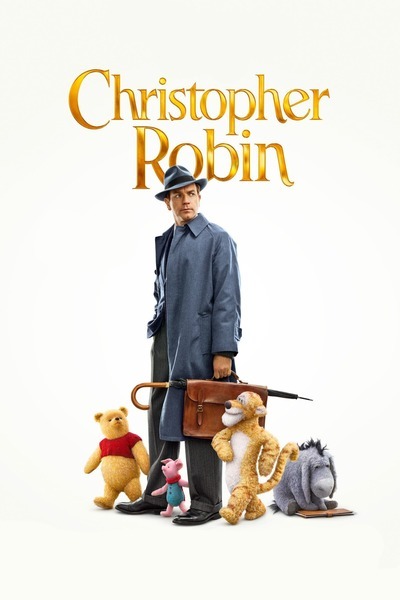
CHRISTOPHER ROBIN (2018) - FILM REVIEW

Christopher Robin (2018)

Cast
Director
  • Marc Forster
Writer (based on the characters created by)
  • A.A. Milne
  • Ernest Shepard
Writer (story)
  • Greg Brooker
  • Mark Steven Johnson
Writer
  • Allison Schroeder
  • Alex Ross Perry
  • Tom McCarthy
Cinematographer
  • Matthias Koenigswieser
Editor
  • Matt Chesse
Composer
  • Jon Brion
  • Geoff Zanelli
Adventure, Animation, Comedy
Rated PG for some action.
120 minutes
 
 
One of the problems with “Christopher Robin” is right there in the title. Compared to his stuffed playthings, Christopher Robin is the least memorable character in the Hundred Acre Wood-set tales penned by A.A. Milne and illustrated by E. H. Shepard. And we don’t even get him as the imaginative, precocious child overlord of Milne’s stories. Instead, Christopher appears in the guise of 47-year-old Ewan McGregor, a man who, in his own words, has not thought about his old pal Winnie-the-Pooh in thirty years. So why does Pooh, a figment of Christopher’s young imagination, return to him after all these years? Because Disney wants your money, of course. I don’t begrudge their need for greed; I just wish they hadn’t given us yet another movie built on the pseudo-psychological cliché that adults need to reconnect with their childhoods in order to be better adults.

After a brief recap of the most famous moments in Pooh’s history, “Christopher Robin” settles into the present day. Pooh and his friends are living their best lives in the Hundred Acre Wood. They have accepted that Christopher has grown up and moved on to London. We see Pooh change from his pajamas into his familiar and very short red shirt (it’s odd that he wears more clothes to bed than he does when he’s roaming the streets, but I digress). Armed with his usual hungry tummy rumble, Pooh sets off to mooch hunny from his friends, only to find that everyone has mysteriously disappeared.

Meanwhile, in the adult world, we learn that Christopher has grown up, gotten married to a woman named Evelyn (Hayley Atwell) and had a daughter name Madeline (a very good Bronte Carmichael). He works a miserable job in Winslow Luggage Factory and is shown to be a World War II veteran. Whoever thought it was a good idea to put violent war footage of the main character into a children’s film must know more about feel-good kiddie films than I do. But again, I digress.

I dawdle because I don’t want to tell you that Christopher is a rather horrible person. He’s a workaholic who neglects his kid and frowns on any notion of playtime she may be harboring. (His idea of bedtime reading involves history books, not “Treasure Island.”) Despite her pleas, he intends to ship her off to boarding school. Making matters worse, Chris’ marriage is on the rocks because he and Evelyn are not doing that thing I can’t talk about in a review of a children’s movie. Worst of all, the luggage factory is failing financially due to lack of travel after the war, so Christopher must fire a good portion of the factory workers. This last item prevents him from going away for the weekend with his family, who is so used to his broken promises that they don’t even pack him a suitcase.

For reasons unexplained, Pooh needs Christopher to help him find his friends Piglet, Eeyore, Rabbit, Owl, Tigger, Kanga and Roo. So when he shows up in London, having gone through Christopher’s tree in the Hundred Acre Wood, his former benefactor thinks he’s losing his mind. Once he’s accepted the situation, however, Christopher Robin sees Pooh as another problem he doesn’t have time to solve. But unlike Paddington Bear (whose movie is one of this year’s best), Pooh isn’t going to last 45 seconds in London. So Christopher Robin has to personally deliver him back to the Hundred Acre Wood, which requires returning to the same old house where Madeline and Evelyn are vacationing. 

The travel scenes, and the return visit to the Hundred Acre Wood, are pleasant enough, with McGregor doing a fine job of credibly selling the reunion between him and his stuffed pals. Each of your favorite characters is brought to life in special effects I thought looked exceptionally creepy, but your mileage may vary. Their personalities remain intact, and McGregor interacts with each of them with an admirable amount of happiness and joy.

This joy is short-lived, of course, because adulthood isn’t all fun and games. In fact, it stinks on ice. Christopher Robin has major league problems that the childlike, innocent Pooh and his crew are just not equipped to handle let alone supplement. That’s my biggest issue here. As a kid, the last thing you probably wanted during playtime was for it to be invaded by adults. Even though the characters are pulled into Christopher’s real-life universe, it feels as if reality has invaded the Hundred Acre Wood and sullied it. The film’s Madeline-led climax, a mad race to save Christopher’s ability to fire people, feels like a case where the children have to raise the adults.
By now, you’re probably saying I should just change my name to OdiEeyore Henderson. And I’m fine with that, because I love Eeyore. He was my favorite character as a kid. My mother used to say I had the hyperactivity of Tigger and the miserableness of Eeyore, which is the nicest thing anyone has ever said about me. My partner in attitude is rendered magnificently by the voice of Brad Garrett. As Eeyore, he gets the best lines, which I would expect from a script co-written by misery specialist Alex Ross Perry, and Garrett digs into them with a hilarious mixture of pathos and pessimism. And Jim Cummings’ voice-work as Pooh is also superb, a warm and cozy nostalgic throwback to Sterling Holloway that’s as comforting as Pooh’s favorite food.

Back in 1991, Steven Spielberg’s “Hook” tried to bring a grown Peter Pan, and all his adult problems, back to Neverland. It was a bad idea despite the fact that Neverland is well-matched with the more messed up parts of the adult male psyche. By contrast, the Hundred Acre Wood—Heffalumps notwithstanding—felt safer and more immune to intrusions from scary adulthood. Even at its most amusing—and there are moments when it is downright hilarious—“Christopher Robin” can’t reconcile its darkness and its light. But if these folks want to write an Eeyore movie that stays firmly planted in the Wood, I’ll be first in line to see it.


DUMBO Trailer (2019)

Dumbo (2019)


Plot unknown.

Director:

Writer:

(screenplay)

Stars:


Holt was once a circus star, but he went off to war and when he returned it had terribly altered him. Circus owner Max Medici (Danny DeVito) hires him to take care of Dumbo, a newborn elephant whose oversized ears make him the laughing stock of the struggling circus troupe. But when Holt's children discover that Dumbo can fly, silver-tongued entrepreneur V.A. Vandevere (Michael Keaton), and aerial artist Colette Marchant (Eva Green) swoop in to make the little elephant a star.


INCREDIBLES 2 (2018) - FILM REVIEW

Incredibles 2 (2018)


For years, Pixar focused on original films, ignoring the sequel trend so prevalent in children’s entertainment. Sure, there were two sequels to “Toy Story,” but that was the exception. Now, the company regularly alternates original projects like “Inside Out” with sequels to “Cars,” “Monsters Inc.,” and “Finding Nemo.” But even as critics bemoaned the sequelitis that inflicted the company, there was always a caveat. “No more sequels...well, maybe The Incredibles.” Brad Bird’s 2004 animated classic felt like the most sequel-ready film in the entire Pixar canon. It was an origin story, the first chapter of a universe waiting to be explored. For some reason, it took 14 years to get back to the world of “The Incredibles,” but the good news is that this world doesn’t feel remotely stale. In fact, Bird and his collaborators have wisely updated it for the late-'10s while also staying true to what we loved about the first movie. They’ve done what a great animated sequel should do—continue to develop the themes of the original while also staking new territory. This is a smart, beautiful, fun family film. In other words, exactly what we want from Pixar.

Bird wastes no time getting into the meat of this story, cleverly picking up where the last film ended. Sure, it’s been 14 years in the real world, but animation allows time to be suspended. And so we see an attack by the Underminer, burrowing through the city, robbing its banks from below, and we watch the Parr family try to stop it. They do, but there’s so much damage done to the metropolis that no one is really eager to thank them. In a clever twist that is sure to inspire some thinkpieces about how it reflects on our current culture, officials would rather just let the criminals get away with it. The banks have insurance and there wouldn’t be so much destruction. And it’s that destruction that has led to superhero activity being criminalized. Read into that themes of failures of justice, anti-intellectualism, etc. as you see fit.

One person who refuses to believe that superheroes should be criminalized is Winston Deavor (Bob Odenkirk), who comes to the Incredibles with a plan. Working with his sister Evelyn (Catherine Keener), he’s going to make superheroes great again. And he’s going to do so by being transparent. They’ll put a body cam on a superhero and allow the world to fall in love with heroic deeds all over again. Realizing that her brand of lifesaving is a little more cost-effective than her husband’s, the Deavors pick Elastigirl (Holly Hunter) to be the face that will make people love heroes. Once again, the concept that we only appreciate that which we can see in today’s society feels remarkably current. “Pics or it didn’t happen,” if you will.

As Elastigirl gets a new outfit and a cool new ride, Bob/Mr. Incredible (Craig T. Nelson) is stuck at home, learning how being a parent takes a different kind of heroism. Dash (Huck Milner) is still his rambunctious self—and the most underwritten character in the film—but Violet (Sarah Vowell) is going through some teen girl drama, especially after the boy she likes literally doesn’t remember her any more. Most urgently, Jack-Jack has started to display powers, and if you think your baby is tough to manage because you don’t know when he’s going to throw a tantrum, imagine if you didn’t know when he was going to burst into flames.


As he has in all of his work, Bird is playing with societal definitions. The Iron Giant doesn’t have to be a weapon; a rat can be a chef; Mr. Incredible can be the stay-at-home parent and Elastigirl can save the day. And the theme of surpassing even the expectations and limitations we set for ourselves weaves through the plot of “Incredibles 2” as we’re introduced to new heroes (with names like Voyd, Screech, and Reflux) and a villain named Screenslaver, who hypnotizes people through today’s greatest addiction—our attachment to our screens. Yes, “Incredibles 2” is a movie that encourages us to detach from technology and experience the world. However, it’s with a twist.

Pixar films are famously beautiful when it comes to character design and art direction, but “Incredibles 2” is one of the most significant achievements in this regard. The word that I kept thinking of was fluid. I have three kids, so trust me when I say that this is not a common word when it comes to family entertainment, much of which shoehorns in messages between clunky comedy scenes with no concern for flow and pacing. “Incredibles 2” just moves beautifully, sliding from one scene to another with such grace and momentum. And the action sequences are among the best you’ll see all year. There’s a sequence with Elastigirl and a runaway train that’s gorgeously conceived and executed, and the climax is better than most Marvel action sequences. It’s a movie that’s constantly in motion, surprising you with the way it so seamlessly flows from action to comedy to family and back again, buoyed by a jazzy, fantastic score by Michael Giacchino. It’s a testament to Bird’s filmmaking ability how effortless “Incredibles 2” often feels. Nothing feels too eager-to-please, even the Jack-Jack material, which is surprisingly funny and fresh.

It helps to have a fantastic voice cast to be the fuel for this finely-tuned animated machine. Nelson gets the gruff tone of Mr. Incredible, a man who loves his family but also misses the days when he was the coolest superhero in the world, and the supporting cast is uniformly stellar. But the movie is really stolen by Hunter, who can convey more with a single line reading than other actresses can with an entire monologue.

Parents should be warned that “Incredibles 2” is long—almost two hours—just like the first one, and there is an unavoidable sense that some of the wonder of the concept has been diluted since the first film. Having said that, “Incredibles 2” understands something that most family sequels, even the Pixar ones, fail to comprehend—we don’t just want to repeat something we loved before. We want to love it all over again. You will with “Incredibles 2.”  


Bob Parr (Mr. Incredible) is left to care for Jack-Jack while Helen (Elastigirl) is out saving the world.

Director:

Writer:

Stars:

, ,  

Official Sites:

Official Movie Website

Country:

Language:

Release Date:

13 June 2018 (Philippines)  »

Also Known As:

The Incredibles 2  »

Company Credits

Production Co:

,

CHRISTOPHER ROBIN Trailer 2 (2018)

Christopher Robin (2018)


A working-class family man, Christopher Robin, encounters his childhood friend Winnie-the-Pooh, who helps him to rediscover the joys of life.

Director:

Writers:

(screenplay by), (screenplay by) | 3 more credits »

Stars:


Working-class family man Christopher Robin encounters his childhood friend Winnie-the-Pooh, who helps him to rediscover the joys of life. Christopher Robin is the new animation movie by Marc Forster, starring Hayley Atwell, Ewan McGregor and Mark Gatiss.

ISLE OF DOGS (2018) - FILM REVIEW (IN CINEMAS MARCH 23, 2018)

Isle of Dogs (2018)


Set in Japan, Isle of Dogs follows a boy's odyssey in search of his dog.

Director:

Writers:

(screenplay), (story) | 3 more credits »

Stars:


Official Sites:

Country:

|

Language:

Release Date:

23 March 2018 (USA)  »

Also Known As:

Isla de perros  »

Filming Locations:


Company Credits

Production Co:


Stop-motion animation is a remarkable art form. There is a certain luddite aspect to it, as the powers of modern computers could render in hours what it takes weeks for artists to physically build. But there is arguably no cinematic medium greater at conveying levels of detail or handmade craftsmanship. It ultimately makes for a unique screening experience, as you find yourself drawn into each sumptuous frame as you're embedded in the story.
Of course, not every filmmaker can pull off making a stop-motion animated movie... but writer/director Wes Anderson absolutely can. In 2009 he made his first bold move into the medium, constructing the brilliant, funny and beautiful Fantastic Mr. Fox, and now he's back with Isle Of Dogs -- a film that in many ways represents the best aspects of Anderson as an artist; pairing his wonderful auteur vision with a wholly original, weird world born out of inspiration from man's best friend and an immense appreciation for Japanese culture and art.

Based on a story developed by Anderson, Roman Coppola, Jason Schwartzman, and Kunichi Nomura, Isle of Dogs takes audiences 20 years into the future, as Major Kobayashi (Nomura) of Japan, a renowned cat-lover, announces that outbreaks of snout flu among the canine population has made them too dangerous to be among mankind. Despite the opposition party arguing that a cure is possible with proper time and research, it is decreed that all dogs be moved to Trash Island, starting with Spots (Liev Schreiber) -- a dog from Kobayashi's own household who watches over the mayor's young ward, Atari (Koyu Rankin).
 
Six months later, the entire dog population has moved to Trash Island, all of them suffering from the effects of snout flu while just trying to survive. Chief (Bryan Cranston), Rex (Edward Norton), Boss (Bill Murray), Duke (Jeff Goldblum) and King (Bob Balaban) run in a pack together -- despite all of them being alphas -- but find their daily routine searching for scraps of food interrupted when a small plane crashes nearby. It's discovered that the young, injured pilot is none other than Atari, who has gone against his guardian's wishes in hopes of finding his lost dog. A language barrier separates them (Atari only speaks Japanese while the dogs speak in English), and Chief, a former stray among a group of domesticated friends, doesn't feel the rescue is his responsibility. But before long, they all join together to venture across the island and discover what really happened to Spots.

Because Fantastic Mr. Fox was an adaptation from a beloved children's novel, Isle Of Dogs marks the first time that Wes Anderson has truly been able to physically build a world from the ground up -- and it's such a mesmerizing experience that I internally questioned being able to properly review it having only seen it once. The film is in equal parts inspired by the works of Akira Kurosawa and Hayao Miyazaki, respectively reflected in the dark, stark city and the fantastical, animal-controlled Trash Island, but it also never lets you forget that this is a Wes Anderson experience with its use of creative split screen, captioned montages, and stunning, long panning shots. Details like gusts of wind flowing through fur, colorful light refracted in broken bottles, and the intermittent dog sneeze feel remarkably precise while always feeling entirely natural; and the use of the medium even makes silhouetted conversations and cartoon-like, dust cloud-obscured brawls feel special. It can get to the point where it practically feels overwhelming -- especially because of the abundant use of subtitles -- but it just suggests that the second viewing will be that much more rewarding.
 
 
Aesthetically, Isle of Dogs brings to the table much of what film fans have grown to love about Wes Anderson's work, but there's also a certain amount of maturation from the storyteller, as well. The writer/director has long been associated with dysfunctional family narratives like those found in The Royal Tenenbaums, The Darjeeling Limited, and more, but this film, following The Grand Budapest Hotel, shows Anderson legitimately branching out (obviously the not-America setting is a big part of that as well). Crafting some fascistic parables, the movie is certainly more political than any of his past work, but rather than feeling heavy-handed or overbearing, it's balanced by his natural quirk and charm to be perfectly digestible. It's an excellent evolution for the filmmaker, and a perfect clap-back to anyone who ever called him one-note.

Of course, it also wouldn't be a Wes Anderson film without his troupe of regular players -- which is a group enhanced by a number of new stars joining the family for Isle of Dogs. The strongest role unquestionably belongs to Bryan Cranston's Chief, who is supported with a deep backstory, effective arc, and legitimate transformation -- and while the other characters aren't drawn as boldly, they're still entertainingly well-utilized. Among the main group of dogs, each has their own special affectation that helps them stand out, from Goldblum's gossip-hungry Duke to Norton's plan-devising Rex, and while they don't take over the movie at any given moment, they do make for fantastic background. What's more, Anderson's familiarity with each of their voices means that he knows the exact kind of material they can deliver, and the result is laughs from beginning to end.
Isle of Dogs is the ninth film from Wes Anderson, and an excellent showing, telling fans that he has many more and many different kinds of stories still to tell. Not only is it a fantastic return to the stop-motion animated medium, but with the help of an incredible number of talented artists and performers, it's a movie that plays on the best of the writer/directors sensibilities, while accessing entirely brand new areas of it.
 
 
 Thanks for reading and have fun watching movies.

INCREDIBLE - THE INCREDIBLES 2 (2018) - TRAILER

Incredibles 2 (2018)


Bob Parr (Mr. Incredible) is left to care for Jack-Jack while Helen (Elastigirl) is out saving the world.

Director:

Writer:

Stars:


Official Sites:

Country:

Language:

|

Release Date:

15 June 2018 (USA)  »

Also Known As:

The Incredibles 2  »

Company Credits

Production Co:


 Thanks for reading and have fun watching movies.

[IN CINEMAS NOVEMBER 22] COCO (2017) - REVIEW + HD TRAILER

Coco (2017)


Aspiring musician Miguel, confronted with his family's ancestral ban on music, enters the Land of the Dead to work out the mystery.

Directors:

, (co-director)

Writers:

(original story by), (original story by) | 4 more credits »

Stars:


Despite his family's baffling generations-old ban on music, Miguel dreams of becoming an accomplished musician like his idol, Ernesto de la Cruz. Desperate to prove his talent, Miguel finds himself in the stunning and colorful Land of the Dead following a mysterious chain of events. Along the way, he meets charming trickster Hector, and together, they set off on an extraordinary journey to unlock the real story behind Miguel's family history.  


Country:

Language:

|

Release Date:

22 November 2017 (USA)  »

Also Known As:

Untitled Dia de los Muertos Project  »

Company Credits

Show detailed on  »

Technical Specs

Sound Mix:

| (DTS: X)|

Color:

Aspect Ratio:

2.35 : 1

Did You Know?

Trivia

The filmmakers and animators traveled to Mexico five times to research about the culture, people, food, traditions, etc. to help define the story and characters of Coco (2017). Among their journeys, they visited Mexico City and Oaxaca. Director Lee Unkrich said of the experience, "I'd seen it portrayed in folk art. It was something about the juxtaposition of skeletons with bright, festive colors that captured my imagination. It has led me down a winding path of discovery. And the more I learn about Día de Muertos, the more it affects me deeply." See more »

Quotes

[from trailer]
Héctor: What are you doing?
Miguel: I'm walking like a skeleton.
Héctor: No, skeletons don't walk like that.
Miguel: That's how *you* walk.
Héctor: No, I don't.
See more »

Crazy Credits

The Disney logo has the Santa Cecilia cemetery in the background and has the Disney music played in Mexican mariachi style. See more »

Connections

Referenced in Nostalgia Critic: Norm of the North (2017) See more »

Soundtracks

Proud Corazon
Music by Germaine Franco
Lyrics by Adrian Molina
Performed by Anthony Gonzalez

"Coco" is the sprightly story of a young boy who wants to be a musician and somehow finds himself communing with talking skeletons in the land of the dead. Directed by Lee Unkrich ("Toy Story 3") and veteran Pixar animator Adrian Molina, and drawing heavily on Mexican folklore and traditional designs, it has catchy music, a complex but comprehensible plot, and bits of domestic comedy and media satire. Most of the time the movie is a knockabout slapstick comedy with a "Back to the Future" feeling, staging grand action sequences and feeding audiences new plot information every few minutes, but of course, being a Pixar film, "Coco" is also building toward emotionally overwhelming moments, so stealthily that you may be surprised to find yourself wiping away a tear even though the studio has been using the sneak-attack playbook for decades.
The film's hero, twelve-year old Miguel Riviera (voice by Anthony Gonzalez), lives in the small town of Santa Cecilia. He’s a goodhearted child who loves to play guitar and idolizes the greatest popular singer-songwriter of the 1920s and '30s, Ernesto de la Cruz (Benjamin Bratt), who was killed when a huge church bell fell on his head. But Miguel has to busk in secret because his family has banned its members from performing music ever since Miguel's great-great-grandfather left, abandoning his loved ones to selfishly pursue his dreams of stardom. At least that’s the official story passed down through the generations; it’ll be challenged as the film unfolds, not through a traditional detective story (although there’s a mystery element to “Coco”) but through an “Alice in Wonderland” journey to the Land of the Dead, which the hero accesses through the tomb of his ancestors. 

Family and legacy as expressed through storytelling and song: this is the deeper preoccupation of “Coco.” One of the most fascinating things about the movie is the way it builds its plot around members of Miguel’s family, living and dead, as they battle to determine the official narrative of Miguel’s great-great grandfather and what his disappearance from the narrative meant for the extended clan. The title character is the hero’s great-grandmother (Renee Victor), who was traumatized by her dad’s disappearance. In her old age, she has become a nearly silent presence, sitting in the corner and staring blankly ahead, as if hypnotized by a sweet, old film perpetually unreeling in her mind.

The machinations that get Miguel to the other side are too complicated to explain in a review, though they’re comprehensible as you watch the movie. Suffice to say that Miguel gets there, teams up with a melancholy goofball named Hector (Gael Garcia Bernal), and has to pose as one of the dead with the aid of skeletal facepaint, but that (like Marty McFly returning to the 1950s to make sure his mom ends up with his dad in “Future”) the longer Miguel stays on the other side, the more likely he is to end up actually dead.

I’m reluctant to describe the film’s plot in too much detail because, even though every twist seems obvious in retrospect, Molina and Matthew Aldrich’s script frames each one so that seems delightful and inevitable. Many of them are conveyed through a stolen family photograph that Miguel brings with him to the Land of the Dead. The deployment of the photo is a great example of how to tell a story through pictures, or more accurately, with a picture. Somebody’s face has been torn out; there’s a guitar that proves to be important later, and there are other ways in which visual information has been withheld from Miguel (and us) so that it can be revealed or restored when the time is right, completing and correcting an incomplete or distorted picture, and "picture.”
What’s freshest, though, is the tone and outlook of the film. “Coco” opened in Mexico a month before it opened in the USA and is already the highest grossing film of all time there. It assumes a non-American point-of-view on spirituality and culture—not in a touristy or “thought experiment” sort of way, but as if it were merely the latest product of an alternate universe Pixar Mexicano that has existed for just as long as the other one. The film’s stable of voice actors reads like a Who’s Who of Latin-American talent: the ensemble includes Edward James Olmos, Alfonso Arau, Ana Ofelia Murguia, Alanna Ubach and, in a small role, to my surprise and astonishment, playwright Octavio Solis, who was one of my teachers in high school back in Dallas. Michael Giacchino's score is unsurprisingly excellent, as are the original songs—in particular, the future Oscar winner "Remember Me," the greatest tear-eruption mechanism to accompany a Pixar release since the "Toy Story 2" centerpiece "When She Loved Me."

Like most Pixar productions, this one is filled with homages to film history in general and animation history in particular. I was especially fond of the references to the dancing skeletons that seemed to pop up constantly in cartoon shorts from the 1930s. There’s a touch of Japanese master Hayao Miyazaki in the film’s matter-of-fact depiction of the dead interacting with the living, as well as its portrayal of certain creatures, such as a goofy, goggle-eyed dog named Dante (modeled on Xoloitzcuintli, the national dog of Mexico) and a gigantic flying dragon-type beast with the personality of a plump old housecat.

Also notable are the film's widescreen compositions, which put lots of characters in the same frame and shoot them from the waist up or from head-to-toe, in the manner of old musicals, or Hollywood comedies from the eighties like "9 to 5" or "Tootsie." The direction lets you appreciate how the characters interact with each other and with their environments and lets you decide what to look at. At first this approach seems counter-intuitive for a movie filled with fantastic creatures, structures and situations, but it ends up being effective for that very reason: it makes you feel as though you're seeing a record of things that are actually happening, and it makes "Coco" feel gentle and unassuming even though it's a big, brash, loud film.
I had some minor quibbles about “Coco” while I was watching it, but I can’t remember what they were. This film is a classic.


 FINAL RATING: 9/10 FOR THE GENRE AND 9/10 OVERALL. Overwhelming.


Thanks for reading and have fun watching movies.

THE BREADWINNER (2017) [ANIME] - REVIEW

The Breadwinner (2017)


A headstrong young girl in Afghanistan disguises herself as a boy in order to provide for her family.

Director:

Stars:


Country:

| |

Language:

Release Date:

17 November 2017 (USA)  »

Company Credits


Technical Specs

Runtime:

Color:


Based on a children's novel by Deborah Ellis and executive produced by Angelina Jolie, Nora Twomey's animated feature centers on a young Afghan girl's resilience in the face of devastating circumstances. 

Movies are filled with scrappy kids who weather tough situations, but Parvana, the 11-year-old Kabul resident at the center of The Breadwinner, is a particularly memorable survivor. In a story that's as vibrant as it is harrowing, the Afghan girl steps into the vacuum left by her father's arrest and, disguising herself as a boy, ventures into the Taliban-controlled city in order to keep her family fed.
In her first solo stint at the helm of a feature, Nora Twomey, who co-directed the dazzling Secret of Kells, sugarcoats nothing about Parvana's story, even while layering it with a touch of enchantment. She and screenwriter Anita Doron, adapting Deborah Ellis' book, maintain the child's point of view in both strands of the narrative: the brutal day-to-day challenges that Parvana faces and the magic-tinged fable she spins to soothe and entertain her baby brother.

The involvement of Angelina Jolie will certainly boost the profile of the Ireland-Canada-Luxembourg co-production, which joins the ranks of such hard-hitting animated features as Waltz With Bashir and Persepolis in its artful alchemy of personal particulars through the prism of political conflict.

Novelist Ellis based her Breadwinner series of books on interviews she conducted with residents of an Afghan refugee camp in Pakistan, and the filmmakers have taken similar care to ensure the cultural accuracy of their adaptation, from the realistic backdrops to the use of Afghan musicians and singers (recorded remotely) in the affecting score by siblings Mychael and Jeff Danna.

The action unfolds in 2001, when Parvana (voiced with spirit and intelligence by Saara Chaudry) regularly accompanies her father, Nurullah (Ali Badshah), on his trips to the central market, where he hawks miscellaneous items along with his letter-writing and -reading skills. A former schoolteacher, he instills a sense of history in his young daughter — specifically, the history of their country as the site of countless incursions and occupations over the centuries. Parvana sighs in boredom over the litany of invaders: Alexander the Great, Genghis Khan and, in more recent years, the Soviets. But Afghan political history takes on a terrible urgency for her when the city's self-appointed moral guardians, the Taliban, cart the worldly Nurullah to prison for questioning their restrictive edicts.

The apartment that Parvana shares with her broken-hearted mother, Fattema (Laara Sadiq); argumentative older sister, Soraya (Shaista Latif); and toddler brother, Zaki, becomes a kind of prison, too. Under Taliban rule, women and girls can be out and about only in the company of a male, and shopkeepers fearful of retribution won't sell Parvana rice or any other household staples.

But once she cuts her hair short and dons the clothes of her deceased older brother Sulayman (Noorin Gulamgaus) — whose story is gradually revealed with minimal detail and maximum impact — Parvana navigates the streets and markets with relative freedom. She finds a kindred spirit and entrepreneurial partner in Shauzia (Soma Chhaya), another girl passing as a boy. Together they sell tea and take on odd jobs. Plotting her escape to the peaceful seaside, Shauzia alludes to a troubled home life, and, as in their treatment of Sulayman, the screenplay and direction convey volumes in just a few words and gestures.
Amid all the sorrow and struggle, there are moments of welcome humor, too, particularly in the tale that Parvana, carrying on her absent father's love of storytelling, tells Zaki. To set the story-within-the-story apart from the main narrative's simple line-drawn characters and naturalistic background renderings, Twomey adopts a stylized cutout animation style. The tale of a child's courage against a villainous Elephant King abounds in deep jewel tones and is punctuated with circular and other symmetrical arrangements.

That the allegory's protagonist is a boy ties him to the daring of Parvana and Shauzia as well as to the late Sulayman and the tot Zika, a sweetly gurgling embodiment of joy and innocence. An expression of strength and creativity in a world of constant danger, the story Parvana weaves gives shape to hope while acknowledging seemingly insurmountable difficulties.

Through it all, Parvana never gives up on trying to see her imprisoned father, if only to pass along the walking stick he's needed since losing a leg in wartime. One of his illiterate customers, Razaq (Kawa Ada), proves sympathetic and helpful, and the wordless moments he shares with Parvana, as his own devastating losses come to light, are among the most poignant in the film.

The threat of war and its bitter memories are everywhere; not long after Parvana crosses a desert littered with abandoned military tanks, the skies are darkened by new machines of destruction. Not unlike her gutsy protagonist, Twomey moves through the charged landscape with extraordinary agility. Combining gripping suspense with a quote from the immortal Persian poet Rumi, she creates a stirring final sequence from the rising chords of terror and resilience. Nothing is resolved, exactly, but for a breathtaking instant, love resounds more powerfully than any bomb ever could.

FINAL RATING: 8/10 for the genre and 7/10 overall. Nice and cute anime which shows what it means if you have nothing and how to survive every day with little things. Different and great at the same time because the movie shows what it really means to sell your body.


Thanks for reading and have fun watching movies.
 
Copyright © 2017. MOVIETOWN
Blogger Templates