Recent Movies
Showing posts with label Sci-Fi. Show all posts

Captain Marvel (2019)

Captain Marvel (2019)

Cast
  • Brie Larson as Carol Danvers / Captain Marvel
  • Samuel L. Jackson as Nick Fury
  • Ben Mendelsohn as Talos
  • Jude Law as Yon-Rogg
  • Annette Bening as Supreme Intelligence
  • Gemma Chan as Minn-Erva
  • Lee Pace as Ronan
  • Mckenna Grace as Young Carol Danvers
  • Djimon Hounsou as Korath
  • Clark Gregg as Agent Phil Coulson
Director
  • Ryan Fleck
  • Anna Boden
Writer (story by)
  • Nicole Perlman
  • Meg LeFauve
  • Anna Boden
  • Ryan Fleck
  • Geneva Robertson-Dworet
Writer
  • Anna Boden
  • Ryan Fleck
  • Geneva Robertson-Dworet
Cinematographer
  • Ben Davis
Editor
  • Elliot Graham
  • Debbie Berman
Composer
  • Pinar Toprak
Action, Adventure, Mystery, Science Fiction
Rated PG-13 for sequences of sci-fi violence and action, and brief suggestive language.
128 minutes
It’s finally here: the first film in the Marvel Cinematic Universe with a female superhero at its center and a woman serving as a co-director and writer. These are unprecedented, exciting and long overdue achievements all around within a pop-culture powerhouse that’s long been dominated by male stories and storytellers.

So why does “Captain Marvel” feel like a bit of a disappointment? It’s fine and often quite funny. It fits securely within the MCU but also functions sufficiently as a stand-alone entity. But the character, and the tremendous actress playing her in Oscar-winner Brie Larson, deserved more than fine. They—and the girls and women everywhere looking to “Captain Marvel” with wide eyes and high hopes for seeing themselves on screen—deserved a game-changer along the lines of “Black Panther” or even “Guardians of the Galaxy” or “Doctor Strange.”

“Captain Marvel” mostly takes place in the mid-1990s, and feels like it was made then, too, in terms of its technical prowess and emotional depth. This is not a compliment. As for the former, perhaps that was intentional—yet another example of wallowing in period nostalgia alongside the grunge chic and girl-power anthems. The prolonged intro in space and the big action sequences have a cheesy, retro feel to them that can be amusing but also inscrutable.

But co-directors Anna Boden and Ryan Fleck have made their names writing and directing indie dramas featuring richly drawn characters facing real stakes. “Half Nelson” (2006), about a drug-addicted middle school teacher, is the movie that put Ryan Gosling on the map and earned him his first Oscar nomination. “Sugar” (2008) is one of the most intimate and insightful movies ever made about baseball. You’d rightly expect that their depiction of the title character—real name Carol Danvers—would be complex, compelling and abidingly human, despite her otherworldly superpowers. But while Larson is tough, plucky and skilled with a well-timed quip, her chief character trait seems to be rebelliousness. That’s a little limiting. (Boden and Fleck co-wrote the script with Geneva Robertson-Dworet, and all three share story-by credit with Nicole Perlman and Meg LeFauve.) Additionally, she has forgotten who she really is, so her interior life is as much of a blank to her as it is to us.

Despite her fighting spirit, Carol often finds herself as a pawn trapped between various worlds where she feels as if she doesn’t belong. At the film’s start, she’s living and training as a warrior on the Kree planet of Hala. Her mentor, Jude Law’s Yon-Rogg, is constantly reminding her not to let her emotions get the best of her—a pointed commentary on the sexist notion that women are too emotional to handle tough jobs. And “Captain Marvel” is full of such less-than-subtle messaging. But after the shapeshifting enemy Skrulls, led by the swaggering Talos (Ben Mendelsohn), take her prisoner during a battle, she escapes and lands on a different planet: our own. Specifically, she finds herself a fish out of water within the urban sprawl of Los Angeles.

It’s here that “Captain Marvel” leans hard on the humorous kitsch of its decade-specific detail: Blockbuster Video! Two-way pagers! Dial-up Internet! We were so lame. It’s the cinema of empty recognition—a ‘90s version of the way “Ready Player One” relies heavily on ‘80s pop culture to provoke a warm, knowing response. “Hey, Captain Marvel ties her plaid flannel button-down around her waist the way I used to in college! Cool.” These moments and images are good for a chuckle and not much more.

But as Carol begins to piece together her history as an Air Force test pilot, “Captain Marvel” begins to feel like a female version of “Top Gun.” This actually is a compliment; the sections on Earth in which Carol grasps at her memories of the past and discovers her strength and bravery in the present (and in the cockpit) are the film’s highlights. The always formidable Annette Bening is a tantalizingly fleeting presence as a mysterious mentor figure in Carol’s previous life. And Lashana Lynch helps flesh out Carol’s personality as her best friend: a fellow pilot who similarly never got the shot she deserved because she was a woman and a young mother.

Carol’s most rewarding and consistently entertaining relationship, though, is with young S.H.I.E.L.D. agent Nick Fury, played by a magically de-aged Samuel L. Jackson in a bit of visual effects wizardry. Truly, the result is seamless. You will forget that you are looking at a 70-year-old man. (Clark Gregg, reprising his revered role as Agent Coulson, isn’t quite so believable, but it’s always good to see him.) Larson and Jackson play off each other beautifully, trading snappy banter and affectionate zingers with ease. Their mission is to find a glowy space cube thingy—you know what it is and why it matters if you’ve been following these movies—and keep it out of the wrong hands, but that’s the least intriguing component of “Captain Marvel.”  

But her camaraderie with Jackson—and later with a quick-witted Mendelsohn and a fantastically scene-stealing orange kitty named Goose—ultimately serves as a reminder of just how little there is to Larson’s character. Not unlike Captain America’s role within the Avengers, Captain Marvel functions here as the straight woman, the steady anchor in a sea of big, swirling personalities. Sure, she eventually comes into her powers in full and is literally the kind of girl on fire that Alicia Keys sings about. But if we’re not invested in who she is at her core, how are we supposed to care about what she’s burning down?

Speaking of music, the folks behind “Captain Marvel” spared no expense on the film’s soundtrack, including songs from such female-driven '90s acts as TLC, Garbage, Elastica, Salt-n-Pepa and a painfully on-the-nose use of No Doubt’s “Just a Girl” during a particularly elaborate fight scene. The girl power (and grrl power) ring out loud and clear, if a bit hollow.


Alita: Battle Angel (2019)

Alita: Battle Angel (2019)

Cast
  • Rosa Salazar as Alita
  • Christoph Waltz as Dr. Dyson Ido
  • Ed Skrein as Zapan
  • Mahershala Ali as Vector
  • Jennifer Connelly as Chiren
  • Keean Johnson as Hugo
  • Michelle Rodriguez as Gelda
  • Lana Condor as Koyomi
  • Jackie Earle Haley as Grewishka
  • Eiza González as Nyssiana
  • Jorge Lendeborg Jr. as Tanji
  • Marko Zaror as Ajakutty
  • Casper Van Dien as Amok
Director
  • Robert Rodriguez
Screenplay
  • James Cameron
  • Laeta Kalogridis
Comic Book
  • Yukito Kishiro
Cinematography
  • Bill Pope
Editor
  • Ian Silverstein
  • Stephen E. Rivkin
Music
  • Junkie XL
Action, Romance, Science Fiction, Thriller
Rated PG-13
122 minutes


With his 1992 debut of “El Mariachi,” Robert Rodriguez announced himself a director with an eye for action. He prefers to keep his camera movement light and energetic, his edits quick and focused. His movies tend to carry an unmistakable playfulness, like in the all-out barroom brawl between humans and vampires in “From Dusk till Dawn” and the bizarre yet stylish “Spy Kids” franchise in which two siblings face off against some truly surreal-looking enemies.  

Rodriguez brings this fun-loving, action-fueled touch to the big-screen adaptation of Yukito Kishiro’s popular manga, Battle Angel Alita, salvaging a project that had languished in development hell since the early aughts. James Cameron, who co-produced the refashioned “Alita: Battle Angel” and co-wrote the screenplay with Rodriguez and Laeta Kalogridis, originally picked up the project around 15 years ago before eventually handing the reins over to Rodriguez. The script is still somewhat unwieldy, chock full of explanations about how robotic bodies work and the history of the decaying setting known as Iron City. Yet, underneath multiple levels of plot and world-building, there’s a weirdo heart keeping the action moving along.

As far as movies about girl robots go, “Alita” isn’t so bad. The movie’s star is a promising Rosa Salazar as the namesake hero, a mysterious yet powerful teen girl bot with oversized anime-style eyes and a good and very powerful heart that could power a city. Alita is the last of her kind, a superior enemy who was somehow were defeated by the humans. After she was found in a scrap heap, Alita is brought back to life with the help of a fatherly doctor, Dr. Ido (Christoph Waltz), a paternal relationship that gives “Alita” some of its more stranger moments. More straightforward is the relationship Alita has with a secret nemesis, Chiren (Jennifer Connelly), Dr. Ido’s former wife, and Vector (Mahershala Ali), a smooth-talking kingpin who promises almost anyone who will listen to him a ticket to Zalem, the city hovering in the sky holding society’s upper class over the heads of the poor below.

Even with so many different creative demands on the story, Rodriguez makes the movie his own. Many of his movies feature Latino actors, like Danny Trejo in the “Machete” movies and Alexa Vega and Daryl Sabara in “Spy Kids,” and the trend continues with “Alita” as the Peruvian American Salazar gets the chance to lead a big-budget movie. He includes Spanish and English signs in Iron City, and some of the extras can be heard speaking Spanish in the background. It’s still rare to hear or see Spanish spoken in sci-fi movies about multilingual futures unless the films are from Latin America.

“Alita” draws inspiration from various sci-fi sources, like the physical divide between the rich and the poor in “Metropolis,” the mysterious femme being with incredible powers of “The Fifth Element," and the multilingual, neon-lit grimy future world of “Blade Runner,” to name a few. Iron City is a place similar to what we’ve seen in other movies, but it’s outfitted with enough differences to tell it apart, like making the society corrupt enough for serial killers and robbing cyborgs of their mechanical parts and giving the place its own gladiatorial-like roller derby that gives Iron City hopefuls their only shot at getting into Zalem. Somehow all of these storylines are interconnected, which adds to the clunkiness of the script but it never allows it to get boring. Some kind of action sequence is always just a few minutes away.

Although Alita is built with some feminist empowerment in mind, some of the messaging malfunctions against old world patriarchy. The odd paternalistic doctor is just the start. Because she looks like a teen girl, of course, she develops a heterosexual crush on a human teen boy, Hugo (Keean Johnson). Never mind that she’s actually 300 some years older and very much a cyborg. The two share some cute moments, but others, like when Hugo introduces her to chocolate or when Alita offers Hugo her one-of-a-kind ancient technology heart so he can go up to Zalem, feel so old school. Was this all because she’s an impulsive teen girl? In another scene, after a devastating battle with a big bad cyborg, Alita must trade out the delicate, girlish body the doctor had built for his daughter (not weird – at all!) for a warrior-grade bod that adheres to her, um, vision of herself. That vision includes a corset-sized tiny waist and an athletic set of breasts that defy gravity. It’s been 300 years after the fall and we’re still holding onto Barbie-size proportions.

Thankfully, Salazar smoothes over many of these cumbersome details with her earnest motion-captured performance. She physically leans into the awkwardness of walking around as a teen girl bot, unsure of her new body and discovering its potential and limits. She explores her new surroundings with literal wide-eyed wonder. When she upgrades her body, she stands tall and confident, having sped through puberty in the span of a surgery. Her character’s chutzpah is the reason why it vaguely makes sense to jump from a “hunter killer,” a bounty hunter in futuristic terms, to a Motorball prospect when she’s working her way to becoming a warrior.

With so much background and story to cover, maybe “Alita” would have benefitted from a “less is more” approach. But considering its estimated budget of $200 million, “Alita: Battle Angel” is an awe-inspiring jump for the man who first burst onto the film scene with a movie that cost around $7,000. The visual bonanza cooked up by Rodriguez, cinematographer Bill Pope and editors Stephen E. Rivkin and Ian Silverstein is enough to power through any narrative bumps with quickly paced action and bleak, yet colorful, imagery.


Glass (2019)

Glass (2019)

Cast
  • James McAvoy as Kevin Wendell Crumb / The Horde / The Beast / Patricia / Dennis / Hedwig / Barry / Jade / Orwell / Heinrich / Norma
  • Bruce Willis as David Dunn / The Overseer
  • Samuel L. Jackson as Elijah Price / Mr. Glass
  • Anya Taylor-Joy as Casey Cooke
  • Sarah Paulson as Dr. Ellie Staple
  • Spencer Treat Clark as Joseph Dunn
  • Charlayne Woodard as Mrs. Price
  • Luke Kirby as Pierce
Director
  • M. Night Shyamalan
Producer
  • Jason Blum
Editor
  • Luke Franco Ciarrocchi
  • Renaldo Kell
Director of Photography
  • Mike Gioulakis
Writer
  • M. Night Shyamalan
Original Music Composer
  • West Dylan Thordson
Drama, Horror, Mystery, Science Fiction, Thriller
Rated PG-13
129 minutes
More “Split 2” than “Unbreakable 2,” M. Night Shyamalan has finally produced his first direct sequel, the mash-up that is “Glass,” bringing together characters from two of his biggest hits. As the end of “Split” hinted, that film took place in the same universe as Shyamalan’s 2000 film “Unbreakable,” still his best work to date. The promise of the coda to “Split” is fulfilled in “Glass,” bringing together Shyamalan’s vision of the Freudian brain in the uncontrolled id of DID-afflicted Kevin Crumb (James McAvoy), the regulating force of the super-ego in David Dunn (Bruce Willis), and the moderator between the hero and the villain in the ego that is Elijah Price aka Mr. Glass (Samuel L. Jackson). Once again, Shyamalan is playing with comic book tropes, adding his twists to monologuing heroes and villains who are remarkably self-aware of their own genre arcs. There’s a truly ambitious film buried in “Glass,” and I do mean buried. The problem is that Shyamalan can’t find the story, allowing his narrative to meander, never gaining the momentum it needs to work. Say what you will about “Unbreakable” and even “Split,” they had a propulsive energy that’s lacking here, at least partially because any sense of relatability is gone. “Glass” is a misfire, and it’s the kind of depressing misfire that hurts even more given what it could have been.

“Unbreakable” and “Split” have protagonists thrust into life-changing situations. The former told the story of David Dunn, the only survivor of a horrible train crash, who learned that he was more than human. The latter tells two stories—that of a girl, Casey (Anya Taylor-Joy, who returns here and is given woefully little to do), forced to discover her own strengths, and that of a mentally ill patient who may be more than your average person diagnosed with DID. 

As “Glass” opens, we know David Dunn, now known in Philadelphia as the mysterious protector called the Overseer and working with his son (Spencer Treat Clark), is a superhero. And we know Kevin Crumb has a personality called The Beast that can climb walls and take shotgun blasts. And yet so much of “Glass” is devoted to trying to convince David and Kevin that they are not super in any way. In the pursuit of another twist ending, Shyamalan takes a narrative step back, covering so much of the same ground that the two previous films did instead of carving a new path. He’s so obsessed with ending on a gotcha note that he delays any sort of narrative interest until then, basically forcing his audience to tread water until that point. Think long and hard about what you know at the end of “Glass” as opposed to what you knew at the beginning and you’ll realize how hollow this whole venture has been.

Most of “Glass” takes place at Raven Hill Memorial Psychiatric Hospital. In what could be called the prologue, David/Overseer tracks Kevin/Horde down after the villainous man with multiple personalities kidnaps four young women, holding them in an abandoned factory. The two men fight, and one immediately gets the sense that something is not quite right. This showdown between two of the most memorable characters in Shyamalan’s history lacks the punch or creative fight choreography fans should expect. The pair head out a window and into the arms of Dr. Ellie Staple (Sarah Paulson), the confident doctor who shuttles them off to the same psych ward that’s been housing Mr. Glass for almost two decades. Glass is kept in a deeply vegetative state in a room in the same wing as David and Kevin. Dr. Staple tries to convince all three that they are not really super in any way. David’s strength isn’t that abnormal and Kevin’s powers as The Beast could be explained away.

In the midsection of “Glass,” Shyamalan hits every beat more than once, almost joylessly. Paulson gives the same speech multiple times, and a bit with a bright light that can change which personality of Kevin’s dominates goes on forever ... and then happens again. Shyamalan is determined to cycle through the back stories of these characters, even employing footage from “Unbreakable” and “Split” in flashbacks as if he doesn’t realize that 95% of viewers have seen them. He seems so intent on the reveals of his final fifteen minutes that he forgets to take opportunities to make the nearly two hours before that interesting. Why is Raven Hill such a dull bore to look at? Why is Shyamalan determined to make another film about whether or not superheroes are superheroes instead of just building on the foundation he’s created? Imagine “The Avengers” retelling all the origin stories and then questioning whether or not The Hulk is really a superhero or just an angry dude. 

There are glimpses of the crazy, ambitious movie that “Glass” could have been, and that’s what saves it from complete "Happening"-level disaster. Once again, McAvoy is giving it his all, even if he’s not getting as much back in return as he did last time (and is balanced by another half-hearted Willis performance in which I swear you can practically see him fall asleep). And there are just enough out-there ideas in “Glass” that it’s impossible to completely dismiss even if they don't come together. It’s that fine line between ambitiously clunky in a way that engages the viewer and just sloppy. I honestly kept trying to engage with “Glass” as a fan of Shyamalan’s early films, comic books, and movies that try to mash-up familiar genres in a way that makes a new one. I ultimately resigned myself to the fact that it’s not my fault that it’s broken.


Bumblebee (2018)

Bumblebee (2018)

Cast
  • Hailee Steinfeld as Charlie Watson
  • Dylan O'Brien as Bumblebee (voice)
  • Jorge Lendeborg Jr. as Memo
  • John Cena as Agent Burns
  • Angela Bassett as Shatter (voice)
  • Justin Theroux as Dropkick (voice)
  • John Ortiz as Agent Powell
  • Peter Cullen as Optimus Prime (voice)
Director
  • Travis Knight
Writer
  • Christina Hodson
Cinematographer
  • Enrique Chediak
Editor
  • Paul Rubell
Composer
  • Dario Marianelli
Action, Adventure, Science Fiction
Rated PG-13 for sequences of sci-fi action violence.
114 minutes
"Bumblebee," the first live-action Transformers movie to be directed by somebody other than Michael Bay, a Bizarro World version of this year's "The Predator," though only in one very particular way: there's too much undercooked human drama and not enough 'splodey high-concept stuff (which is competent). Sure, "Bumblebee" may seem like a welcome change-up after six Bay-ified Transformers flicks. But, as somebody who quit the recently revived franchise after the fourth entry, I have to say: so what? "Bumblebee" is only comparatively modest: it's 113 minutes and feels longer, and plays like a lukewarm, John Hughes-ified clone of "E.T.: The Extra-Terrestrial." There's not only nothing new here, there's nothing convincing. And if I'm supposed to judge "Bumblebee" based on how well it succeeds at what it tries to do (rather than what came before it), it's still not very good.

"Bumblebee" begins with a lifeless homage/tip of the cap to the animated "Transformers: The Movie." War has come to Cybertron, the home of the Autobots—who have apparently already visited Earth, and therefore look like cars—and the Decepticons, who also look like cars and jets and things, despite ... not having been to Earth yet? You guessed it, dear reader: "Bumblebee" is a prequel, a bridge between the notoriously confusing "Transformers: The Movie" and Bay's tediously noisy "Transformers," so it makes sense that this new movie should be ... well, a bit like both the older Transformers film and the newer Transformer films, actually.

Yet while "Bumblebee" is a movie where sentient war machine robots go pew-pew at each other—and blow up trucks, and sometimes reduce human beings to translucent goo—this is also apparently a film about generically rebellious teenager Charlie Watson ("True Grit" star Hailee Steinfeld), a young woman who listens to The Smiths, resents her mom ("Better Things" star Pamela Adlon), and has a tentative romance with a wimpy boy-next-neighbor named Memo (Jorge Lendeborg Jr.). Throw in the mute, nigh-magical, E.T.-like Bumblebee, and bam, you got yourself a thrice-nuked fish-out-of-water-tale.
The film's "formulaic" nature isn't necessarily a bad thing. Problems do, however, inevitably arise with "Bumblebee" since it often appears to be stuck on fast-forward, especially during big emotional moments. Several key scenes—ones that are supposed to establish the film's heartstring-tugging stakes—feel bewilderingly inconsequential, but only because screenwriter Christina Hodson's scenario (realized as it is by director Travis Knight and the gang), feels totally rushed. It's enough to leave viewers with burning questions, though the answers to those questions might seem obvious to anyone who's cursorily familiar with post-"E.T." fish out of water stories. 

Like: why did Bumblebee wait so long—in an early scene, before he loses his voice, and also one second before missiles decimate a bunch of gruff military guys—to command them to "Run?" Because the filmmakers don't have an extra couple seconds to earn genuine dramatic tension, not when they could just make their robot hero strike a cool pose and then get blown up. And why did Hodson and company have the film's villainous Decepticons kill Bumblebee’s Autobot friend on another planet before viewers are introduced to that character in a prior scene? Because wanton death is dramatic! 

As for the film's supporting characters, the one whose expectations Charlie rebels against: they're sadly not well-developed either. Which is a problem, since I can't root very hard for Charlie if my expectations are not overturned with hers. Stephen Schneider's amiably goony stepdad isn’t a convincing stick in the mud since his character's most heinous crimes against Charlie are practicing defensive driving and earnestly recommending one self-help book. And John Cena—playing cranky-pants, anti-robot military guy Agent Burns—isn’t a believable trigger-happy villain, despite the scary scar on his cheek. Finally, Lendeborg's Memo isn’t a credible nerd, despite the way he breathlessly explains why he wears disposable hair nets (sanitary reasons) when he’s confronted by a vaguely threatening valley girl bully.
Then again, what would you expect from a movie that asks viewers to fall in love with Bumblebee, a character who (in this film) appears to be a cuddly VW-shaped war machine? At the beginning of the movie, Bumblebee blows up a robot to rescue of his leader Optimus Prime (Peter Cullen). Later, after a bunch of sappy moments that don't quite land, he blows up a bunch of other stuff (mostly inanimate). Yes, Bumblebee ostensibly loves Charlie, his human owner/buddy. But the military? And the bad robots? According to the film’s aimlessly destructive (but convincing) logic, Bumblebee delivers the only fitting punishment for their (inefficient) kind of violent intolerance: total destruction.
Look, I’m not expecting the shooty-shoot robot movie to deliver a great anti-war, anti-consumerist epic (I used to love “Transformers: Beast Wars” when I was a pre-teen). I do, however, wish that somebody who was responsible for this film’s creation was a little more serious about the tropes that they mercilessly ripped off, I mean borrowed, from executive producer Steven Spielberg. There's nothing implicitly wrong with this movie's approach. You just have to do something with it.


Aquaman (2018) - Film Review

Aquaman (2018)

Cast
  • Jason Momoa as Arthur Curry / Aquaman
  • Amber Heard as Mera
  • Willem Dafoe as Nuidis Vulko
  • Patrick Wilson as Orm Marius / Ocean Master
  • Dolph Lundgren as King Nereus
  • Yahya Abdul-Mateen II as David Kane / Black Manta
  • Nicole Kidman as Queen Atlanna
  • Temuera Morrison as Thomas Curry
  • Ludi Lin as Murk
  • Graham McTavish as King Atlan
  • Djimon Hounsou as The Fisherman King
  • Natalia Safran as Fisherman Queen
  • Michael Beach as Jesse Kane
  • Randall Park as Dr. Stephen Shin
Writer
  • Will Beall
  • David Leslie Johnson-McGoldrick
  • Will Beall
Writer (Aquaman created by)
  • Mort Weisinger
  • Paul Norris
Writer (story by)
  • Geoff Johns
  • James Wan
  • Will Beall
Cinematographer
  • Don Burgess
Editor
  • Kirk M. Morri
Composer
  • Rupert Gregson-Williams
Action, Adventure, Fantasy, Romance, Science Fiction
Rated PG-13 for sequences of sci-fi violence and action, and for some language.
 
144 minutes
 
 
Whenever anybody asks me what “Aquaman” is like, I mention an early scene where opposing Atlantean forces square off and debate the kingdom’s future. One side rides armored seahorses that whinny. The other rides armored sharks that roar. "Aquaman" is as concerned with scientific accuracy as “SpongeBob Squarepants.” And that’s one of many reasons why I like it. 

It takes skill to be as ridiculous as this movie about a half-human, half-Atlantean prince who’s known on land as Arthur Curry (Jason Momoa) without seeming to condescend to the material. Directed by James Wan (“Saw,” “The Conjuring”), it’s part of a thriving subcategory of superhero movies, also represented by “Spider-Man: Homecoming,” “Thor: Ragnarok,” “Venom” and both “Ant-Man” pictures—sweet, goofy, at times psychedelically weird films that mostly reject the sour gloom that gets mistaken for maturity. But that’s not to say that those movies aren’t serious in their own way. “Aquaman,” in particular, feels simultaneously like a spoof and an operatic melodrama. Any film that can combine those modes is a force to be reckoned with. 

Aquaman made his DC Expanded Universe debut in “Batman vs. Superman” and was part of the ensemble in “Justice League,” but this is the first movie that’s put him front-and-center. The results are enjoyable enough that you may wish Warner Bros. had done it sooner. While it’s not billed as such, this is an origin story, positioning Arthur as a reluctant hero. As concieved by screenwriters David Leslie Johnson-McGoldrick and Will Beall, adapting Mort Weisinger and Paul Norris’ source, Arthur is a mixed-species character who feels alienated from both of the civilizations he embodies. He's the offspring of union between a lighthouse keeper named Tom Curry (Temura Morrison) and a stranded Atlantean named Atlanna (Nicole Kidman) whom Tom nursed back to health. Atlanna then returned to the sea and was put to death for the sin of birthing a half-human child. 

Arthur has long hair and tattoos, a knack for wisecracks and a fondness for beer, and just wants to be left alone. He rejects allegiance to land or sea, but eventually succumbs to prodding by the idealistic Atlantean Mera (Amber Heard) and becomes a uniter at a time when radical forces, led by Arthur’s treacherous half-brother Orm (Patrick Wilson), want to destroy the land-dwellers as revenge for polluting and militarizing the ocean. Arthur is one of those Joseph Campbell-certified, Fated-for-Great-Things heroes, thus the mythically resonant first name. He even has the equivalent of the moment where the future King Arthur pulls the sword from the stone.

The movie is overlong and a bit repetitious (as big-budget superhero films tend to be), and its second half is more distinctive than its first because it lets its freak flag fly. But Wan and company mostly do a brilliant job of shaking the algae from cliches. Rather than get bogged down in plot particulars, they concentrate on characterization and performances, production design, costumes, and visual details. 

Every frame has marvelous details that you might not catch on first viewing. The Atlanteans use their mouths to speak, but there are no visible bubbles, only vocal distortion that suggests "bubbly-ness." When the characters aren’t swimming at dolphin speeds, they square off against each other as if they’re standing on a sidewalk on land, bobbing ever-so-slightly. The water dwellers have lighting that's supplied by luminous deep-sea creatures and high technology that’s inspired by aquatic animals and plants. Some of the battle armor features oversized crab and lobster claws. In one scene, Mera wears a dress with a collar made of glowing jellyfish and a multicolored seagrass skirt. In an arena sequence, we hear taiko drumming on the soundtrack, and the camera moves to reveal a lone percussionist: a giant octopus. 

The fight sequences use high-speed, 360-degree camerawork to create surprise and delight, rather than to add superfluous hype. We’re constantly surprised by where movements start and end, and there are multiple slapstick jokes woven into each encounter. "Aquaman" embraces the childlike absurdity of armored Atlantean troopers coming up onto the land and martial arts-fighting their enemies in broad daylight, presenting the mayhem as plainly as a kung fu showdown in a schlock fantasy like “Infra-man” or TV’s “Mighty Morphin Power Rangers.” Rather than cross-cut between multiple lines of action, the camera sometimes swims or flies from one location to another and back again—most spectacularly in a chase-and-fight sequence set in a Sicilian seaside town, where combatants smash through the walls of cliffside homes and scramble across tiled rooftops. 

Momoa anchors the film, imbuing the big guy with surly charm, like one of those early Marlon Brando characters who was a jerk most of the time, but so magnetic and wounded that you couldn’t help but care about him. The rest of the cast is just as committed, notably Kidman as Atlanna, who carries on as if she’s playing the lead in an ancient Greek tragedy; Yahya Abdul-Mateen II as David Kane, aka Black Manta, a pirate who swears revenge on the hero; and Willem Dafoe as Atlantis’ counselor Vulko, who advises caution and reason to no avail, and who’s like a second (aquatic) father to Arthur. 

The most remarkable aspect, though, is the way "Aquaman" pushes against the idea that every problem can be solved by violence. There are plenty of bruising fights on land and sea, plus laser shootouts and aquatic infantry clashes, but some of the most important showdowns are resolved peacefully, through conversation, negotiation, and forgiveness. Men as well as women cry in this movie, and the sight is treated not as a shameful loss of dignity, but as the normal byproduct of pain or joy. For all its wild spectacle and cartoon cleverness, this is a quietly subversive movie, and an evolutionary step forward for the genre. 


Mortal Engines (2018) - Film Review

Mortal Engines (2018)


Cast

Hera Hilmar as Hester Shaw
Robert Sheehan as Tom Natsworthy
Hugo Weaving as Thaddeus Valentine
Jihae as Anna Fang
Ronan Raftery as Bevis Pod
Leila George as Katherine Valentine
Patrick Malahide as Magnus Crome
Stephen Lang as Shrike
Director

Christian Rivers
Writer (based on the book by)

Philip Reeve
Writer

Fran Walsh
Writer

Philippa Boyens
Peter Jackson
Cinematographer

Simon Raby
Editor

Amy Hubbard
Liz Mullane
Composer

Junkie XL

Science Fiction

Rated PG-13 for sequences of futuristic violence and action.
128 minutes


How did this truly crummy movie get made? I have a theory. Co-producers Peter Jackson and Fran Walsh, who once upon a time could put together a motion picture that was engaging, coherent, entertaining, and even genuinely dazzling, looked at a bag of money that Universal and sundry other sources of capital left on their table and asked themselves, “Can we whiff as badly as the Wachowskis did with ‘Jupiter Ascending,’ only leaving out the fun pansexual campy parts?” And the answer is, absolutely!

Co-written by Jackson and Walsh (you may remember their “Heavenly Creatures” and a couple of Tolkien adaptations) with frequent collaborator Philippa Boyens, from a sorta-I-guess-must-have-been YA novel (it was published by Scholastic in the States, I see) by Phillip Reeve, “Mortal Engines” begins with the usual voiceover informing us how “that Ancients” destroyed Earth’s civilization in “only 60 minutes,” using bad and terrible weapons technology, and how now the world itself is unmoored, as predator cities scavenge the globe for what’s left of its resources. 

How this translates into visual terms is that whole, or at least partial, world cities now are mobile, going around on giant tank treads. How this engineering feat was achieved is not addressed. Anyway, London, which we still largely think of as genteel, is hauling ass and hunkering down on a much smaller “Romanian mining town,” hoping to steal its salt. On that town is Hester Shaw (Hera Hilmar), a teenage girl looking to take revenge on London’s power engineer (or something) Thaddeus Valentine for killing her mom. London’s own Tom Natsworthy (Robert Sheehan), a young historian building up a collection of “the Ancients’” weaponry (the Ancients, in case you’re missing it, were us) the better to dispose of it so as to study war no more, is initially a Thaddeus fan. But once Tom gets too close to Hester’s secret, down London’s garbage chute he goes, the better to find love and adventure with the feisty, reticent Hester. This move, among other things, allows Thaddeus access to the weapons storehouse, which will abet him in constructing a Brand New Superweapon. 

As for Hester, does she have much to be reticent about. In her orphaned girlhood she was adopted by a member of something called “The Lazarus Brigade,” undead robots with high-level superpowers who always get what they want. Her adoptee, Shrike, played by Stephen Lang with a substantial overlay of CGI, was touched by her promise that she would allow him to turn her into a similar robot (because it sounds like such a great deal, right?). But Hester reneged to seek revenge on Thaddeus, and Shrike went apeshit, or whatever the equivalent of apeshit is for super-powered undead robots. The better to keep Hester at bay, Thaddeus frees the very insistent and very destructive Shrike from a floating prison and off he goes to collect on her promise. He destroys so much in his path it’s a wonder that Hester’s many newfound friends even keep her around, but lucky they do, because, surprise, she holds the key to dismantling Thaddeus’ super weapon. The storyline is just packed with surprising plot developments like that. 

Said story’s various components are introduced so haphazardly they can’t help but elicit titters, but even if brought into the picture differently, Shrike, intended as a poignant reminder of What It Is To Be Human, is a terrible idea terribly executed. I know Lang has probably been cooling his heels Down Under waiting for the “Avatar” sequels to start shooting long enough that he’s gotten antsy, but I wish he’d found a better way to waste his time. Even by the lower standards of kids’ stuff, this movie is laughably portentous and kitschy, and gets progressively worse, what with the heavy-handed introduction of the ethnically diverse rebel flyer team and the Dalai Lama lookalike leader of the Asian territory Thaddeus intends to bulldoze. 

But it looks great, right? Not really. Directed by Christian Rivers, a longtime art director for Jackson, the overall look asks the question, “are you sick of Steampunk yet,” and for me, yeah. Never mind that the whole concept of the movie is like someone decided to take Terry Gilliam’s “The Crimson Permanent Assurance” way more seriously than it was ever intended. I did like the near-cavernous tread tracks that Hester and Tom had to run around in on their Way to Love.  


Terminator 2: Judgment Day 3D (2017) - Film Review

Terminator 2: Judgment Day 3D (2017)


Cast

Arnold Schwarzenegger as The Terminator
Linda Hamilton as Sarah Connor
Edward Furlong as John Connor
Robert Patrick as T-1000
Earl Boen as Dr. Silberman
Joe Morton as Miles Dyson
S. Epatha Merkerson as Tarissa Dyson
Castulo Guerra as Enrique Salceda
Director

James Cameron
Writer

James Cameron
William Wisher
Cinematographer

Adam Greenberg
Editor

Conrad Buff
Dody Dorn
Mark Goldblatt
Richard A. Harris

Action, Science Fiction

Rated R for strong sci-fi action and violence, and for language.
137 minutes


While "The Terminator" was a great horror film, "Terminator 2: Judgment Day" is a great action film. While "The Terminator" was about the horror of an unstoppable harbinger of a technologically-advanced but soul-dead present, "Terminator 2" is, like so many action films before it, a paradoxically violent screed against violence. The film's reactionary politics are essentially dated, though there are several modern fanatics who embody the paranoiac impulses that compel self-styled freedom fighter Sarah Connor (Linda Hamilton) to fight against mental institutions, the police, and common sense to stop artificially-intelligent computer system Skynet from obliterating humanity in a nuclear war. 

But it's important to note that Sarah is not the heroine of "Terminator 2" as she was in "The Terminator," but rather a supporting character who helps raise both estranged son John (Edward Furlong) and cyborg bodyguard/surrogate dad T-101 (Arnold Schwarzenegger). The T-101 is the main character in "Terminator 2" since he, as he boasts, is a "learning machine," capable of progressive adaptation. This was the path to war in the era of George H.W. Bush bipartisanship: using one lethal system to combat a more threatening system. Robots don't kill people—people kill people. 

The T-101's burgeoning ersatz humanity makes Schwarzenegger a perfectly re-purposed tool. Director James Cameron had to convince the Austrian Oak to turn his humanoid baddie into a good guy, a jarring transition that was partly difficult for Schwarzenegger to stomach due to the prior failure of "Conan the Destroyer," another sequel that was relatively lighter than its predecessor. But the T-101's role change works as well as it does because viewers—both then and now—don't necessarily expect Schwarzenegger's deadpan killing machine to be capable of serving as anybody's Jiminy Cricket-like moral compass. Still, that's exactly what the T-101 does when he re-unites John with Sarah, and learns from both characters first-hand the value of preserving human life.

The T-101's change from a villain to a hero also reflects the ambivalent optimism at the heart of "Terminator 2." Some cogs in the system can be retrained, but not all systems are benign. The psychiatric institution, represented by vainglorious Dr. Silberman (Earl Boen), is tellingly dismissed since it keeps singular iconoclasts like Sarah down, and convinces them that they must genuinely want to re-assimilate rather than just mimic a desire to change (in "Terminator 2," bad machines are good mimics, but good people are bad mimics). The cops, represented by the confounded detectives who interrogate Sarah about her connection to the T-101 and the gas-mask-making SWAT team that tries to prevent the destruction of Skynet, are ineffectual, and hampered by a lack of emotional inspiration. 

But nuclear families, like the ones that surround well-meaning scientist Miles Dyson (Joe Morton) and good-natured survivalist Enrique Salceda (Castulo Guerra), are all positive since they represent a bright future that must be protected (hope must be preserved and defended instead of cultivated and maintained). So it makes sense that Sarah stops being a machine-like human, and starts acting like a human machine when she encounters Miles and Enrique, but is either suppressed, or threatened during her every encounter with security guards, orderlies, and cops.

These central tenets of "Terminator 2"'s fear-mongering worldview are also present in "The Terminator," but they are perhaps more compelling in the sequel since they are a product of Cameron's singularly fanatic creativity. I imagine he identified as the clean-burning machine, his vision hindered only by unyielding crew members, pressing budget restrictions, and the small-mindedness of anyone who doesn't agree that bigger is necessarily better. 

For proof, compare the way Cameron shoots violence in "The Terminator" with "Terminator 2." There's more gore and impact-intensive massacres in the former film while the latter is characterized by the relatively sleek killing style of the T-1000, or even the scalpel-like precision of the T-101, who self-disassembles his left fore-arm in "Terminator 2" much faster than he gouges his right fore-arm and his left eyeball "The Terminator." And while there aren't more collisions and car crashes in "Terminator 2" than there are in "The Terminator," there are bigger explosions. "Terminator 2" oozes barely-sublimated tension that hails from Cameron's highly personal vision, as we see during formative car chases, pyrotechnics, and body-morphing computer effects.

In fact, one major reason to revisit the "Terminator 2" is that the post-converted 3-D makes the film's textures that much richer, especially any surface covered in fire, sweat, or light. Special effects designer Stan Winston's cyborg puppets and computer effects are worth the extra couple of bucks for 3-D, especially his body-deforming designs for the T-1000, like the bifurcated "Pretzel Man," or the porous "Donut Head." 

Schwarzenegger and his mostly excellent cast-mates may not need a glossy technological reboot, but it is nice to be reminded on a big screen, through engrossing close-ups, tracking shots, and complex lighting set-ups, that Cameron knows how to use his human cogs to maximally service his hulking anti-authoritarian blockbuster. His maximalist style pays off big time, making "Terminator 2" that rare genre classic that is every bit as good as its reputation.


Venom (2018) - FIlm Review

Venom (2018)


Cast
Director

Ruben Fleischer
Screenplay

Scott Rosenberg
Jeff Pinkner
Kelly Marcel
Characters

David Michelinie
Todd McFarlane
Mike Zeck
Director of Photography

Matthew Libatique
Original Music Composer

Ludwig Göransson
Editor

Alan Baumgarten

Action, Horror, Science Fiction, Thriller

Rated PG-13 for intense sequences of sci-fi violence and action, and for language.

112 minutes


Tom Hardy is notorious for giving it his all—for digging in deep, physically and emotionally, for every role he inhabits. Whether it’s bulking up to play Bane in “The Dark Knight Rises,” being strapped to the front of a truck for “Mad Max: Fury Road,” spouting indecipherable dialogue as British gangster twins in “Legend” or spending the entirety of a shoot alone in a car for “Locke,” Hardy never half-asses it. It’s been said many times before, but it’s true: He’s our generation’s Brando.

So of course, Hardy applies that same intensity to the comic-book anti-hero origin story, “Venom.” And his fully committed performance is pretty much the only reason to see it.

This is an extremely minor entry in the Marvel universe (although it’s not technically a part of the Marvel Cinematic Universe, for those of you who care about these things), a tonally wonky lark that’s actually stronger when it’s sillier. It’s a mess, but a fun mess—at least for a while.

Think of this as an intensely violent version of “All of Me,” the 1984 comedy in which Lily Tomlin’s soul ends up in Steve Martin’s body. As in that film, the best parts of director Ruben Fleischer’s uneven extravaganza occur when Hardy’s character, investigative reporter Eddie Brock, struggles to retain control of his body, even as an otherworldly life force in the form of a menacing black blob is gaining strength inside and bickering with him.

The most successful example of this comes when Eddie first realizes the extent of his newfound (and unwanted) abilities—the thing that turns him from a regular guy into a hulking mass. A group of heavily armed henchmen have invaded his shabby San Francisco apartment to take him down and retrieve the gooey alien specimen inhabiting him, which he accidentally acquired while snooping around a high-tech lab. Eddie unwittingly annihilates them one by one, his limbs instantly stretching and transforming into sharp, shiny and supremely deadly weapons. His body gets yanked hither and yon and his panic rises, even as the growling voice in his head (also Hardy) grows louder and lifeless bodies lie scattered in his frenzied wake. In moments like this, Hardy seems down for both the demanding physicality of the role as well as the dark humor, even though the two mixed together aren’t always the smoothest fit as the film goes on.

When he’s completely overtaken by the wide-eyed, sharp-toothed Venom, he literally bites people’s heads off, but he also wants you to toss your head back in laughter with his wacky quips. (Four writers get screenplay credit: Scott Rosenberg, Jeff Pinkner, Kelly Marcel and Will Beall). It’s a tough balance to strike, one the extremely R-rated “Deadpool” movies achieved by absolutely going for it in terms of both ridiculous violence and raunchy humor. “Venom” is right there on the edge of what you can get away with and still maintain a PG-13 rating, in that it features massive amounts of carnage, gunfire and destruction, but no bloodshed. But as the film’s action set pieces grow larger in scale—including one particularly exciting motorcycle chase through the streets of San Francisco—they increasingly fail to connect emotionally and visually.

Fleischer (“Zombieland,” “Gangster Squad”) had the benefit of working with a true artist in Matthew Libatique, Darren Aronofsky’s longtime cinematographer. (He also happens to have shot Bradley Cooper’s remake of “A Star Is Born,” which is opening this week, as well. It’s a must-see for a multitude of reasons, but Libatique’s glossy, dreamy images are among them.) But so much in “Venom” happens at night—and Venom himself essentially looks like an enormous dominatrix clad in head-to-toe black Latex—that it’s often difficult to discern what’s happening. This is especially true when Venom takes on a guy whose body has become the host for another angry blob: mad billionaire scientist Carlton Drake (Riz Ahmed), who’d hoped to tame these space specimens for the supposed good of mankind.

Their fight scenes are as inscrutable as anything you’d see in a “Transformers” movie: a sticky mass of sinew, screams and flailing limbs. Sometimes, it’s clear that there are people inside these creatures, as opposed to the other way around, which complicates the visuals even further. But once again, on a more intimate level, the playful connection between Eddie and Venom can be enjoyable. This is often true in his/their interactions with Michelle Williams, who’s imminently overqualified for the role of Eddie’s ex-fiancée, Anne Weying. Hardy also has some sprightly interplay with Jenny Slate as the whistleblower at Drake’s company; it’s one of several examples of the film’s inspired casting.

And eventually, as we know, Venom will have to become a villain in Spider-Man’s web. That’s why we care about him, theoretically. For now, in Hardy’s hands, it’s the ambiguity of the character—if not his surroundings—that makes him intriguing.


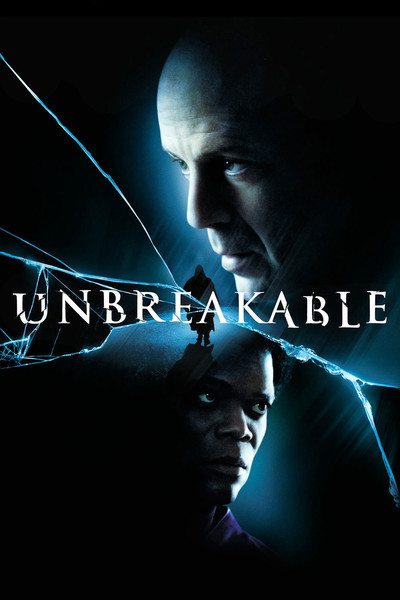
UNBREAKABLE & SPIT FILM SPECIAL + REVIEW + SUMMARY

Earlier I posted on my Facebook account the new trailer of Glass, which will be part 3 of the series about people who think and believe in being a super heroe.

Follow me on FB for more trailer and special plus exclusive Hollywood news.

Tonight let's have a review on part one and two of this movie series, which will create its own universe in the future. 

Unbreakable (2000)


Cast

Bruce Willisas David Dunne
Samuel L. Jacksonas Elijah Price
Robin Wright Pennas Megan Dunne
Spencer Treat Clarkas Jeremy Dunne
Written and Directed by

M. Night Shyamalan

Action, Fantasy, Science Fiction, Suspense, Thriller

Rated PG-13 For Mature Thematic Elements, Including Some Disturbing Violent Content, and For A Crude Sexual Reference

107 minutes


At the center of "Unbreakable" is a simple question: "How many days of your life have you been sick?" David Dunne, a security guard played by Bruce Willis, doesn't know the answer. He is barely speaking to his wife Megan (Robin Wright Penn), but like all men, he figures she remembers his life better than he does. She tells him she can't remember him ever being sick, not even a day. They have this conversation shortly after he has been in a train wreck that killed everybody else on board, but left him without a scratch. Now isn't that strange.

The question originally came to him in an unsigned note. He finds the man who sent it. This is Elijah Price (Samuel L. Jackson), who runs a high-end comic book store with a priceless stock of first editions. Elijah has been sick a lot of days in his life. He even had broken bones when he emerged from the womb. He has spent a long time looking for an unbreakable man, and his logic is plain: "If there is someone like me in the world, shouldn't there be someone at the other end of the spectrum?"
"Unbreakable," the new film by M. Night Shyamalan, is in its own way as quietly intriguing as his "The Sixth Sense." It doesn't involve special effects and stunts, much of it is puzzling and introspective, and most of the action takes place during conversations. If the earlier film seemed mysteriously low-key until an ending that came like an electric jolt, this one is more fascinating along the way, although the ending is not quite satisfactory. In both films, Shyamalan trusts the audience to pay attention, and makes use of Bruce Willis' everyman quality, so we get drawn into the character instead of being distracted by the surface.

The Jackson character is not an everyman. Far from it. He is quietly menacing, formidably intelligent, and uses a facade of sophistication and knowledge to conceal anger that runs deep: He is enraged that his bones break, that his body betrays him, that he was injured so often in grade school that the kids called him "Mr. Glass." Why does he want to find his opposite, an unbreakable man? The question lurks beneath every scene.

This story could have been simplified into a -- well, into the plot of one of Elijah Price's old comic books. Shyamalan does a more interesting thing. He tells it with observant everyday realism; he's like Stephen King, dealing in the supernatural and yet alert to the same human details as mainstream writers. How interesting, for example, that the Robin Wright Penn character is not simply one more bystander wife in a thriller, but a real woman in a marriage that seems to have run out of love. How interesting that when her husband is spared in a crash that kills everyone else, she bravely decides this may be their opportunity to try one last time to save the marriage. How interesting that David Dunne's relationship with his son is so strong, and that the boy is taken along for crucial scenes like the first meeting of David and Elijah.

In "Psycho," Alfred Hitchcock made us think the story was about the Janet Leigh character, and then killed her off a third of the way into the film. No one gets killed early in "Unbreakable," but Shyamalan is skilled at misdirection: He involves us in the private life of the comic book dealer, in the job and marriage problems of the security guard, in stories of wives and mothers. The true subject of the film is well-guarded, although always in plain view, and until the end, we don't know what to hope for or fear. In that way, it's like "The Sixth Sense." 

There is a theory in Hollywood these days that audiences have shorter attention spans and must be distracted by nonstop comic book action. Ironic, that a movie about a student of comic book universes would require attention and patience on the part of the audience. Moviegoers grateful for the slow unfolding of "The Sixth Sense" will like this one, too.

The actors give performances you would expect in serious dramas. Jackson is not afraid to play a man it is hard to like -- a bitter man, whose intelligence only adds irony to anger. Willis, so often the centerpiece of brainless action movies, reminds us again that he can be a subtle actor, as muted and mysterious as actors we expect that sort of thing from -- John Malkovich or William Hurt, for example. If this movie were about nothing else, it would be a full portrait of a man in crisis at work and at home.

I mentioned the ending. I was not quite sold on it. It seems a little arbitrary, as if Shyamalan plucked it out of the air and tried to make it fit. To be sure, there are hints along the way about the direction the story may take, and maybe this movie, like "The Sixth Sense," will play even better the second time -- once you know where it's going. Even if the ending doesn't entirely succeed, it doesn't cheat, and it comes at the end of an uncommonly absorbing movie.

Split (2017)


Cast

James McAvoy as Kevin
Anya Taylor-Joy as Casey
Haley Lu Richardson as Claire
Jessica Sula as Marcia
Betty Buckley as Dr. Fletcher
Kim Director as Hannah
Brad William Henke as Uncle John

Director

M. Night Shyamalan

Writer

M. Night Shyamalan

Cinematographer

Mike Gioulakis

Editor

Luke Franco Ciarrocchi

Composer

West Dylan Thordson

Drama, Horror, Thriller

Rated PG-13 for disturbing thematic content and behavior, violence and some language.
 
116 minutes


Within the process of watching an M. Night Shyamalan film, there exists a parallel and simultaneous process of searching for its inevitable twist. This has been true of every film the writer-director has made since his surprise smash debut, “The Sixth Sense,” nearly two decades ago. We wonder: How will he dazzle us? What clues should we be searching for? Will it actually work this time?

Increasingly, with middling efforts like “The Village” and “Lady in the Water”—and dreary aberrations like “The Last Airbender” and “After Earth,” which bore none of his signature style—the answer to that last question has been: Not really. Which makes his latest, “Split,” such an exciting return to form. A rare, straight-up horror film from Shyamalan, “Split” is a thrilling reminder of what a technical master he can be. All his virtuoso camerawork is on display: his lifelong, loving homage to Alfred Hitchcock, which includes, as always, inserting himself in a cameo. And the twist—that there is no Big Twist—is one of the most refreshing parts of all.

“Split” is more lean and taut in its narrative and pace than we’ve seen from Shyamalan lately. Despite its nearly two-hour running time, it feels like it’s in constant forward motion, even when it flashes backward to provide perspective.

It’s as if there’s a spring in his step, even as he wallows in grunge. And a lot of that has to do with the tour-de-force performance from James McAvoy as a kidnapper named Kevin juggling two-dozen distinct personalities.

From obsessive-compulsive maintenance man Dennis to playful, 9-year-old Hedwig to prim, British Patricia to flamboyant, New York fashionista Barry, McAvoy brings all these characters to life in undeniably hammy yet entertaining ways. There’s a lot of scenery chewing going on here, but it’s a performance that also showcases McAvoy’s great agility and precision. He has to make changes both big and small, sometimes in the same breath, and it’s a hugely engaging spectacle to behold.
His portrayal of this troubled soul is darkly funny but also unexpectedly sad. Kevin is menacing no matter which personality in control, but the underlying childhood trauma that caused him to create these alter egos as a means of defense clearly still haunts him as a grown man. Flashes of vulnerability and fragility reveal themselves in the film’s third act, providing an entirely different kind of disturbing tone.

First, though, there is the abduction, which Shyamalan stages in efficient, gripping fashion. Three high school girls get in a car after a birthday party at the mall: pretty, chatty Claire (Haley Lu Richardson of “The Edge of Seventeen”) and Marcia (Jessica Sula) and shy, quiet Casey (Anya Taylor-Joy), who was invited along out of pity. But they quickly realize the man behind the wheel isn’t Claire’s dad—it’s Kevin, who wastes no time in knocking them out and dragging them back to his makeshift, underground lair.

Repeated visits from Kevin, with his varying voices and personae, gradually make it clear that their kidnapper harbors multiple personalities. Only Casey, who emerges as the trio’s clever leader, has the audacity to engage with him. As she showed in her breakout role in “The Witch” as well as in “Morgan,” Taylor-Joy can be chilling in absolute stillness with her wide, almond eyes—as much as McAvoy is in his showiness. She makes Casey more than your typical horror heroine to root for, particularly with the help of quietly suspenseful flashbacks that indicate how she acquired her survival instincts. Her co-stars aren’t afforded nearly as much characterization or clothing, for that matter.

But we also get a greater understanding of Kevin’s mental state through the daily sessions he (or, rather, a version of him) schedules with his psychologist, Dr. Fletcher (an elegant and soulful Betty Buckley). A leading researcher in the field, she believes having dissociative identity disorder is actually a reflection of the brain’s vast potential rather than a disability. Their conversations, while exquisitely tense, also provide a welcome source of kindness amid the brutality.

And they help us put together the pieces of this puzzle—which is actually a few different puzzles at once. There’s the question of what Kevin wants with these girls. There’s the question of how they’ll escape. But the fundamentally frightening element of this whole scenario is how the various personalities interact with each other—how they manipulate and intimidate each other—and whether there’s an even more fearsome force gaining strength.


Still, it’s exciting to see Shyamalan on such confident footing once more, all these years later. Make sure you stay in your seat until the absolute end to see what other tricks he may have up his sleeve.
 
Copyright © 2017. MOVIETOWN
Blogger Templates