A teenage Leatherface escapes from a mental hospital
with three other inmates, kidnapping a young nurse and taking her on a
road trip from hell while being pursued by an equally deranged lawman
out for revenge.
Leave Me Alone
Written and Performed by Nathaniel Mayer
Published by Trianon Publications (BMI)
Courtesy of Fortune Records
By arrangement with Westwood Music Group
In the US, a child goes missing every 40 seconds. You never think it
will happen to you. Until it does. Alone and scared, Karla Dyson (Halle
Berry) is unwilling to leave the fate of her son's life in someone
else's hands. When she catches a glimpse of the abductors speeding away,
she decides to fight back. In a heart pounding race against time, Kate
begins a high speed pursuit and will stop at nothing to save her son's
life.
Halle Berry stars as a desperate mom trying to save her son from ruthless abductors in Luis Prieto's thriller.
The limits of maternal instinct are relentlessly tested in Kidnap,
a tightly wound actioner that draws on Halle Berry’s intense
performance to power this fast-paced feature. Despite its rather generic
TV-movie premise, a clever script and consistently gratifying plot
twists provide plenty of momentum that could propel Aviron Pictures'
late-summer release to decent returns among audiences weary of a season
of studio misfires.
As a divorced single mother, Karla Dyson (Berry) works a thankless
waitressing job serving rude customers at a New Orleans-area diner to
support her 6-year-old son Frankie (Sage Correa), the light of her life.
On a rare, carefree outing to the park one weekend after a particularly
stressful shift, Frankie disappears while Karla's distracted by a phone
call from her lawyer regarding her ex-husband's attempt to obtain
primary custody of their son.
Thinking at first he might just be playing a game, Karla searches the
park to no avail, then ventures into the parking lot where she glimpses
an unknown woman dragging Frankie into a beat-up old Mustang GT with
the license plates removed. Karla runs after the Ford as it pulls out of
the parking lot, taking a bad fall and dropping her cellphone as the
car speeds away. Barely hesitating, she jumps into her Chrysler minivan
and gives pursuit, frantically searching for her phone.
At this point, most distraught parents would probably pull over and
find a way to contact law enforcement, but convinced she's on her own,
Karla follows the Mustang, which leads her on a perilous high-speed
chase through freeway traffic. The kidnappers' attempt to escape only
strengthens her resolve as Karla relentlessly closes in on the Ford,
finally cornering the car on a deserted highway median. With Frankie's
life at stake, she confronts his abductors in a desperate attempt to
negotiate his release.
Screenwriter Knate Lee mines Karla's single-minded determination to
protect her child for all it's worth, sometimes testing the bounds of
plausibility. This tendency becomes especially apparent when Karla's
alone in her car without a phone and there's no opportunity for
conversation, so she improvises a reassuring dialogue with Frankie that
borders on the outright silly, or predictably prays aloud for God's
intervention.
Despite these occasional outbursts, most of the plot plays out like
one extended chase scene, which is exactly the point, as Karla tries to
catch up with Frankie's abductors. As she grows more desperate and their
evasion tactics reach extremes, Karla's pursuit strategies evolve,
becoming more calculated and far riskier. When her attempts at
contacting law enforcement prove fruitless, she relentlessly pushes
herself beyond limits she didn't even know she had.
Berry has capably demonstrated her action expertise in numerous low-budget thrillers, as well as four installments of the X-Men franchise
in her role as Storm, so her ability to command the screen
single-handedly here proves surprisingly satisfying. Lee's narrative
template, which overlays a child-abduction scenario with a reluctant
heroine's self-actualization, adds up to more than a soccer mom on a
mission; it gets directly to the primal issues of survival and maternal
instinct. Berry (the mother of two kids herself) is at her best when
she's dipping into this deep well of emotion as she ferociously hunts
down her child's kidnappers with little regard for her own safety (or
that of the numerous victims of her epically distracted driving).
Spanish filmmaker Luis Prieto, who directed the 2012 remake of Nicolas Winding Refn's Pusher,
adroitly leverages Berry's familiar face and onscreen persona to
consistently escalate tension, as DP Flavio Labiano and editor Avi
Youabian construct their shots and action sequences to enable her to
totally own the screen.
I
believe every well known actor leads in at least one film not deserving
of their talents. Kidnap is that kind of film and Halle Berry is truly
trying her hardest to sell this film.
As a mother of a young boy,
Halle finds herself in pursuit of a abductor of her child in her
SUV.......and honestly that's really it in terms of plot. The plot and
events are so thin that even the editing is struggling to warrant its 95
minute run time in a story that's only worth about 35 minutes, so the
director and editor find themselves using fast, strobe like cuts of
Halle in pursuit (it looks really bad and out of place), and slow
extended periods of cars just driving on the highway. While the film
tries to make you root for Halle, I couldn't shake the fact that her
characters negligence is the reason this story is even happening.
Kidnap
is a film that was filmed in 2014, and still in June 2017 hasn't been
released officially and I see why. It's not the worst film ever, as
there is some ridiculous fun to be had with this, but with sloppy
editing, and a script that few directors could even try to elevate,
Kidnap leaves nothing missed if you turned in the other direction and
walked away.
The camera is mixture of drama, full of action, sadness, and it totally fits into the theme that everything is tried hard and harder in this movie.
The effects are not relevant here, daily issues and daily drama are meant to be filled with high spectular CGI.
The music is cheezy and does not fit into the drama genre, but the landline music is nice.
In some moments, actually most of the time I am asking myself where is the thrill since we are talking about a thriller, but as I said already a lot of times, it seems like we have a better hostage drama than a thriller. But I cannot help myself than giving
The last Gunslinger, Roland Deschain, has been locked in an eternal
battle with Walter O'Dim, also known as the Man in Black, determined to
prevent him from toppling the Dark Tower, which holds the universe
together. With the fate of the worlds at stake, good and evil will
collide in the ultimate battle as only Roland can defend the Tower from
the Man in Black.
During the first act of the film, several Stephen King Easter eggs are
visible. The twins from "The Shining", the family (including the dog)
from "Cujo", and the car from "Christine" (as the toy pushed by Jake in
his room) are each shown briefly.
The story is based on the eight books by Steven King, and the book are awesome, everyone should have read them, and then there is the thing that those content of eight books was put into a movie, which about 95 minutes only.
I think this is a total misleading in understanding the content of the books, and to be honest, I cannot understand why this content was put down into a movie, which is everything else than a wow, after leaving the cinema. We have an incredible cast with honored names like Idris Elba, Matthew McConaughey, Tom Taylor, Claudia Kim, Fran Kranz, Abbey Lee Kershaw, or Jackie Earle Haley and those characters do not have the time to convince us because of the high speed of action and the wrapping of content into those 95 minutes.
Let's make this clear at the beginning of this review before we go into further details and let's talk about the technic first.
The camera is kept in a dark tone, everything needs to be fast, and the camera is not an exception here. The effects are just fine, some of them, especially when the movies wants to make a final, they are so rough, no HD, and cheesy at the same time, that I had the feeling to see a comedy movie, which fails seen at the intension of the movie.
The settings are well places, epic towns ad buildings, caves, and also a trip into the universe is placed in that at the end disappointment coming from Hollywood.
So let's talk about the things why the movies fails a bit to tell us his full story and why the movie actually should be a start of a frenchaise, but it won't, which is sad.
For over a decade, some of Hollywood's most successful storytellers have wanted to turn Stephen King's eight-book Dark Tower
saga into movies. Few, presumably, started out with the idea that the
best way to wrangle this mountain of plot was to write a new sequel to
it. That's roughly what Danish director Nikolaj Arcel offers in The Dark Tower,
weaving elements from the published books into a new premise suggested
by the series' end and paring the whole mythology down enough to fit
into a mere hour and a half. Recent industry gossip described a troubled
shoot and early edits that were so confusing to test audiences they
prompted much postproduction tinkering by producers and studio execs.
That's tough to believe when looking at the finished product, a
save-the-multiverse sci-fi fantasy that is, if anything, too easily
digested.
Though far from the muddled train wreck we've been led to expect, this Tower
lacks the world-constructing gravitas of either the Tolkien books that
inspired King or the franchise-launching movies that Sony execs surely
have in mind. Though satisfying enough to please many casual moviegoers
drawn in by King's name and stars Idris Elba and Matthew McConaughey, it
will likely disappoint many serious fans and leave other newbies
underwhelmed.
Things begin promisingly, with visions of impending doom that haunt
the nightmares of a New York City kid named Jake Chambers (Tom Taylor).
Despite (or maybe because of) the specificity of these John the
Baptist-grade revelations, Jake's parents and shrink are sure it's all a
fantasy, the emotional fallout of a death in the family. But the
mysterious Man in Black that Jake has seen in his dreams knows
otherwise, and his minions are already en route to kidnap the boy.
The Man in Black is McConaughey's Walter O'Dim, a sorcerer known by
several names in King's books. We'll soon learn that he's attempting to
harness the psychic energy of gifted children to destroy the eponymous
Tower, which protects not just our planet (known here as "Keystone
Earth") but an unknown number of parallel worlds. Beyond these worlds
lies a void full of monsters, we're told. Though nobody ever hints at
why Walter might want to set unpredictable, violent monsters loose on
infinite Earths instead of just ruling over them — he coos commands to
people and they magically do whatever he asks — it's hard to have a
save-the-universe adventure without a villain bent on destruction.
Jake manages to find a teleportation gizmo that sends him into one of
those parallel Earths — a post-apocalyptic place called Mid-World whose
inhabitants have fought Walter for, presumably, eons. Elba plays Roland
Deschain, the last of an honorable warrior clan called the Jedi Knigh—
er, the Gunslingers. Somehow resistant to Walter's spells, he has
endured while the Man in Black killed everyone he loved. He agrees to
help Jake on his quest, but only in order to slay Walter; Roland no
longer has the stomach for saving the galaxy.
Heaven knows, the books offer more invention than could fit in one
feature film — reading just the first two paragraphs of Wikipedia's
entry on Jake Chambers excited me more than anything Dark Tower
contains — but in their effort to introduce newcomers to this world,
the filmmakers make the saga's contents look not archetypal but generic
and cobbled together. Walter's giant weapon looks like the Starkiller
from The Force Awakens, spitting a giant beam of fire out
toward a de-Sauroned version of the scary edifice in Tolkien's Mordor;
Jake, who has great psychic gifts, looks like the same "One Who Was
Prophesied" we've met in every wish-fulfillment fantasy targeted at
youngsters since Luke Skywalker learned to see things with his eyes
closed.
Elba and McConaughey give the movie exactly what it needs from them:
tarnished righteousness and stoic wisdom from the former, unruffled
indifference to humanity's suffering from the latter. Production and
effects departments make the picture quite good-looking, action scenes
play well and, though the setups are sometimes inelegant, a few comic
moments land nicely. But no scene in this film even approaches the
rousing, lump-in-the-throat power of the first Lord of the Rings film, or even of the initial chapter of The Hunger Games.
An optimist would say that the Harry Potter movies survived a couple of
stiff opening chapters to hit their stride midway through. But that
series relied on the loyalty of a different sort of fan. Older and
wiser, longtime Stephen King readers know how much Hollywood wants their
attention. If they shrug their shoulders at this Dark Tower, a better one might come along before you can say "reboot."
I
was very disappointed being a casual Dark Tower fan. With so much
material and so many great opportunities to pull action, this movie
falls flat.
Thinking back, this book series probably was not to
be made into a movie. Condensing Roland's ka-tet into a Hollywood flick
was a recipe for a let down.
Danny Ocean wants to score the biggest heist in history. He combines an
eleven member team, including Frank Catton, Rusty Ryan and Linus
Caldwell. Their target? The Bellagio, the Mirage and the MGM Grand. All
casinos owned by Terry Benedict. It's not going to be easy, as they plan
to get in secretly and out with $150 million.
A heist movie with a serious demeanor but comic underpinnings, Ocean's Eleven performs
its grand larceny through a collection of star turns by the likes of
George Clooney, Brad Pitt, Julia Roberts, Matt Damon, Don Cheadle and
Andy Garcia. It's a movie that demands not to be taken too seriously.
But at times it feels so weightless that the intrigue comes more in
seeing how the writer and director will wiggle out of plot predicaments
than how a team of thieves will rip off Las Vegas casinos.
For Steven Soderbergh, coming off last year's historic double whammy
in which he became the only director to have two films nominated for
best picture and best director, Ocean's Eleven represents a
mostly successful stylistic shift into sheer artifice, where the force
of the personalities involved compels your interest. Each star gets his
moment to shine, so fans will suffer no disappointment. If kids have Harry Potter this holiday season, then adults have Ocean's Eleven. The film could be a major hit both in North America and overseas.
The movie, of course, has an antecedent in the 1960 Ocean's Eleven,
in which Frank Sinatra and his Rat Pack buddies rob five Vegas casinos.
(This has been reduced to three in the new movie, and really only one
vault.) That earlier film was mostly an exercise in celebrity cool; here
Soderbergh makes his actors earn their money by actually playing
characters.
Everyone is a career criminal in Ted Griffin's intricate, richly
detailed script, so not one moment is wasted on worry over a dishonest
day's work. Clooney's Danny Ocean sets the wheel in motion the moment he
leaves prison. His goal is to rob an underground vault that services
the Bellagio, Mirage and MGM Grand casinos.
Every team member he and his right-hand man, Pitt's Rusty Ryan,
recruits is a genius at some criminal activity. Linus (Damon) is a
nimble pickpocket. Basher (Cheadle, with a marvelous Cockney accent) can
blow up anything. Livingston (Eddie Jemison) is a brilliant though
tightly wound surveillance guy. Frank (Bernie Mac) can deal cards and
still watch everything that takes place on the casino floor. Saul (Carl
Reiner) knows every con game that exists. The Malloy brothers (Casey
Affleck and Scott Caan) are whizzes at auto mechanics. Yen is an amazing
Chinese acrobat (played by Shaobo Qin, who is exactly that). Finally,
ex-casino owner Reuben Tishkoff (Elliott Gould) is rich enough to fund
the operation, so you never have to wonder, "How did they get that
thing?"
Then, to give the cold mechanics of the heist some hot blood, Danny
has an ulterior motive in robbing these particular casinos: All are
owned by Terry Benedict (Garcia), a polished though deadly entrepreneur
currently sleeping with Danny's ex-wife, Tess (Roberts).
This is not your typical crime movie. These are all gentleman
thieves; they never raise their voices. There are never any quarrels or
unpleasantness. They don't even seem to be doing this for the money.
Some might find the clockwork precision of their criminal
craftsmanship hard to swallow, but the movie operates solely in the
arena of fantasy wish fulfillment. This is a movie for anyone who has
lost a wad in Vegas, lost a mate to a really smooth rich guy or gal or
simply lost his keys through lack of organization.
Ocean's Eleven is no Rififi, which virtually served
as a documentary in how to break into a jewelry store. Rather, the
movie is an exercise in Hollywood glamour, enlivened by the feeling one
often gets from a Soderbergh film: that the actors are having a ball.
The film is a technical marvel, with Philip Messina's sets and real
casino locations binding seamlessly together. Soderbergh's elegant
camerawork takes you "backstage" at the Bellagio to tour rooms,
corridors, elevator shafts and passages. And David Holmes' cool, jazzy
score makes this Ocean's Eleven feel hipper than Sinatra's.
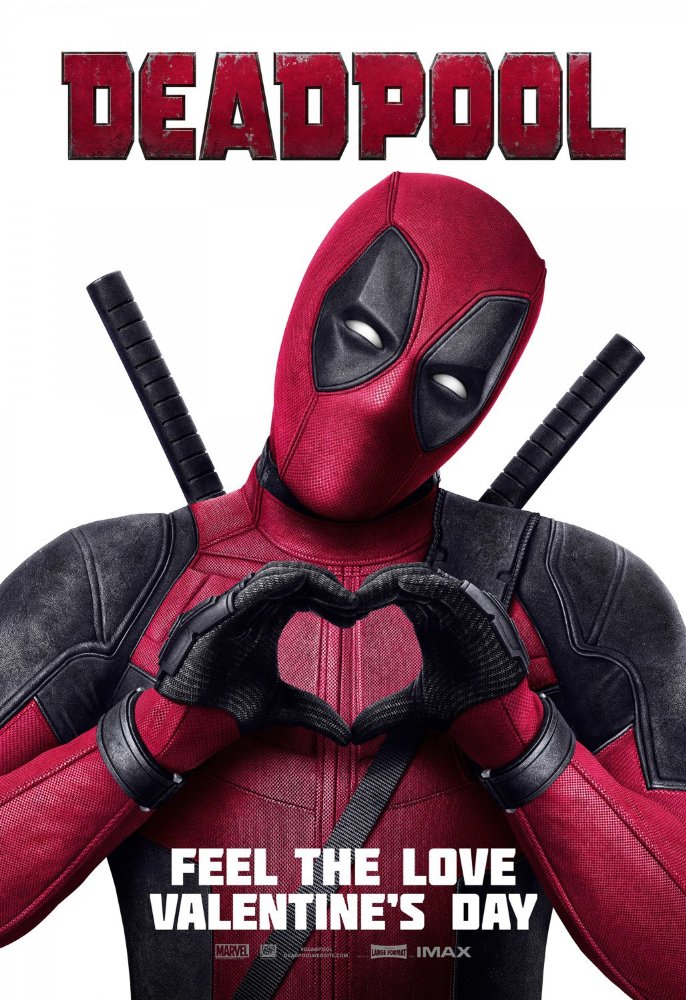
A fast-talking mercenary with a morbid sense of
humor is subjected to a rogue experiment that leaves him with
accelerated healing powers and a quest for revenge.
This is the origin story of former Special Forces operative turned
mercenary Wade Wilson, who after being subjected to a rogue experiment
that leaves him with accelerated healing powers, adopts the alter ego
Deadpool. Armed with his new abilities and a dark, twisted sense of
humor, Deadpool hunts down the man who nearly destroyed his life.
According to data compiled by TorrentFreak, the Ryan Reynolds starrer racked up the most illegal downloads last year.
Ryan Reynolds' long-gestating anti-superhero pic Deadpool was one of the biggest hits of 2016. In addition to its massive box-office success, the film also earned two Golden Globe nominations
for best musical or comedy and best actor for Reynolds. Now, the sendup
of the superhero genre can add another accolade to its growing list:
the most pirated film of 2016.
According to data compiled by TorrentFreak, Deadpool topped its list of illegally downloaded movies. The year-end roundup included other such superhero ventures as Batman v. Superman: Dawn of Justice and Captain America: Civil War.
The list features many of the year's highest box-office grossers, such as Star Wars: The Force Awakens (which was actually released in December 2015) and Pixar's hit animated sequel Finding Dory.
However, the correlation between commercial hit and pirated
hot-ticket item is not the only one at play. While massive hits like Deadpool, Finding Dory and Captain America: Civil War landed on the top 10 list in both categories, family fare such as Illumination Entertainment's The Secret Life of Pets and Disney's live-action remake of The Jungle Book were absent from the rundown of most torrented films, despite ranking fourth and fifth at the 2016 box office, respectively.
Despite the illegality of the downloads, earning the top spot with torrentors proves, yet again, that Deadpool resonated with audiences.
Ryan Reynolds stars as a superhero not quite like the others in the
latest — and certainly raunchiest — Marvel movie, directed by Tim
Miller.
For the multitudes who feared that, after Fantastic Four, Fox
might simply be rummaging too far down into Marvel's basement in search
of a few more scraps of lucre, the joke's on them. It takes a little
while to get in gear — or perhaps just to adjust to what's going on here
— but once it does, Deadpool drops trou to reveal itself as a
really raunchy, very dirty and pretty funny goof on the entire superhero
ethos, as well as the first Marvel film to irreverently trash the
brand. Just what anyone suffering from genre burnout might appreciate at
this point, as well as a big in-joke treat for all but the most
reverent fanboys, this film looks to be hitting the market at just the
right time — with Christmas releases now in the rearview mirror — to
rake in some sweet returns.
Given the surprising amount of nudity, raw sex jokes and nonstop
underlined and bold-faced, racy dialogue, it's amusing to picture the
countless pubescent boys who will be plotting a way to get into this
extremely R-rated romp. Not only does Ryan Reynolds give it his all,
shall we say, but the conversations here mostly resemble the sort of
thing you'd expect to hear around last call at a Bakersfield biker bar.
Or, more to the point, what you'd get if you mashed up the dialogue from
the two previous scripts written by Rhett Reese and Paul Wernick, Zombieland and G.I. Joe: Retaliation.
Last seen decapitated and heading down the chimney of a nuclear plant at the end of X-Men: Origins in
2009, Wade Wilson/Deadpool has always seemed like a tough nut to crack
in terms of centering a mass-audience film on him. A brash and brazen
mercenary, he's an anti-hero with a film noir lead's taste for the
louche and low-down, as well as a character who, in narrative terms,
stands out due to his predilection for breaking the fourth wall. Whether
he could make the grade as the leading man of a franchise of his own
was always a question, which partly accounts for the prolonged
wait-and-see on Marvel's part.
Other reasons for hesitation lay in the character not being a
superhero like all the others and, if the pic were to be done right, the
necessity of an R rating — a place Marvel has never gone before. How to
reconcile the brand's image and fan base with such material? The answer
probably lies in the fact that Marvel is so successful now, and so far
down the line with their various franchises, that shaking things up was
seen as permissible and maybe even a good move. Or perhaps executives
aware early on of what was happening with Fantastic Four said, “Opposite direction! Now!”
At first, with some strained/cheeky opening credits (“a
moody teen,” “a gratuitous cameo”) followed by an
emotional-investment-free highway action sequence notable for its
splatter gore content, things don't look promising — just wiseass-y and
needlessly violent. Who is this guy in red and black spandex with white
fabric where eyes should be, who fights with two katanas, spins in the
air in slo-mo and has wounds that heal at once? Shoot this guy full of
holes and he'll be back at you within seconds. “I may be super, but I'm
no hero,” he cracks. Why should we care?
Flash back two years and things seem no
better, save, perhaps, for the dude's face, which now plainly belongs to
Reynolds. A grown man who hangs at a skateboard park, Wade Wilson is a
former Special Forces operative whose watering hole is a dive called
Sister Margaret's Home for Wayward Girls, where the guys are all former
soldiers of fortune who never hit the jackpot and the gals look like
Hooters rejects. Wade and a bitter hooker named Vanessa (Morena
Baccarin) hit it off and get it on in a kinky montage that's more
out-there than what most Hollywood-made R-rated stuff ever serves up.
It's right around here, and immediately
afterward, when Wade is diagnosed as having late-stage cancer, that,
ironically, the film really starts to click. When a doctor mentions the
possibility of going to Chechnya for special treatment, Wade responds,
“Isn't that where you go to get cancer?” and you finally begin to sense that there might be something to this verbal speed-freak character after all.
The positioning of the flashback seems
simple but serves the movie extremely well, especially with the arrival
of Ajax (Ed Skrein, deeply evil), a doctor and head of something called
the WeaponX workshop, who takes Wade on as a reclamation project and
turns him into a fighting machine who can never die. Ajax's sadism
during the painful transformation process knows no bounds and, at the
end of the ordeal, he takes particular pleasure in introducing Wade to
his new face, which resembles ground beef (Vanessa's measured reaction
to beholding it is, “It's a face … I'd be happy to sit on”).
Now a freak behind his mask and
form-fitting outfit, Wade/Deadpool has it out for Ajax, but their
ultimate face-off, previewed in the opening scene, must wait until after
Deadpool teams up with two unlikely cohorts: the metallic giant
Colossus, who does what he can to protect him, and a rebellious teen who
can't possibly live up to her name, Negasonic Teenage Warhead (Brianna
Hildebrand). For his part, Ajax has his own one-woman hit squad in Angel
Dust (mixed martial arts champ and Haywire star Gina Carano).
The final showdown is very small potatoes
by Marvel standards and, of course, predictable, but compensates with
humor, which is what floats the entire project. The script has the feel
of something gone over again and again and yet again to double the
number of jokes each time. The machine-gun approach doesn't always hit,
but it does enough so that, in the end, the number of laughs is pretty
high.
Beyond even what Robert Downey Jr. has done in the Iron Man series,
Reynolds lets fly here in a manic, sly, self-conscious way that leaves
you not quite knowing what hit you: the irreverence slides quickly into
lewd comic territory; the inside jokes about Marvel in particular and
pop culture in general come fast and furious; the fourth-wall breakage
is disarming; and the actor's occasional fey, high-pitched voicings add
yet another strange element. As in the presence of motor-mouthed
comedians, you either sit there stone-faced or eventually capitulate to
the cascade of weirdness and the fertility of wayward minds unleashed.
A longtime commercials and visual effects
executive and creative director, Tim Miller hasn't so much directed his
first feature as liberated much of what has been bubbling under the
surface of superhero films for a long time; it answers a lot of the
questions you were afraid to ask.
For the record, Deadpool features one of Stan Lee's best Marvel cameos — it's actually funny.
Investigators cited a law generally used to regulate alcohol and nudity
at strip clubs, which are required to have dancers wear G-strings and
pasties if the club serves liquor.
Utah alcohol bosses have filed a complaint and will consider revoking
the liquor license of a movie theater it says violated a state
obscenity law by serving drinks while screening Deadpool, which features simulated sex scenes.
The theater said the law is unconstitutional and has threatened to challenge it in court if the complaint isn't dropped.
Rocky Anderson, an attorney for Brewvies in Salt Lake City, said
Monday the law violates free-speech rights and is so broadly written
that even a movie featuring Michelangelo's nude sculpture "David" would
be banned if alcohol were served at a screening.
Utah's Department of Alcoholic Beverage Control filed the complaint
against Brewvies after three undercover state officers attended a
screening of Deadpool in February.
Investigators cited a state obscenity law that is generally used to
regulate alcohol and nudity at strip clubs, which are required to have
dancers wear G-strings and pasties if the club serves liquor.
The law also bans the showing of any film with sex acts or simulated
sex acts, full-frontal nudity or the "caressing" of breasts or buttocks.
It only applies to businesses with liquor licenses, so most Utah movie
theaters, which are alcohol-free, are not cited under the law.
Brewvies, which has been open since 1997, only allows people 21 and
older to attend movies and serves food and liquor to customers.
The DABC has scheduled a meeting in May to discuss or possibly settle the complaint before further disciplinary action is taken.
The agency's Vickie Ashby had no comment Monday and said she could
not speak to the next steps in the disciplinary process. She directed
questions to the attorney general's office and State Bureau of
Investigation, which ran the undercover investigation.
Dan Burton, a spokesman for the Utah attorney general's office,
declined to comment. The State Bureau of Investigation looked into the
matter after the DABC sent it a complaint, according to Marissa
Villasenor, a spokeswoman for Utah's Department of Public Safety, which
oversees the investigative bureau.
Anderson said he'll challenge the law in court unless the complaint
is dropped and Utah stops enforcing the obscenity law. Anderson said his
client should also be repaid for a $1,627 fine the theater paid five
years ago when it was cited under the same law for showing The Hangover Part II.
Anderson, who provided a copy of the investigative report to The
Associated Press, said the fact that the film can be shown at other
theaters nearby makes it clear Utah officials are using liquor laws to
limit First Amendment rights of free speech.
Anderson said the Utah law is similar to an Idaho measure that
lawmakers repealed this year after a theater sued after its liquor
license was threatened for showing Fifty Shades of Grey while serving alcohol.
Deadpool is a master piece of film classics already and the show will continue since yesterday the final cut was finally done. Cannot wait for 2018.
China's deadliest special forces operative settles into a quiet life on
the sea. When sadistic mercenaries begin targeting nearby civilians, he
must leave his newfound peace behind and return to his duties as a
soldier and protector.
Wu Jing plays a former Chinese Special Forces operative who finds
himself in the middle of an African revolution in this sequel to the
2015 hit.
Wu Jing again stakes his claim as the natural heir to Jackie Chan
with the sequel to his 2015 action movie that was a hit in his native
China. Starring, directed and co-written by Jing, Wolf Warrior 2
is even bigger and bolder than its predecessor, which doesn’t always
work in its favor. But genre fans will definitely relish the
near-constant barrage of elaborate set pieces that are choreographed and
filmed for maximum impact.
Jing again plays Leng Feng, now living a quiet life in Africa after
having left the titular Chinese Special Forces unit under unfortunate
circumstances depicted in the previous installment. But that doesn’t
mean he isn’t ready to spring into action when necessary, as illustrated
by an elaborate pre-credits sequence in which he battles a group of
pirates in an underwater fight that could easily fit into a James Bond
movie.
Apparently beloved by all of the Africans with whom he comes into
contact, even when he beats them at drinking games, Feng doesn’t
hesitate to get involved when the country is wracked by a civil war and
invaded by a group of bloodthirsty American mercenaries led by Big Daddy
(Frank Grillo). He also strives to protect the local Chinese community,
since the Chinese government is apparently helpless to intervene due to
internecine rules of international engagement.
Although the convoluted plot also involves an epidemic of a deadly
disease for which a Chinese doctor (Celina Jade) is attempting to find a
cure, it’s basically an excuse for a relentless series of action
sequences featuring martial arts combat, gun battles, car chases, a tank
battle and pretty much anything else you can think of. The star’s
charisma is enhanced by his athletic prowess, which makes the
hand-to-hand combat particularly arresting, especially a brutal brawl
between him and Grillo (no slouch himself) that provides a fitting
climax.
Hard to believe that the director/star needed two collaborators on
the screenplay, judging by such lines as Leng’s declaration, “Once a
Wolf Warrior, always a Wolf Warrior!” Grillo, too, doesn’t have much to
work with, as he’s often reduced to looking sinister while smoking a
cigar and issuing such commands as “I want that son of a bitch!”
American audiences, at least, may also be put off by the relentless
Chinese jingoism on display, although, to be fair, it seems a fair price
to pay for such American movie characters as Rambo.
The breathless pacing thankfully doesn’t allow much time for viewers to
ponder the plot holes or worry about character development, although the
two-hour running time (more than 30 minutes longer than the original
pic) results in overkill fatigue. As with Jackie Chan’s efforts, the
outtakes during the end credits indicate that the film must have been a
lot of fun to make, at least when the performers weren’t getting hurt.
And in case fans were worried, a post-credits sequence sets up the
inevitable sequel, which, they won’t be surprised to learn, will be
entitled Wolf Warrior 3.
A Wall Street broker is forced to evade a police chief investigating a
bank robbery as he attempts to recover the stolen money in exchange for
his son's life.
In an attempt to reconnect with his son Danny, successful Wall Street
broker Will takes his family on a vacation to the cabin where he grew
up. While Will and Danny are hunting, their trip takes a deadly turn
when they witness the murder of a crooked police officer as a bank
robbery goes awry. When Danny is taken hostage by the criminals, Will is
forced to help them evade the police chief investigating the murder and
recover the stolen money in exchange for his son's life.
First Kill marks the third collaboration between director
Steven C. Miller and Bruce Willis, but their efforts are not likely to
enter the pantheon of such previous cinematic teams as Alfred Hitchcock
and Jimmy Stewart or John Ford and John Wayne. Produced by the aptly
named Grindstone Entertainment, the film, much like its Miller/Willis
predecessors Extraction and Marauders, is strictly
grindhouse level, if grindhouses still existed. Their modern-day
equivalent, VOD, will be the natural home for this mediocre thriller
receiving a limited theatrical release.
As with most of his recent vehicles, Willis here plays a supporting
part. Hayden Christensen plays the central role of Will, a hotshot
investment banker whose importance is signaled in an early scene when he
exasperatedly asks his assistant, “Did the meeting with the Saudis get
moved to today?”
Not surprisingly, Will’s home life has suffered due to his workaholic
ways. When he discovers that his 11-year-old son Danny (Ty Shelton) has
been bullied at school, he decides to take his family to the small town
where he grew up so that he can teach his boy how to hunt in an effort
to give him confidence.
Using the same rifle that his grandfather gave him, Will takes Danny
on a deer hunting expedition. But father and son get more than they
bargained for when they encounter a pair of criminals and Will winds up
having to shoot one of them in self-defense. It turns out that the duo
was involved a recent bank robbery, and the surviving one, Levi (Gethin
Anthony), winds up kidnapping Danny to force Will to help him find the
key to a bank vault that contains $2 million in loot.
To complicate the situation even further, the local police chief
(Willis), who’s known Will since he was a boy, becomes suspicious of
Will’s actions after his boy is taken. The two men are soon involved in a
twisty cat-and-mouse game even while Danny bonds with his captor over
their shared love of video games. Levi, it’s soon revealed, isn’t really
a bad guy, just a desperate one, trying to get the money to pay for an
operation to remove his mother-in-law’s 80-pound tumor. (Yes, the
screenplay by Nick Gordon gets that baroque).
More reminiscent of a broadcast network crime drama episode than a feature film, the generically titled First Kill
features one decent chase scene involving a pick-up truck and ATV
barreling through the woods and a suspenseful gun stand-off near its
conclusion. Otherwise it’s all pretty tedious, with Miller failing to
infuse the proceedings with the stylistic flair necessary to compensate
for the cliché-ridden plotline, whose twists can be seen a mile away.
Christensen, who’s been unable to capitalize on the buzz over his acclaimed performance in Shattered Glass,
at least goes through his paces with professionalism. The same can’t be
said of Willis, who turns in yet another phone-it-in performance that
makes one yearn for the actor to hark back to the sort of superb
character work he did in such films as In Country and Nobody’s Fool.
The best performance on display here comes from Anthony, a British
actor who displays both a credible Southern accent and an entertaining
relish for his intriguing character. It’s the one genuine pleasure in
this otherwise forgettable genre exercise.